


The black economic empowerment (BEE) framework has seen more than R700-billion changing hands, but concerns have been raised about its impact on the economy.
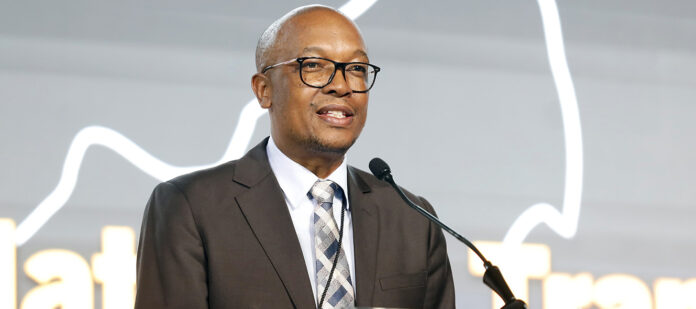
Speaking at the Nedbank Top Empowerment Conference at the Sandton Convention Centre on Wednesday, Trade and Industry Minister Parks Tau said there was a widening gap between B-BBEE compliance on paper and the reality of who benefits from the country’s economy.
Gap between compliance and competitiveness
Tau said R100-billion has been spent on skills development while R600-billion was spent on transformation transactions, and many companies are meeting required scorecard targets. However, the minister insisted that this has not translated to meaningful changes in ownership patterns or the creation of strong and competitive black-owned businesses.
“The framework has moved money. The question is whether it has moved the economy. And that is the question we must engage on. Because there is a gap, a persistent, structural gap between what the scorecards say and what you see when you look at who owns what in South Africa.
“It is the gap between compliance and competitiveness. And closing that gap is the work of this next phase,” said Tau.
B-BBEE a box-ticking exercise?
Many firms have been accused of treating B-BBEE as a box-ticking exercise, directing funds in ways that help them meet minimum requirements without necessarily building sustainable enterprises or long-term economic value.
As a result, empowerment efforts can become fragmented, inconsistent, and poorly targeted, with some initiatives making a real impact while others exist mainly to satisfy regulations.
“The critics of B-BBEE will tell you this gap is evidence that the policy has failed. Some call for it to be scrapped entirely. I want to be clear, that argument is not new, and it is not neutral.
“The global backlash against affirmative action is a politically driven campaign by those who have always opposed economic redress. However, honest assessment is not capitulation. It is the precondition for getting the policy right,” said Tau.
Two-phase review of B-BBEE
The first phase focused on the detailed rules, including the codes, regulations and practice notes. In January this year, the department published the most significant proposed changes to the Codes of Good Practice since 2013. This is part of the two-phase review of the B-BBEE framework, which Tau said is to strengthen its impact starting with proposed changes to the codes earlier this year.
The minister said after consulting sector councils, it was clear that many industry frameworks focus too much on compliance rather than real transformation.
He said agreement was reached on three priorities. These include improving how funding reaches black businesses, strengthening implementation of existing rules, and fixing systems that are not delivering meaningful results.
“The enterprises winning in this economy, building market share, attracting capital, and retaining top talent are not winning because of their B-BBEE level.
“They are winning because transformation has made them better businesses. Deeper access to the full national talent pool. More resilient supplier networks. Products and services that reach the communities that constitute the majority of this country’s consumers,” said Tau.
Read More: True economic empowerment is about the many working together
- Over R700 billion has flowed through South Africa's B-BBEE framework, but significant concerns remain about its real economic impact and who benefits from it.
- Trade Minister Parks Tau highlighted a persistent gap between meeting B-BBEE compliance scorecards and actual shifts in ownership or competitive black-owned businesses.
- Many companies treat B-BBEE as a box-ticking exercise, focusing on minimal compliance rather than building sustainable enterprises or lasting economic value.
- A two-phase review of B-BBEE is underway, aiming to refocus efforts on meaningful transformation by improving funding access, strengthening rule enforcement, and fixing ineffective systems.
- The minister emphasized that successful businesses excel due to genuine transformation driving competitiveness, not just their B-BBEE compliance level.



After almost 20 years in the automotive industry, I welcome every discussion about transformation, industrialization, localization, and supplier development within South Africa’s automotive sector.
However, there is a difficult conversation that we continue to avoid. While significant resources have been invested through development agencies, OEM programmes, industrial parks, and transformation initiatives, township and informal settlement automotive businesses remain largely excluded from meaningful participation in the automotive value chain.
Many of us have attended workshops, conferences, exhibitions, and stakeholder engagements for years. We have submitted proposals, participated in consultations, and engaged development agencies. Yet the reality on the ground is that township-based panel beaters, fitment centres, mechanics, auto spares retailers, logistics operators, and emerging manufacturers continue to struggle to access markets, funding, industrial infrastructure, supplier opportunities, and procurement programmes.
Transformation cannot only be measured by reports, presentations, and compliance requirements. It must also be measured by how many sustainable township enterprises are integrated into the automotive value chain, how many jobs are created, and how many black-owned businesses graduate from survivalist enterprises into industrial participants.
Institutions such as government departments, development agencies, OEMs, SEZs, and industry bodies have an important role to play. However, there is a need for a more deliberate focus on township automotive ecosystems, informal sector operators, women-owned enterprises, youth-owned enterprises, and emerging manufacturers.
The question is not whether transformation programmes exist. The question is whether they are reaching the communities and entrepreneurs who need them most.
South Africa cannot achieve inclusive industrialization while township and informal settlement automotive businesses remain on the margins of the sector.
It is time to move beyond ticking boxes and towards measurable economic inclusion, supplier development, market access, skills transfer, and industrial participation for township entrepreneurs.
Thank you for contacting Dirong Automotive and Logistics — A Division of Dirong Energy Resources and Dirong Cleantech.
We are currently unavailable but your message is important to us. We will respond as soon as possible.
Driving Africa’s Green Mobility Transition Through Innovation, Sustainable Transport and Cleantech Solutions.