


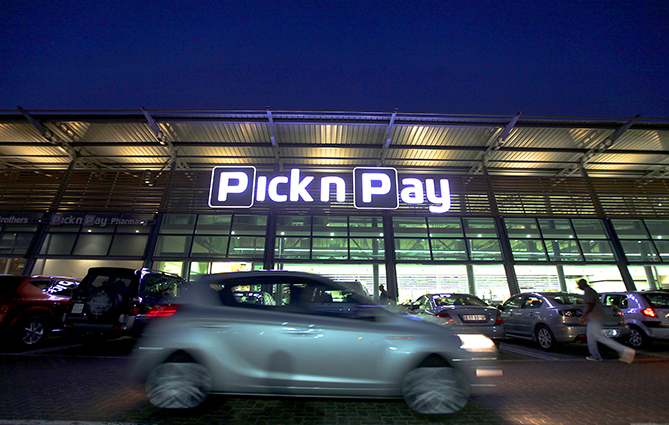
General retailer Pick n Pay has reported a deeper decline in profits for the year ending March 2026 as it battles a difficult turnaround journey.
The group’s latest results show that while overall turnover increased by 3.4% to R120.3-billion, this is masked by a 1.6% decline in Pick n Pay supermarkets, particularly store closures under its restructuring plan.
In contrast, Boxer, its discount division, delivered stronger growth of 12.3% while continuing to hold the group’s stability.
Group trading profit dropped by 4.2% to R1.7-billion held down by the pressure from Pick n Pay, as the segment’s trading loss increased to R1-billion, a further deterioration compared to the same period in the previous year.
Boxer’s profit growth helped offset a R404-million increase in the Pick n Pay trading loss, with Boxer itself adding R330-million in trading profit.
Tackling high costs
Sean Summers, Pick n Pay chief executive, said returning the core business to profitability will depend on tackling high costs, especially labour.
He said the company had made important progress even as losses deepened, saying the business was stronger than two and a half years ago.
Sunday World previously reported that the retailer Pick n Pay has started talking to the South African Commercial, Catering, and Allied Workers Union about Section 189A of the Labour Relations Act 66 of 1995.
“We are now taking the difficult but necessary step of addressing our structurally high store labour costs through the formal Section 189 consultation process announced a few weeks ago.
“This should not be surprising. One of the first issues I raised on my return was that we needed to address Pick n Pay’s significantly distorted labour cost base relative to competitors, a major cost block,” said Summers.
Increase reported in online sales
He said the aim is to fix the cost base without unnecessary job losses, highlighting that they aim to align the cost structure with industry standards.
The group also showed encouraging signs, with like-for-like sales in company-owned stores improving to 3.9%, up from 3.3% in the same period last year.
The group further reported that online sales increased by 32.7% and there was a 0.5 percentage point increase in gross profit margin to 18.8%.
“We continue to see encouraging progress across the business, but the reality is that the challenges facing Pick n Pay developed over an extended period.
“This means that rebuilding the business into a leading supermarket retailer again will take time, disciplined execution and difficult but necessary decisions.
Summers added that external pressures, including rising fuel prices and strain on consumers, could weigh on performance in the coming year.
“We have a clear path to sustainability, driven by ongoing incremental gains, and remain confident that the initiatives we have put in place are starting to bear fruit as we rebuild a stronger, more competitive Pick n Pay for the long term,” said Summers.
- Pick n Pay's profits declined further for the year ending March 2026 despite a 3.4% increase in total turnover to R120.3 billion, driven by a 1.6% drop in supermarket sales amid store closures.
- The discount division Boxer grew strongly by 12.3%, contributing R330 million in trading profit and partially offsetting Pick n Pay supermarket's increased trading loss of R1 billion.
- CEO Sean Summers emphasized the need to tackle high labour costs through formal Section 189 consultations, aiming to align costs with industry standards while minimizing job losses.
- Online sales surged by 32.7%, like-for-like store sales improved to 3.9%, and gross profit margin rose by 0.5 percentage points to 18.8%, showing some positive operational progress.
- Summers warned of ongoing external challenges like rising fuel prices and consumer strain but remains confident in the company's long-term turnaround strategy and sustainability initiatives.


