


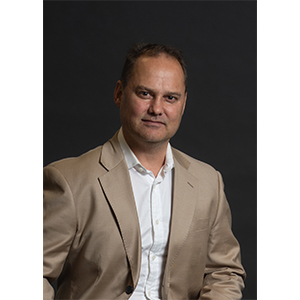
The medical scheme industry could face further liquidations unless government reforms the way private healthcare is funded, according to Christoff Raath, Joint CEO of Insight Actuaries & Consultants.
Raath warned that medical scheme contributions will continue rising well above inflation if key regulatory gaps remain unresolved.
He said the current system combines mandatory benefits, open enrolment and community-rated pricing, but lacks the supporting mechanisms needed to keep costs under control.
“If we retain mandated minimum benefits, open enrolment and community rating without risk equalisation and some form of mandatory participation, medical scheme contributions will continue to increase at 4-5% more than CPI in the long run.
“We may also see one or two more medical schemes liquidating, like Health Squared Medical Scheme, which liquidated in 2022,” said Raath.
‘Medical schemes too expensive’
He said the industry has reached a critical point with the cost of belonging to a medical scheme approaching what many households can no longer afford.
Raath said Prescribed Minimum Benefit (PMB) costs now average more than R1 600 per beneficiary per month. As a result, even the cheapest medical scheme option for a family of three costs more than R4 000 a month before any other household expenses are taken into account.
He attributed the rising cost largely to hospital treatment, which he said makes up most of the PMB package.
“The main driver of PMB costs is hospitalisation because the PMB package is predominantly hospital-centric,” he said.
Ageing membership base
He said an ageing membership base is also pushing up costs as younger and healthier people increasingly choose not to join medical schemes. Raath argued that South Africa’s healthcare funding framework remains incomplete.
He said reforms introduced in the early 2000s, including community rating, open enrolment and PMBs, were intended to improve access to healthcare but were never matched with risk equalisation or mandatory participation.
According to Raath, requiring people who can afford medical scheme cover to join would significantly reduce contributions by bringing younger, healthier members into the risk pool.
“We estimate that the cost of medical scheme contributions could reduce by as much as 30% if the young and healthy lives who can afford medical scheme cover, but opted not to belong to schemes, were to join the system,” he said.
Call for regulatory reform
He also called for renewed cooperation between regulators and the private healthcare industry, saying policy development has stalled over the past two decades.
Raath said South Africa has not seen significant healthcare regulatory reform since PMBs were last updated in 2003.
He believes future reforms should include redesigning PMBs, improving reimbursement rules, introducing Risk Based Capital requirements, allowing medical schemes to invest part of their reserves offshore and implementing risk equalisation.
“Healthcare financing is more complex than other financial domains like, say, conventional insurance. The complexity of healthcare can be attributed to the emotive and politically sensitive nature of healthcare financing. All of us want to live in a society where someone who is diagnosed with cancer (as an example) can quickly and easily access the appropriate treatment.
“Yet any treatment comes at a cost, regardless of whether it happens in the public or private sector, and there is always a limit as to what a society can afford to pay for. Which means that there is always an unenviable decision that must be made as to what is covered and what is not covered. These decisions are very difficult to make, but there are scientific methods that can be used to underpin these decisions,” said Raath.
- The medical scheme industry in South Africa risks further liquidations unless the government reforms private healthcare funding, warns Christoff Raath, Joint CEO of Insight Actuaries & Consultants.
- Medical scheme contributions are rising significantly faster than inflation due to regulatory gaps, including a lack of risk equalisation and mandatory participation despite mandated benefits, open enrolment, and community rating.
- High costs, especially for hospital-based Prescribed Minimum Benefits (PMBs), are making medical scheme membership unaffordable for many households, with minimum expenses exceeding R4,000 monthly for a typical family.
- An ageing membership base and the exclusion of younger, healthier individuals from schemes are driving up costs; mandatory enrolment of these groups could reduce costs by up to 30%.
- Raath calls for urgent regulatory reforms including PMB redesign, improved reimbursement rules, risk-based capital requirements, offshore investment allowance, and stronger cooperation between regulators and the private healthcare sector.


