


South Africa is running out of time. Not because the economy is facing one crisis, but because we keep waiting for the next crisis before acting on problems we already know how to fix.
The latest unemployment figures are a stark reminder. The official unemployment rate has risen to 33.6%, with around 8.5 million South Africans unemployed. Youth unemployment is at 47.4%, while the expanded unemployment rate is 43.8%.
Then came inflation. Headline inflation fell to 4.3% in July, from 5% in June. Good news? Yes, but we should be careful about celebrating too quickly.
Much of the decline was driven by lower fuel prices. Petrol fell 7.1% and diesel 11.7% between June and July. Yet petrol remained 19.3% more expensive than a year earlier, while diesel was 28.8% higher.
And now the direction is reversing. Current indications point towards another substantial fuel-price increase in September, with diesel potentially rising by around R3 a litre. For transport operators, farmers, manufacturers, retailers and households, diesel is an input into almost everything.
The international environment is hardly helping. The Middle East conflict continues to disrupt energy markets, and traffic through the Strait of Hormuz remains severely constrained.
Brent crude remains stubbornly high, hovering around the $90 mark, with futures trending higher.
Interest rates cannot produce more oil. They cannot reopen the Strait of Hormuz, repair a refinery, fix our railways or unclog our ports.
Our problem is obvious. We have a growth problem. And we have an investment problem.
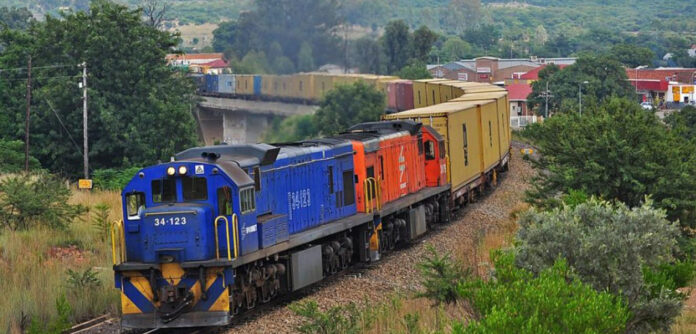
Consider our logistics system. A figure being recirculated is that South Africa loses about R1-billion a day because of logistics inefficiencies. This is not a new number. President Cyril Ramaphosa himself cited the estimate in March. That equates to roughly R365-billion a year.
Even allowing for differences in methodology, the message is clear: inefficient logistics impose an enormous cost. Exports are lost, businesses pay more, investment is discouraged and ultimately jobs disappear.
South Africa’s infrastructure challenge is too large to be solved by government alone. Gross government debt is expected to reach 78.9% of GDP in 2025/26, while debt-service costs are expected to amount to R420.6-billion. Think about that. R420-billion servicing debt accumulated in the past. It does not build a railway. It does not employ a young South African. It does not manufacture a product. This is why we need a far more aggressive programme of private investment and public-private partnerships.
Where infrastructure can generate a commercial return, let the private sector build it. Let investors put in equity. Let pension funds participate. Let international infrastructure companies bring capital and expertise. Let South African companies partner with global investors.
And critically, let South Africans become employed.
The objective is not simply to attract capital. It is to turn capital into productive assets, productive assets into economic growth, and economic growth into real jobs.
Investment is not an end in itself. It must improve the lives of South Africans.
There are encouraging signs. Private participation in rail is expanding, while the World Bank’s latest infrastructure programme for South Africa is expected to help create nearly 600 000 jobs and mobilise up to $10-billion in private capital.
This is the direction we should pursue.
Government does not necessarily need to sell strategic infrastructure. It needs to make infrastructure investable, using concessions, long-term operating agreements and public-private partnerships that allow private capital to build and operate infrastructure while protecting the public interest.
South Africa cannot control the price of oil, the Middle East or every global shock. But we can improve our ports and railways. We can attract investment. We can make it easier for businesses to employ people.
The choice is clear. We can continue borrowing and taxing our way through an increasingly difficult environment. Or we can use government as a catalyst to unlock private capital on a massive scale.
We cannot wait for better times. We need to build better times.
•Van Doesburgh is head of Economics at CPUT and a regular commentator on South Africa’s economic landscape, focusing on financial markets, policy, and business strategy. vandoesburghm@cput.ac.za
- South Africa's official unemployment rate has risen to 33.6%, with youth unemployment at 47.4% and expanded unemployment at 43.8%.
- Headline inflation fell to 4.3% in July from 5% in June, largely due to a decrease in fuel prices, although petrol and diesel remain significantly more expensive than a year ago.
- South Africa loses about R1-billion a day due to logistics inefficiencies, equating to roughly R365-billion annually, impacting exports, business costs, investment, and jobs.
- Gross government debt is expected to reach 78.9% of GDP by 2025/26, with debt-service costs projected at R420.6-billion, limiting government capacity to invest in infrastructure.
- Encouraging signs include expanding private participation in rail and the World Bank's infrastructure program for South Africa, expected to create nearly 600,000 jobs and mobilize up to $10 billion in private capital.


