


Just when governance failures, collapsing municipalities and infrastructure bottlenecks make the country look increasingly difficult to invest in, global companies continue committing billions of rand to our economy.
The contradiction tells us something important. While much of the world’s attention is focused on geopolitical tension, higher oil prices and slowing global growth, two of the world’s largest automotive manufacturers have quietly sent South Africa a powerful message. They believe in our economy.
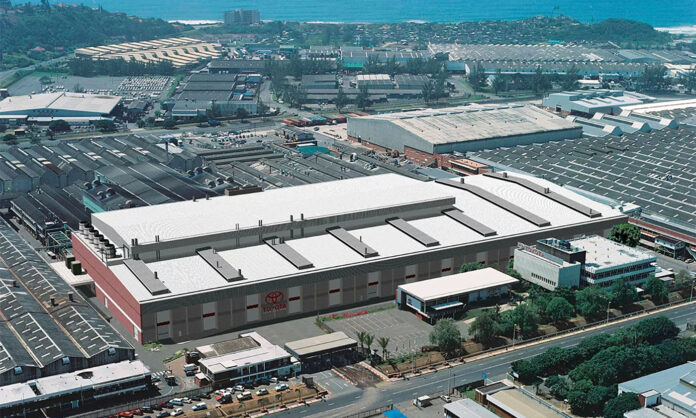
Toyota South Africa’s R10.4 billion investment programme, under way at its Prospecton manufacturing plant in KwaZulu-Natal, is supporting production of the next-generation Hilux. About a third of the programme is strengthening local suppliers and tooling, with supplier companies also committing additional investment.
Chery has confirmed its acquisition of Nissan South Africa’s manufacturing facility in Rosslyn, Pretoria, where it plans to establish its African manufacturing, export and research hub. Vehicle production is expected to start from mid-2027.
These are not simply corporate announcements. They are long-term investment decisions.
Manufacturing remains one of the fastest ways to create sustainable employment, develop supplier industries, expand exports and generate long-term economic growth.
Companies do not commit billions because they admire political speeches. They commit capital because they believe opportunity outweighs risk.
That should encourage every South African. But it should also make us uncomfortable.
The real question is not why Toyota and Chery are investing. It is why some businesses continue expanding while others scale back, restructure or leave.
The answer tells us almost everything we need to know about South Africa’s economy.
The country has never lacked potential. What it has too often lacked is consistent execution.
We possess sophisticated financial markets. World-class engineering expertise. Established manufacturing capability. Abundant natural resources. Entrepreneurial talent. Access to African and international markets. Few emerging economies can match that combination. Yet major investment announcements make headlines. They should be ordinary.
Businesses weigh opportunity against risk. South Africa offers enormous opportunity but opportunity alone is no longer enough. Investors also assess whether electricity is reliable, ports function efficiently, freight rail can move exports, municipalities deliver basic services, regulations are predictable, contracts are respected and government institutions work. These are not political questions. They are commercial ones.
Governance failures are no longer simply administrative problems. They have become economic constraints.
The continuing challenges in Johannesburg are only the most visible example. Investors do not distinguish neatly between municipal dysfunction and national competitiveness. Every governance failure, every infrastructure breakdown and every failure of accountability quietly increases the perceived cost of doing business in South Africa.
Government often celebrates every major investment announcement. It should but celebration is not economic policy. Creating the conditions that make investment routine — that is economic policy.
Investment is not a reward for good intentions. It is the consequence of good decisions.
Investors are remarkably patient with global uncertainty. They are far less patient with avoidable domestic failure.
That is why this week’s announcements matter. They demonstrate that South Africa remains capable of attracting world-class investment despite its structural weaknesses.
Imagine what would happen if the weaknesses were removed. Imagine ports that consistently ranked among the world’s most efficient. Imagine freight rail supporting exporters instead of constraining them. Imagine municipalities delivering dependable services. Imagine infrastructure projects completed on time and within budget. Imagine visible accountability when public institutions fail.
Government should ask a simple question after every major investment announcement: What convinced the company to choose South Africa? Then ask a more important one: How do we create those same conditions for many more investors?
South Africa does not need to reinvent its economy. It needs to make its economy work better.
The world has shown that it believes South Africa can succeed. Toyota and Chery have reminded us of that. The only remaining question is whether we are prepared to remove the obstacles that hold us back.
Vav Doesburgh is head of economics at CPUT, CEO of Economics Investment Group and a regular commentator on South Africa’s economic landscape, focusing on financial markets, policy and business strategy. vandoesburghm@cput.ac.za
- Despite governance failures and infrastructure issues, Toyota and Chery are committing billions of rand to invest in South Africa’s automotive manufacturing sector.
- Toyota South Africa is investing R10.4 billion at its KwaZulu-Natal plant for next-gen Hilux production, including enhancing local suppliers.
- Chery has acquired Nissan’s Rosslyn plant to establish an African manufacturing and export hub, starting vehicle production by mid-2027.
- These investments signal belief in South Africa’s economic potential, but highlight the need to address systemic challenges like unreliable electricity, municipal failures, and inefficient transport infrastructure.
- Sustainable growth requires consistent execution and improved governance to create conditions that make investment routine rather than exceptional.


