


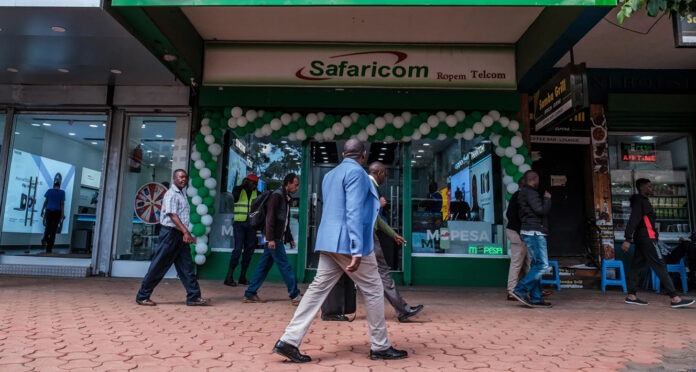
South Africa-headquartered Vodacom is entering its biggest strategic reset in decades after taking control of Safaricom, the Kenyan telecommunications giant behind one of Africa’s most successful mobile money platforms, M-PESA.
Beyond simply expanding its footprint, the acquisition is reshaping the size, earnings profile, and long-term growth strategy of one of Africa’s largest telecommunications groups.
The shift follows the completion of Vodacom’s acquisition of an additional effective 20% stake in Safaricom on June 30, lifting its shareholding to 55% and giving it control of Kenya’s largest mobile network operator, which served more than 62 million customers at the end of 2025.
Analysts say the significance of the transaction extends well beyond ownership. The acquisition represents a fundamental shift in Vodacom’s business, transforming Safaricom from a strategic investment into one of the group’s principal growth engines while reshaping its scale, diversification and earnings profile.
“The deal is not only about ownership. It also changes how Safaricom appears in Vodacom’s books,” according to financial researcher Adriano Joshua.
“With control moving to Vodacom, Safaricom will shift from being treated as an associate to being fully consolidated under IFRS (International Financial Reporting Standards). That means Vodacom will now report Safaricom’s revenue, Ebitda, assets and liabilities inside its group numbers, rather than only recognising its share of profit.”
Joshua argues the accounting change materially alters Vodacom’s financial profile. “Vodacom reported Ebitda of about R63 billion ($3.8-billion) in FY2026, while Safaricom reported Ebitda of about R29 billion ($1.7-billion). Consolidation does not just add a Kenyan asset to Vodacom’s portfolio; it materially changes the size and profile of Vodacom as a reported group.”
Apart from its telecommunications business, Safaricom owns M-PESA, the fintech platform that processes more than 100 million transactions every day and has become the benchmark for mobile money across Africa.
Safaricom’s latest fintech push is also expanding the strategic value of M-PESA.
In April 2026, the company began rolling out My OneApp, a unified platform that combines the MySafaricom app and the M-PESA Super App into a single AI-driven ecosystem. The app allows customers to buy airtime and data, send money, pay bills, access investments, and use personalised financial services from one platform.
New features include AI Pay, which automatically extracts payment details from scanned receipts, and an upgraded conversational AI assistant, Zuri, designed to respond naturally to customer requests. The platform also introduces AI-powered personalisation that recommends bundles, merchants, and financial services based on customer behaviour, location, and usage patterns.
“What we have been doing over the last few years is bringing the two apps together,” said Peter Gichangi, head of Super Apps at Safaricom Financial Services, describing a project that had been in development for four to five years.
With the new deal, Safaricom’s revenue, earnings, assets and liabilities will now be fully consolidated into Vodacom’s financial statements, making future comparisons increasingly dependent on separating underlying business performance from the accounting impact of consolidation.
The acquisition is also accelerating Vodacom’s shift beyond traditional mobile connectivity.
The enlarged group now oversees one of the world’s largest mobile money ecosystems.
Across Vodacom’s operations, anchored by Safaricom’s M-PESA business, mobile money platforms processed nearly $548-billion in transaction value over the 12 months to June 30, a 19.1% increase year on year, underscoring the growing importance of digital financial services to the group’s future.
The impact was immediate. The acquisition prompted Vodacom to increase its Vision 2030 revenue ambition by R100-billion, lifting the target from more than R200-billion to over R300-billion, while simultaneously upgrading its medium-term Ebitda and operating free cash flow growth targets from double-digit to early-teens growth.
“We are now entering a new phase of growth, supported by a more balanced portfolio, broader earnings drivers and increased exposure to some of Africa’s most attractive opportunities in connectivity, digital services and financial inclusion,” Vodacom Group chief executive Shameel Joosub said on July 27.
The strategic shift is already evident across the group’s operations.
While South Africa remains Vodacom’s cash-generative core business, an increasing share of growth is coming from faster-growing markets and digital services.
Egypt remained its fastest-growing operation, with service revenue increasing 32.8% in local currency and financial services revenue surging 73%, while the international business delivered 14% normalised service revenue growth, driven by Tanzania, the Democratic Republic of Congo and Lesotho. – Bird Story Agency
- Vodacom increased its stake in Safaricom to 55%, gaining control of Kenya's largest mobile network operator with over 62 million customers and transforming Safaricom into a principal growth driver.
- The acquisition shifts Safaricom from an associate to full consolidation under IFRS, significantly altering Vodacom’s reported revenue, EBITDA, assets, and liabilities.
- Safaricom's M-PESA fintech platform processes over 100 million daily transactions and recently launched My OneApp, an AI-driven unified app combining telecom and financial services with features like AI Pay and personalized recommendations.
- Vodacom’s mobile money ecosystem handled nearly $548 billion in transactions over 12 months, boosting the group's digital financial service importance and prompting an increase in its Vision 2030 revenue target from R200 billion to over R300 billion.
- Vodacom’s growth is increasingly driven by faster-growing digital services and international markets such as Egypt, Tanzania, DRC, and Lesotho, with expanding revenues and financial services performance.


