


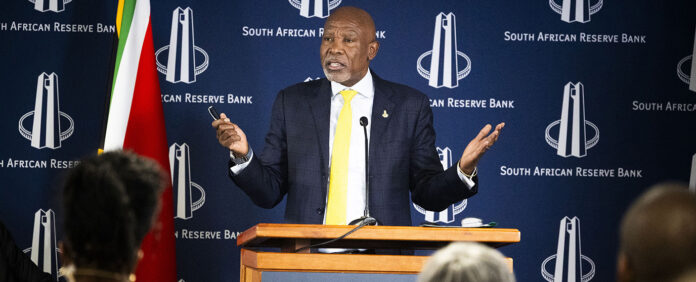
South Africans are set to face higher debt repayments after the South African Reserve Bank (SARB) increased the repo rate by 25 basis points to 7%, with effect from Friday.
This comes as rising global oil prices and heightened geopolitical tensions add pressure to the inflation outlook due to the ongoing US-Iran conflict, which has pushed global oil prices to around $100 per barrel.
Divided MPC vote
Lesetja Kganyago, SARB governor, said the decision followed a divided vote within the Monetary Policy Committee (MPC), with four members supporting the rate hike while the other two preferred to keep the rate unchanged.
“Since our last meeting, hopes for a quick end to the Middle East crisis have faded. The Strait of Hormuz is still largely closed. Oil prices have fluctuated around 100 dollars per barrel. In this context, global growth forecasts have been marked down, while inflation forecasts have been revised higher,” said Kganyago.
He stated that the Reserve Bank has also revised down its domestic growth outlook, saying the combination of global uncertainty and weaker consumer spending will weigh on the economy.
Prior to the shock, he said, the economy appeared to be picking up pace as most of the data showed positive signs. However, he said the country is now facing a difficult mix of greater global uncertainty and lower disposable income, which is likely to reduce both investment and household spending, which he noted as the main drivers of the economy.
Additional pressure has come from recent flooding in parts of the country, which has caused localised economic damage and highlighted longer-term climate risks.
Sharp increase in consumer prices
On inflation, the SARB noted a sharp increase in consumer prices, driven largely by higher fuel costs.
He said inflation increased to 4% in April from 3.1%, mainly driven by higher energy costs. Fuel prices, after dropping by 8.7% in March, surged by 11.4%, marking one of the biggest increases on record.
Services inflation also climbed to 4.6%, well above the 3% target, reflecting higher transport costs as well as pressures in sectors like insurance and financial services.
“Looking forward, we have raised our oil price assumptions. In addition, we see renewed pressure on food prices, with the agricultural sector facing higher costs for both diesel and fertiliser. Our forecast now has headline inflation averaging 4.4% this year and 3.7% next year, before returning to the 3% target in 2028. Core inflation is also higher, peaking early next year.
“These projections entail some second-round effects, as the shock broadens out into wages and inflation expectations. At this stage, we do not have clear confirmation of these effects in data. New results from our main survey of inflation expectations will only be available next month. However, market indicators and analyst expectations are edging higher. Given the forecasts, we see upside risk to inflation,” said Kganyago.
- The South African Reserve Bank (SARB) raised the repo rate by 25 basis points to 7% amid rising inflation and economic uncertainty.
- Global oil prices near $100 per barrel due to the US-Iran conflict and Strait of Hormuz closure, escalating inflation pressures.
- Domestic economic growth outlook has been downgraded because of global uncertainty, weaker consumer spending, and recent flooding impacts.
- Inflation rose sharply to 4% in April, driven mainly by surging fuel prices (up 11.4%) and increased costs in services like transport and insurance.
- SARB forecasts headline inflation averaging 4.4% this year and 3.7% next year with risks of inflation broadening into wages and expectations, possibly elevating future inflation further.


