


South Africa does not control the oil price. It does not control global shipping costs or geopolitical shocks. But it can control how vulnerable its economy is when the next shock arrives.
That, rather than the latest petrol-price increase, is the bigger economic story.
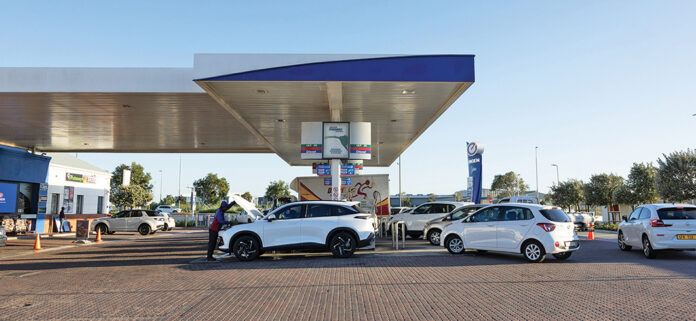
From this past Wednesday, petrol increased by R1.34 a litre, while diesel rose by between R2.94 and R3.15 a litre, depending on the grade.
The full economic cost will extend far beyond the price at the pump. This is where a basic economic concept – the multiplier effect – becomes important.
Put simply, an economic shock does not remain confined to where it starts. It travels through the economy.
A truck costs more to operate. That raises the cost of transporting food. Farmers pay more for diesel. Manufacturers pay more to move raw materials and finished products. Construction companies pay more to move equipment. Eventually, consumers pay more.
But then the second part of the multiplier kicks in.
The consumer has less money available for everything else. The restaurant sells less. The retailer loses business. Small businesses face higher costs while demand weakens. Investment decisions are postponed. Hiring becomes harder to justify.
A shock that began with the international price of oil has become a domestic growth problem. That is the multiplier working in reverse.
South Africa is entering this shock from a position of weak growth. Our vulnerability to external shocks makes it even more urgent to get the economy growing and creating jobs.
A growing economy has greater capacity to absorb rising costs. Businesses are expanding, investment is flowing and household incomes are rising. A stagnant economy has little room for manoeuvre. The numbers show the scale of the initial shock.
The Centre for Research on Energy and Clean Air estimates that South African fossil-fuel importers incurred an additional R56.3-billion in costs between March and August compared with what pre-conflict futures markets had anticipated.
That does not mean South Africa lost R56.3-billion in GDP. It means substantially more had to be paid for imported energy.
The R56-billion is only the beginning. Higher fuel costs feed into transport and production costs. The costs put pressure on prices, complicating the Reserve Bank’s next policy decision.
If inflation becomes more persistent, interest rates may have to remain higher for longer.
That matters for an economy desperately needing investment. Higher borrowing costs discourage consumers from spending and businesses from investing. Higher fuel costs squeeze margins, while weaker demand reduces sales.
Lower investment means less productive capacity – and fewer opportunities to create jobs.
The warning signs are there.
South Africa’s manufacturing sector is contracting, while business activity is falling sharply.
The August Absa Purchasing Managers’ Index fell to 45.8, its fourth-consecutive monthly decline, while the business activity index dropped to 40.2.
In simple terms, production is falling and businesses are doing less business. At a time when South Africa desperately needs the opposite: more production, more investment and more economic activity.
The fuel shock is, therefore, arriving at the wrong time.
This is about more than another cost-of-living increase. It exposes a deeper structural weakness. South Africa remains exposed to international energy prices, movements in the rand, global interest rates and commodity markets. When oil prices rise, our import bill increases. When the rand weakens, imported fuel becomes more expensive. When both happen together, the shock is amplified.
The question should be how we make South Africa less vulnerable to the next shock. That requires structural reform.
Energy security is critical. Reliable electricity and diversified energy supplies can reduce our dependence on imported energy.
Logistics efficiency is crucial. Efficient ports, functioning rail and better roads reduce the cost of moving goods and can soften the impact of higher fuel prices.
Investment matters most of all. We need an environment where businesses have the confidence to build factories, expand operations, invest in technology and employ people.
The answer to a supply shock should not be to make the economy smaller. It should be to make the economy more productive.
The next shock will come. We might know where or when. But we can decide whether it hits an economy struggling to grow – or one growing strongly enough to absorb it.
• Van Doesburgh is an economist and a regular commentator and business consultant on South Africa’s economic landscape, focusing on financial markets, policy, and business strategy. vandoesburghm@cput.ac.za
- From Wednesday, petrol in South Africa increased by R1.34 a litre, while diesel rose between R2.94 and R3.15 a litre depending on grade.
- South African fossil-fuel importers incurred an additional R56.3-billion in costs between March and August compared with pre-conflict futures market expectations.
- The August Absa Purchasing Managers’ Index showed manufacturing contraction with a decline to 45.8 and business activity index falling to 40.2.
- Higher fuel costs increase transport and production expenses, potentially prolonging inflation and leading to sustained higher interest rates.
- Structural reforms focusing on energy security, logistics efficiency, and investment are essential to reduce South Africa's vulnerability to external shocks.


