
Slow growth and disputed ownership figures expose cracks in transformation

Nedbank chief operating officer Mfundo Nkuhlu has challenged South Africa to move beyond compliance-driven transformation, warning that without economic growth, transformation risks becoming a mere process of transfer of resources.

Speaking at the Nedbank Top Empowerment Conference on Wednesday, Nkuhlu placed the spotlight on the need for transformation that is inclusive, investable and impactful, not just on paper, but in people’s daily lives.

Weak growth and rising unemployment

Nkuhlu argued that South Africa’s current economic path is failing to deliver meaningful change, highlighting the weak growth and rising unemployment as clear signs that the status quo is not working.


“Clearly, the economy has persistently performed below its potential, growing at an average rate of 1,1% over the last decade and below the population growth rate of roughly 1,25%,” he said.

“It is patently obvious that the current trajectory does not fulfill the aspirations of inclusive growth and does not alter the existing patterns of concentration of ownership of wealth and distribution of opportunities,” he added.

Nkuhlu stressed that transformation must be rooted in real economic impact – driving investment, creating jobs and expanding opportunity.

Nkuhlu also highlighted ongoing structural reforms under Operation Vulindlela, which target key constraints such as energy, logistics, water, telecommunications and the visa regime. He said further reforms are now focusing on local government and digital transformation.

True impact of empowerment policies

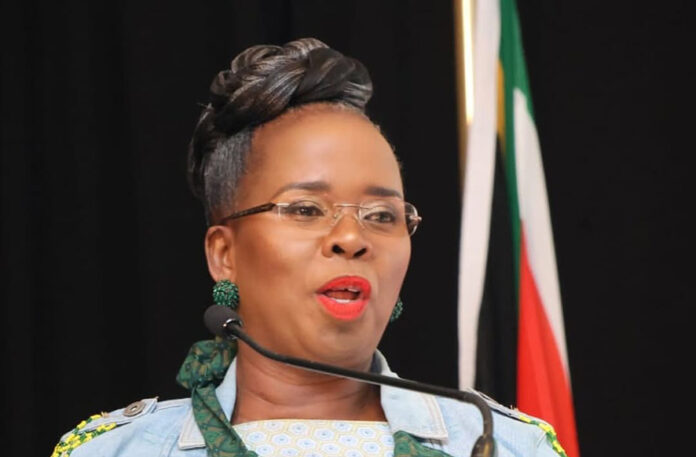
Nomakhosazana Meth, Minister of Employment and Labour, noted that recent research by economist Duma Gqubule on black ownership on the JSE, which she said raised concerns about the true impact of empowerment policies.

She said the study is one of the most detailed reviews of the past 30 years of democracy, based on company annual reports rather than BEE certificates.

It shows that black ownership in the 60 largest listed companies was valued at R255-billion by December 2024, this equals 6.9% of the assets held by those companies and just 1.5% of their total market value. She said this is far below the official estimate of about 29% reported by the B-BBEE Commission.

“That gap, between 6.9% and 29%, is not a rounding difference. Gqubule himself describes it as a ‘voodoo system of accounting’ – a system in which companies continue to count black shareholders long after those shareholders have sold their stakes, in which debt-funded ownership structures prevent any genuine transfer of wealth, and in which empowerment certificate record transactions that, on closer inspection, transferred no real value at all,” said Meth.

Meth said if transformation is to be meaningful, ownership deals must genuinely transfer value and expand participation among historically disadvantaged black South Africans.

She said empowerment should not fade over time but must continue to grow the number of beneficiaries, creating lasting value, productive assets and wealth that can be passed on to future generations.

Visit SW YouTube Channel for our video content

  • Nedbank chief operating officer Mfundo Nkuhlu has challenged South Africa to move beyond compliance-driven transformation, warning that without economic growth, transformation risks becoming a mere process of transfer of resources.
  • Speaking at the Nedbank Top Empowerment Conference on Wednesday, Nkuhlu placed the spotlight on the need for transformation that is inclusive, investable and impactful, not just on paper, but in people’s daily lives.
  • Weak growth and rising unemployment Nkuhlu argued that South Africa’s current economic path is failing to deliver meaningful change, highlighting the weak growth and rising unemployment as clear signs that the status quo is not working.

  • “Clearly, the economy has persistently performed below its potential, growing at an average rate of 1,1% over the last decade and below the population growth rate of roughly 1,25%,” he said.
  • “It is patently obvious that the current trajectory does not fulfill the aspirations of inclusive growth and does not alter the existing patterns of concentration of ownership of wealth and distribution of opportunities,” he added.
🎧 Listen to this article

Nedbank chief operating officer Mfundo Nkuhlu has challenged South Africa to move beyond compliance-driven transformation, warning that without economic growth, transformation risks becoming a mere process of transfer of resources.

Speaking at the Nedbank Top Empowerment Conference on Wednesday, Nkuhlu placed the spotlight on the need for transformation that is inclusive, investable and impactful, not just on paper, but in people’s daily lives.

Nkuhlu argued that South Africa’s current economic path is failing to deliver meaningful change, highlighting the weak growth and rising unemployment as clear signs that the status quo is not working.

“Clearly, the economy has persistently performed below its potential, growing at an average rate of 1,1% over the last decade and below the population growth rate of roughly 1,25%,” he said.

“It is patently obvious that the current trajectory does not fulfill the aspirations of inclusive growth and does not alter the existing patterns of concentration of ownership of wealth and distribution of opportunities,” he added.

Nkuhlu stressed that transformation must be rooted in real economic impact – driving investment, creating jobs and expanding opportunity.

Nkuhlu also highlighted ongoing structural reforms under Operation Vulindlela, which target key constraints such as energy, logistics, water, telecommunications and the visa regime. He said further reforms are now focusing on local government and digital transformation.

Nomakhosazana Meth, Minister of Employment and Labour, noted that recent research by economist Duma Gqubule on black ownership on the JSE, which she said raised concerns about the true impact of empowerment policies.

She said the study is one of the most detailed reviews of the past 30 years of democracy, based on company annual reports rather than BEE certificates.

It shows that black ownership in the 60 largest listed companies was valued at R255-billion by December 2024, this equals 6.9% of the assets held by those companies and just 1.5% of their total market value. She said this is far below the official estimate of about 29% reported by the B-BBEE Commission.

That gap, between 6.9% and 29%, is not a rounding difference. Gqubule himself describes it as a ‘voodoo system of accounting’ – a system in which companies continue to count black shareholders long after those shareholders have sold their stakes, in which debt-funded ownership structures prevent any genuine transfer of wealth, and in which empowerment certificate record transactions that, on closer inspection, transferred no real value at all,” said Meth.

Meth said if transformation is to be meaningful, ownership deals must genuinely transfer value and expand participation among historically disadvantaged black South Africans.

She said empowerment should not fade over time but must continue to grow the number of beneficiaries, creating lasting value, productive assets and wealth that can be passed on to future generations.

Visit SW YouTube Channel for our video content

Subscribe
Notify of

This site uses Akismet to reduce spam. Learn how your comment data is processed.

0 Comments
Oldest
Newest Most Voted
Inline Feedbacks
View all comments