


Government cannot build prosperity on borrowed money alone
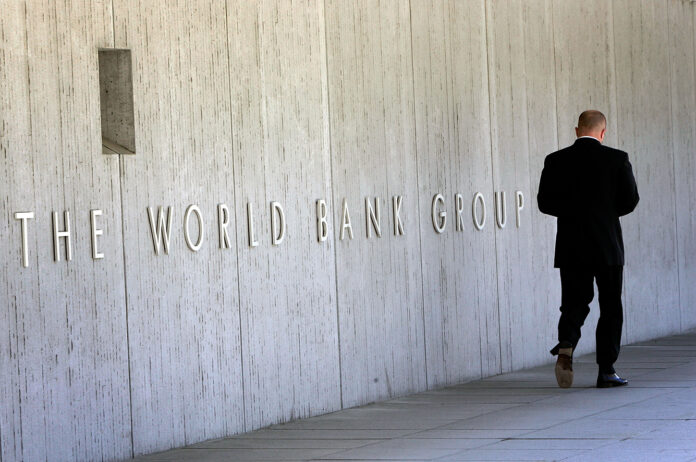
This week, South Africa welcomed the announcement of substantial World Bank financing for long-overdue infrastructure development. The announcement was widely welcomed.
But before we celebrate another major borrowing programme, perhaps we should ask a more important question. Is borrowing really the best way to build South Africa’s future?
There is no doubt that the country needs better roads, reliable electricity, efficient railways, modern ports and upgraded water infrastructure. Years of underinvestment have constrained growth, reduced competitiveness and discouraged investment.
Infrastructure is not the debate. How we finance it is. Every loan eventually has to be repaid.
South Africa’s public debt has risen sharply over the past decade, while debt-service costs have become one of the fastest-growing items in the national budget. Every year, government spends hundreds of billions of rand servicing debt.
That money cannot simultaneously be invested in infrastructure, education, healthcare or public safety.
Interest payments may be unavoidable, but they do not generate electricity, do not move freight, expand productive capacity or create economic growth. Debt itself is not the problem.
Borrowing to finance productive infrastructure can make sound economic sense—provided that infrastructure is delivered on time, managed efficiently and ultimately generates the growth needed to repay the debt.
Unfortunately, South Africa has too often experienced the opposite.
Projects are delayed, costs escalate, maintenance is neglected and infrastructure deteriorates.
The debt remains. The growth never arrives.
That should force us to ask a far bigger question: why has government borrowing become our default solution?
South Africa does not have a shortage of capital; it has a shortage of confidence.
Our pension funds manage trillions of rand. Our banks remain well capitalised. Institutional investors, insurers and private companies have both the capital and the appetite to invest. What they need is confidence that projects will be professionally managed, contracts honoured, regulation kept predictable and public institutions capable of delivery.
Around the world, governments increasingly deliver major infrastructure through well-structured public-private partnerships. Government protects the public interest and provides strategic oversight. The private sector contributes capital, technical expertise, project management and operational efficiency.
When properly designed, these partnerships reduce pressure on public finances while accelerating delivery and improving accountability.
South Africa should be leading this approach—not lagging behind it.
We should be asking how every rand of public money can unlock several rand of private investment, rather than assuming government must carry the financial burden alone.
Imagine if substantially more investment flowed into electricity generation, freight rail, ports, logistics, water infrastructure and digital networks through genuine partnerships between government and the private sector.
Government would borrow less. Debt-service costs would grow more slowly. Infrastructure delivery would accelerate. Businesses would become more competitive. Economic growth would strengthen.
This is not about privatisation for its own sake. It is about recognising that government’s greatest responsibility is not always to finance, own and operate every productive asset. Its responsibility is to create the conditions in which investment can flourish.
This week’s Monetary Policy Committee decision illustrates why this matters.
The South African Reserve Bank kept interest rates unchanged, providing welcome relief to households and businesses already under financial pressure. Yet the rand weakened as investors adjusted their portfolios in response to global market conditions.
The lesson is clear: monetary policy cannot solve South Africa’s structural economic problems.
Interest rates cannot modernise ports, fix freight rail, produce electricity, or restore investor confidence. Those are the responsibilities of economic leadership.
At the same time, higher oil prices and renewed global trade tensions remind us how quickly external events can place additional pressure on an already fragile economy.
We cannot control those global events. We can control the investment environment we create at home.
That means policy certainty. Capable institutions. Efficient project execution, and genuine partnerships with private investors.
South Africa’s prosperity will not ultimately be determined by how much government can borrow. It will be determined by how much investment government can unlock.
We do not need a bigger debt burden. We need a bigger economy.
Government cannot build lasting prosperity on borrowed money alone. Its greatest responsibility is to create an environment where businesses are willing to invest, entrepreneurs are willing to expand, and infrastructure is delivered efficiently and accountably.
Sustainable economic growth has never been built on debt. It has always been built on investment, productivity and confidence.
• Van Doesburgh is Head of Economics at CPUT and a regular commentator and business consultant the economic landscape, focusing on financial markets, policy, and business strategy. vandoesburghm@cput.ac.za
- South Africa requires substantial infrastructure improvements but financing through borrowing has led to rising public debt and high debt-service costs that limit spending on critical services.
- Productive infrastructure investment via borrowing can be beneficial if projects are efficiently managed and generate economic growth, but South Africa often faces delays, cost overruns, and poor maintenance.
- The root issue is a lack of investor confidence, not capital; South Africa’s well-capitalized financial institutions and private sector investors need assured governance, consistent regulation, and capable public institutions.
- Public-private partnerships offer a promising solution by leveraging private capital, expertise, and efficiency to reduce public financial burden and accelerate infrastructure delivery.
- Sustainable prosperity depends on creating an investment-friendly environment with policy certainty and effective public-private collaboration, rather than increasing government borrowing.


