


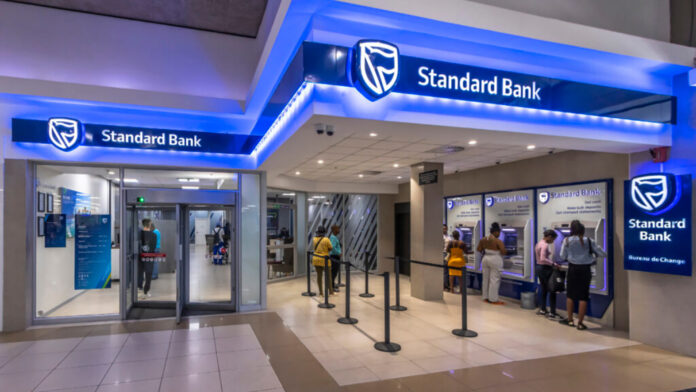
Business transactions and cross-border payments between China and Africa are becoming more simplified after banking giant Standard Bank became the first financial institution on the continent authorised to clear payments in renminbi, the Chinese currency.
The authorisation was granted by the People’s Bank of China, and the new role, which Standard Bank will operate jointly with the Industrial and Commercial Bank of China (ICBC), clears the way for easier international transactions, lowering costs.
African companies doing business in China will benefit from faster payment and cost-effective payments, Standard Bank said.
The move also grants Standard Bank direct access to China’s domestic financial system, including its capital markets, liquidity and payment infrastructure, allowing clients to settle renminbi transactions more efficiently.
Standard Bank and the ICBC – which has a 20% stake in Africa’s largest lender by assets – will operate jointly as the “Renminbi Clearing Bank of Africa”, with operational capacity to clear renminbi in 19 African countries, the bank said.
In November, the bank also became the first on the continent to be authorised to participate in China’s Cross-Border Interbank Payment System (CIPS), which enables interbank payments between Africa and China using the Chinese currency as the
underpinning currency.
Richard de Roos, Standard Bank’s head of operations for corporate and investment banking, said the milestone strengthens the bank’s position in supporting growing trade between Africa and China.
“We are immensely proud to be the first African bank to be granted clearing status. This status speaks to our purpose of promoting the continent’s growth and meeting our clients where they need us most.
“Payments are at the heart of every banking relationship, and we are at the forefront of the payments evolution. This new service will provide our clients with transparent, efficient and cost-effective payments solutions between China and Africa, supporting trade and investment between the world’s most dynamic economies.”
The announcement comes as trade between Africa and Asia continues to grow. According to the latest Standard Bank Africa Trade Barometer, Asian countries are now the preferred trading partners for an average of 35% of businesses surveyed across 10 African markets, up from 24% in 2024.
China remains the leading source of imported goods and production inputs, with 67% of surveyed businesses citing competitive pricing, product variety and reliable supply chains as the main reasons for sourcing from the country.
“China is Africa’s largest export market, and with a clearer status added to CIPS participation, Standard Bank is even better placed to support Africa’s trade with China. We expect demand for these services to continue to expand,” said De Roos.
Countries that form the BRICS partnership have for years been discussing de-dollarisation and how to trade with each other using local currencies.
- Standard Bank is the first African financial institution authorised by the People’s Bank of China to clear payments in renminbi, facilitating smoother China-Africa transactions.
- The bank, in partnership with Industrial and Commercial Bank of China (ICBC), will operate as the “Renminbi Clearing Bank of Africa,” clearing renminbi payments in 19 African countries.
- Authorization includes direct access to China’s domestic financial systems, enhancing efficiency and lowering costs for African businesses trading with China.
- Standard Bank was also authorized to participate in China’s Cross-Border Interbank Payment System (CIPS), supporting renminbi interbank payments between Africa and China.
- This development strengthens trade ties amid growing Asia-Africa trade, with China remaining Africa’s largest import market and preferred trade partner for many African businesses.


