


I have written repeatedly about the increasingly difficult economic environment facing South Africa, its businesses and its households.
As we approach the final quarter of 2026, the pressures are becoming concentrated: higher global interest rates, rising fuel costs, weak domestic growth and an unemployment crisis that remains severe.
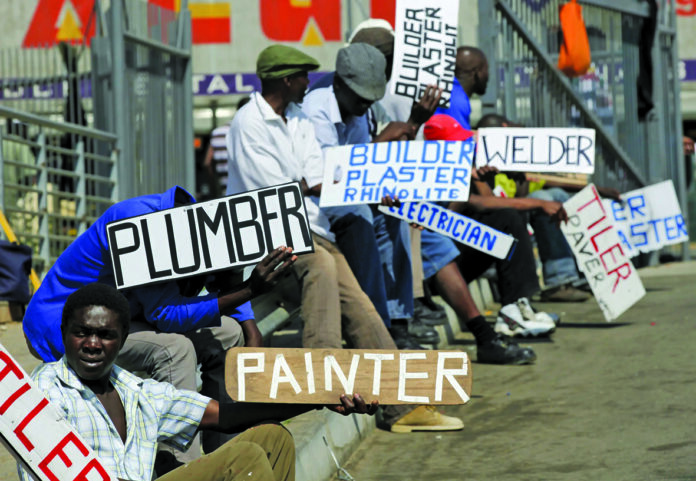
Perhaps the most telling number is not the official unemployment rate. It is 46.3%.
Statistics SA reports that the composite measure of labour underutilisation remained at 46.3% in the second quarter of 2026. The official unemployment rate increased to 33.6%, with 8.5 million people unemployed, while employment declined by 16 000.
The GDP numbers tell a similar story. The economy contracted by 0.2% in the second quarter, after growth of 0.4% in the first quarter. Manufacturing contracted by 1.8% and mining by 3.0%. This is the economic starting point for the final quarter.
Consider what is happening in the United States and Japan.
The US Federal Reserve has raised its policy rate to 3.75%-4%, and the Bank of Japan has lifted its benchmark rate to 1.25%.
But monetary policy cannot be viewed in isolation from the structure and condition of the economy in which it operates.
The US is dealing with a 4.1% unemployment rate and a stronger productive base. South Africa is dealing with large-scale underutilisation of labour and economic capacity.
Interest-rate increases are designed to restrain demand. Higher borrowing costs reduce household expenditure and make investment more expensive for businesses. Weaker consumption and investment reduce aggregate demand, putting downward pressure on output and GDP growth.
Weaker economic activity makes the creation of employment more difficult and can add to unemployment.
The recent acceleration in headline inflation has been driven mainly by higher fuel costs — a supply-side shock rather than an economy overheating because of excessive domestic demand. The South African Reserve Bank has identified higher fuel prices as the principal driver of the increase, while pointing to elevated services inflation and inflation expectations as risks.
This is why I have questioned the reliance on demand-side monetary policy measures when the primary inflationary pressure is originating on the supply side. The policy challenge is not simply to suppress demand.
It is to contain inflation while avoiding unnecessary damage to an economy that urgently requires stronger investment, production and employment. Higher interest rates cannot resolve the underlying constraints on productive capacity. They can, however, make the financing of new investment more expensive at the time when South Africa needs more capital formation.
September brought another sharp increase in fuel prices, with petrol rising by R1.29 a litre and diesel by almost R3 a litre, depending on the grade. For consumers and businesses, the combination of higher transport costs, expensive credit and weak economic activity creates a difficult operating environment.
The SARB policy rate is 7%, with the next Monetary Policy Committee decision scheduled for September 23. The SARB acknowledges that growth is weak and South Africa’s longer-term growth prospects depend on domestic reforms, including improvements in local government and energy productivity.
We should be careful about importing the monetary-policy response of larger economies.
South Africa’s central economic challenge is not a shortage of demand for rate-sensitive consumption. It is insufficient economic expansion and productive capacity. We need greater investment, faster infrastructure development, improved productivity, more effective network industries and an environment in which the private sector can expand its contribution to the economy.
Double-digit GDP growth is possible through a sustained expansion in investment, production and productive capacity, with energy and logistics efficiency and development leading the way.
South Africa has demonstrated that constraints can be shifted. Electricity availability has improved. Work is progressing on rail and port reform. Private-sector participation is becoming more important.
The task now is to build on the gains at a far greater scale. A larger, more productive economy creates the conditions for businesses to expand, investment to accelerate and millions more South Africans to enter meaningful employment.
The objective should not be to manage economic stagnation more effectively. It should be to make strong economic growth the national priority.
South Africa has the resources, markets, skills and productive potential to do far more.
The question is whether we will unlock the potential quickly enough.
• Van Doesburgh is an economist, head of economics at CPUT, CEO of Economics Investment Group and a regular commentator and business consultant on South Africa’s economic landscape, focusing on financial markets, policy, and business strategy. vandoesburghm@cput.ac.za
- South Africa's composite measure of labour underutilisation was 46.3% in Q2 2026, with an official unemployment rate of 33.6% and 8.5 million people unemployed.
- The South African economy contracted by 0.2% in Q2 2026, with manufacturing shrinking 1.8% and mining decreasing by 3.0%.
- Inflation acceleration in South Africa is primarily driven by supply-side shocks like higher fuel prices, with petrol rising by R1.29/litre and diesel by almost R3/litre in September 2026.
- The South African Reserve Bank's policy rate stands at 7%, and there are concerns that demand-side monetary policy might harm investment needed for economic growth.
- Sustainable economic growth in South Africa depends on domestic reforms improving local government, energy productivity, infrastructure, and private-sector participation.


