


After being taken to court by the rival company, TEFLA Group emerged victorious when Judge Sulet Potterill of the North Gauteng High Court in Pretoria dismissed an urgent bid by Working on Fire (WoF) to block the transfer of the contract.
The bone of contention that made WoF to approach the court is a fierce multibillion-rand battle for control of South Africa’s national wildfire fighting programme.
The ruling cleared the way for the Department of Forestry, Fisheries and the Environment to conclude a service-level agreement (SLA) with TEFLA, which emerged as the successful bidder after a court ordered the re-evaluation of the tender.
Environmental protection programmes
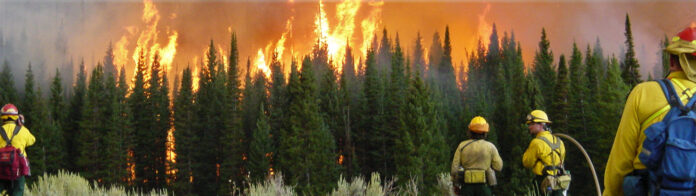
At stake is one of the government’s most important environmental protection programmes, responsible for wildfire suppression across all nine provinces, supporting thousands of Expanded Public Works Programme jobs and maintaining aerial fire-fighting capability during increasingly severe fire seasons.
The dispute traces its roots to a 2022 tender, for which WoF was awarded a five-year contract to run the programme.
Rival bidder TEFLA successfully challenged the award, resulting in a previous court ruling that set aside WoF’s contract and ordered the department to reconsider the bids. After the re-evaluation, TEFLA was declared the successful bidder.
Working on Fire returned to court, arguing that the department had effectively changed the rules after bids had closed by negotiating a two-year implementation model with TEFLA instead of the original five-year structure.
Potterill acknowledged that “the department re-awarded the tender, and TEFLA was determined to be the successful bidder. The department entered into negotiations with TEFLA and concluded an agreement for two years instead of the original five years.”
Tender period shortened
WoF contended before court that “the tender period awarded to TEFLA was shortened from a five-year contract to a two-year contract. This resulted in the award being arbitrary, as a decision on pricing was not solicited”.
However, the court found that WoF had failed to establish the legal requirements for an interim interdict.
In one of the judgment’s most significant findings, Potterill said: “WoF has no prima facie right as a bidder in terms of a tender, the court order or the award. The previous award of the tender to WoF was set aside because WoF was disqualified from the tender.”
Over the years, TEFLA has positioned itself as a major player in the services sector, providing solutions across multiple industries while growing its footprint in both public and private sector projects.
On Tuesday, TEFLA stated that it has welcomed the judgment, which the company stated that it was clearing the way for the finalisation of its appointment to the national WoF programme.
“The Court dismissed an urgent application seeking to interdict the Department of Forestry, Fisheries and the Environment (DFFE) from concluding a Service Level Agreement with TEFLA, confirming that there is no legal basis to delay implementation of the programme.
“With this ruling, TEFLA is now positioned to support one of South Africa’s most important environmental and disaster management initiatives, while building on its track record as a long-term delivery partner to government,” said TEFLA on the statement.
- TEFLA Group won a legal battle against Working on Fire (WoF), with the North Gauteng High Court dismissing WoF's attempt to block TEFLA's contract transfer for South Africa’s wildfire fighting programme.
- The dispute centers on a multibillion-rand contract for the national wildfire suppression program, critical for environmental protection and job creation across all nine provinces.
- TEFLA was declared the successful bidder after a court-ordered re-evaluation of the tender, overturning WoF’s original five-year contract awarded in 2022.
- WoF challenged the shortened two-year contract awarded to TEFLA instead of the original five years, but the court found WoF lacked a prima facie right and dismissed their urgent application.
- TEFLA welcomed the ruling, which enables the Department of Forestry, Fisheries and the Environment to finalize the service-level agreement, securing TEFLA's role in the national wildfire management program.


