


This past week delivered several important economic messages.
The US released softer inflation data, reducing concerns about another immediate increase in US interest rates. South Africa’s latest unemployment figures once again reminded us that far too many people remain outside the economy.
And President Donald Trump announced another round of tariffs as part of his continuing
effort to rebuild American manufacturing.
Different countries. Different economies. Yet all three stories point to one undeniable reality.
Manufacturing still matters.
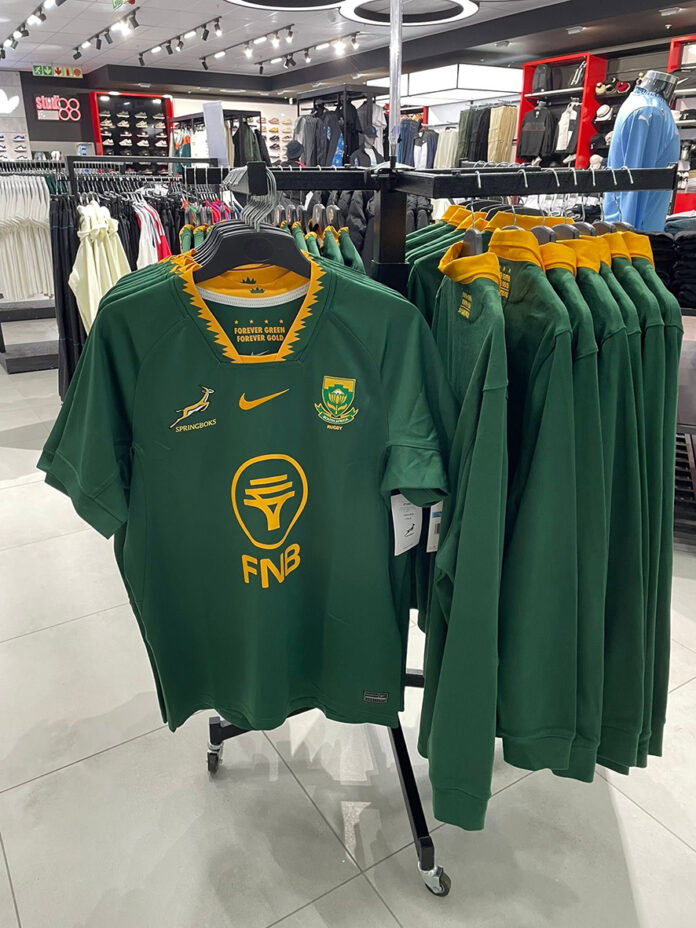
That thought crossed my mind while walking through a major South African retailer this week. I was looking at a range of officially licensed merchandise associated with one of our national sports teams. Caps. T-shirts and jerseys.
I picked one up and turned it over. Inside the label were three small words: Made in China. Those three words immediately raised a much bigger question.
Could that label not have read: Made in South Africa, through international collaboration and investment?
Before anyone misunderstands my point, let me be absolutely clear. This is not an argument against imports. Nor is it an argument against any particular country. Trade is essential. Competition is healthy. Consumers benefit from affordable, high-quality products.
Cheaper products benefit households, businesses and the broader economy. Imports are not the problem.
The question is whether South Africa is capturing enough of the value created by the
products we buy every day.
President Trump’s latest tariff announcements are built on a simple economic principle. Manufacturing creates jobs. The difference lies in the strategy. The US is attempting to rebuild manufacturing through tariffs.
South Africa should pursue a different model. We should rebuild manufacturing through investment.
Protectionism builds walls. Investment builds factories.
Because South Africa does not need to isolate itself from the global economy, we should not reject imports. Instead, we should be asking a different question. How do we encourage international companies to manufacture more products in South Africa? How do we attract more foreign direct investment?
How do we encourage joint ventures? How do we create partnerships that allow both international investors and South African businesses to share in the value created through
manufacturing?
Because manufacturing changes economies. Manufacturing creates jobs, develops skills, generates tax revenue and strengthens supply chains.
And when products are exported, manufacturing earns valuable foreign exchange.
South Africa already possesses many of the ingredients needed to become a far stronger manufacturing economy.
We have abundant natural resources, sophisticated capital markets, established industrial zones, world-class technical expertise and access to African and international markets. And perhaps most importantly, we have millions of South Africans who desperately need economic opportunities.
Yet too often, we continue exporting raw materials while importing finished products. Iron ore provides one of the clearest examples. We export the ore, but it is processed and refined elsewhere. The finished products are then sold into global markets at significantly higher values.
We export the raw material. Someone else captures the manufacturing jobs, captures the industrial development, and captures the value added.
This is not a criticism of international trade. It is simply a reminder that South Africa should participate more meaningfully in it. As I have argued in previous columns, South Africa’s long-term economic challenges cannot be solved through monetary policy alone.
Economic growth requires investment. Infrastructure. Industrial development. Public-private partnerships. Policy certainty, and an environment that encourages businesses to expand with confidence.
Which brings me back to our national sports brands.
These brands were built through decades of support, loyalty and emotional investment.
That raises an important question: should the custodians of our major national sporting brands and their commercial partners not at least explore whether more licensed products could be manufactured locally?
It is a conversation worth having. Imagine if every cap supported a South African textile worker. Imagine if every jersey supported a local factory. Imagine if every T-shirt helped create jobs in a South African manufacturing plant.
The economic benefits would extend far beyond a simple retail transaction.
South Africa does not need to choose between imports and local production. It needs to encourage collaboration.
Because every product labelled Made in South Africa represents far more than a manufacturing decision. It represents jobs. Skills. Investment. Tax revenue. Foreign exchange. And opportunity.
Perhaps it is time we started paying closer attention to the small labels hidden inside the products we buy. Because those labels tell us far more than where a product was made. They tell us where the economic benefits ended up.
• Van Doesburgh is an economist, head of economics at CPUT and a regular commentator on the economic landscape, focusing on financial markets, policy, and business strategy. vandoesburghm@cput.ac.za
- The US recently released softer inflation data, easing fears of another immediate interest rate hike, while South Africa's high unemployment rate remains a concern.
- President Donald Trump announced new tariffs aimed at rebuilding American manufacturing through protectionist measures.
- The author argues that South Africa should rebuild its manufacturing sector through investment and international collaboration, not protectionism.
- South Africa exports raw materials like iron ore but imports finished products, missing out on manufacturing jobs and added economic value.
- Increasing local manufacturing of products, such as licensed national sports merchandise, could create jobs, develop skills, and boost the economy.


