


Just days ago, global markets were breathing a collective sigh of relief.
The prospect of a ceasefire in the Middle East had lifted confidence. Crude oil prices retreated to their lowest levels in months. Investors began pricing in a more stable outlook.
There was cautious optimism that one of the world’s most dangerous geopolitical flashpoints was beginning to cool.
This week, the optimism was shaken.
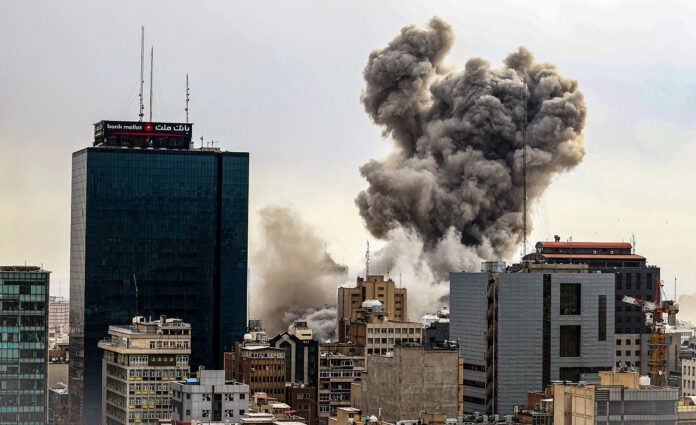
Hopes of a lasting ceasefire faded as fresh military strikes reignited tension across the region, sending crude oil prices climbing once again. It was another reminder that in today’s world, economic certainty can disappear overnight.
Before discussing markets, oil prices or inflation, however, we should remember that every conflict first brings an immeasurable human cost. There are no winners in war.
Yet, war also carries an economic cost that extends far beyond the battlefield.
Every missile launched in the Middle East eventually reaches consumers at the petrol pump. It reaches manufacturers through higher transport costs. It reaches supermarket shelves through more expensive food. It reaches businesses through rising operating costs and households through inflation that steadily erodes disposable income.
Higher energy costs slow global growth, place upward pressure on inflation and complicate monetary policy for central banks across the world. For South Africa, the risks are even greater.
As a net importer of crude oil and refined fuels, our economy is particularly vulnerable to global energy shocks. Every sustained increase in the oil price places upward pressure on inflation, weakens consumer spending and raises the cost of doing business.
Countries with weak economic growth, high unemployment and fragile public finances find themselves exposed.
Unfortunately, South Africa ticks too many of those boxes.
Over recent months, I have argued in these pages that South Africa cannot rely solely on demand-side policies to respond to supply-driven inflation. If higher oil prices once again become the primary driver of inflation, increasing interest rates cannot produce a single barrel of oil, reopen disrupted shipping routes or lower international fuel prices.
The greater lesson from this week’s events is therefore not simply about oil. It is about resilience. Countries with weak growth, deteriorating infrastructure and low investor confidence suffer far more when global conditions deteriorate.
South Africa cannot control events in the Middle East. We cannot determine the price of crude oil. We cannot influence global investor sentiment.
But we can control the strength of our own economy.
That is where our attention should be.
Sustainable growth requires an economy capable of withstanding external shocks through stronger infrastructure, greater competitiveness and higher levels of private investment.
Reliable electricity. Efficient freight rail. Modern ports. Professional municipalities. Policy certainty. A regulatory environment that encourages entrepreneurs rather than frustrates them.
The continuing governance challenges in Johannesburg remind us that economic resilience begins at home. When our largest economic hub struggles with deteriorating infrastructure, weak service delivery and financial instability, confidence is undermined long before any international crisis arrives.
That is a vulnerability entirely of our own making.
Every global crisis eventually passes. Another one inevitably follows.
South Africa cannot continue hoping that favourable global conditions will rescue an economy that remains structurally weak. We must build resilience before the next shock arrives. That means embracing investment. Accelerating infrastructure delivery. Expanding manufacturing. Supporting exporters. Partnering confidently with the private sector. Creating jobs through growth rather than merely managing decline.
The strongest economies are not those that never face storms. They are the ones that prepare long before the storm arrives. The world will always remain uncertain. South Africa cannot afford to be.
Our future prosperity will depend not on events beyond our borders but on the choices we make within them. Those choices require leadership, execution and accountability.
And above all, they require the courage to build an economy that is stronger than the next global crisis.
Because while we cannot choose the storms that confront the world, we can choose whether South Africa is ready for them.
• Van Doesburgh is head of economics at CPUT, CEO of Economics Investment Group and a regular commentator on South Africa’s economic landscape, focusing on financial markets, policy and business strategy. vandoesburghm@cput.ac.za
- Recent hopes for a Middle East ceasefire eased global market tensions and lowered oil prices, but renewed conflict raised prices and economic uncertainty again.
- War in the Middle East drives up global energy costs, which increase inflation, slow growth, and complicate monetary policy worldwide, with acute effects on import-dependent economies like South Africa.
- South Africa’s economy is particularly vulnerable due to high inflation, unemployment, weak growth, and fragile public finances, emphasizing that demand-side policies alone cannot address supply-driven inflation from oil price hikes.
- The article stresses the need for South Africa to build economic resilience through better infrastructure, policy certainty, private investment, and improved governance—especially in key hubs like Johannesburg.
- Sustainable growth and future prosperity depend on internal choices fostering a robust economy capable of withstanding global shocks, requiring leadership, accountability, and proactive investment rather than reliance on favorable external conditions.


