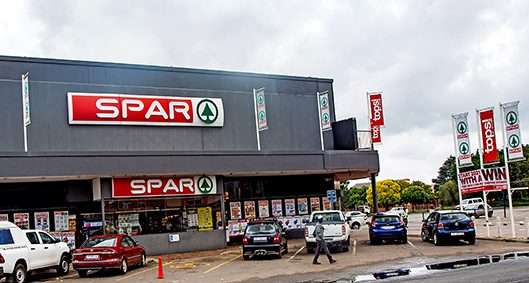
Retail giant Spar group says revenue from the grocery and liquor business in Southern Africa has remained subdued, dropping below the previous year.
The weaker performance was attributed to a challenging macroeconomic environment, the timing of Easter, reduced retailer activity amid concerns about possible looting following March to March protest action, and the weakening of Botswana pula against the rand.
READ: SPAR takes a hit as strained consumers tighten their purse strings
Credit losses surge following methodology review
The group recorded an increase in expected credit losses on its retailer debtors’ book following a review of its credit methology. Expected losses increased to R852-million from R405-million in the previous year, largely driven by the grocery and liquor business.
The review resulted in a once-off adjustment of about R100-million to general credit loss provisions, with SPAR saying the revised methodology would not be repeated.
“The Current period was challenging, particularly in Southern Africa. As indicated in the voluntary trading update published on SENS on 28 September 2026, the Group’s earnings for the Current period are below those for the 52 weeks ended 26 September 2025.
“The decrease largely arose in Southern Africa in H1 2026, due to increased Black Friday promotional investment and the underperformance of the KwaZulu-Natal distribution centre which weighed on earnings. Expected credit losses on the retailer debtors’ book also increased significantly following the once-off impact of a review of the Group’s credit methodology,” the group said.
READ: SPAR Group rocked by fresh boardroom exits
Rising fuel costs add pressure
Higher fuel costs continued to put pressure on the business, reporting that average diesel prices increased by 25% during the year and 50% in the second half, although route and logistics optimization limited the increase in Southern African diesel spending to 14%.
The group expects headline earnings per share from continuing operations to decline by between 40% and 45% on a restated basis, compared with the previous financial year. earnings per share from continuing operations are expected to drop by between 32% and 37%.
The group also made progress in reducing its debt, with Southern African net debt falling from R4.6-billion at the half-year to R3.2-billion at year-end.
- Spar group's grocery and liquor revenue in Southern Africa declined below the previous year due to macroeconomic challenges, Easter timing, reduced retailer activity, and the weakening of the Botswana pula against the rand.
- Expected credit losses on retailer debtors increased to R852 million from R405 million following a methodology review, resulting in a once-off R100 million adjustment to provisions.
- Earnings for the current period are below those of the previous year, impacted by increased Black Friday promotions, underperformance of the KwaZulu-Natal distribution centre, and higher credit losses.
- Average diesel prices rose by 25% during the year and 50% in the second half, with Southern African diesel spending increasing by 14% after route and logistics optimization.
- The group expects headline earnings per share to decline by 40% to 45%, and earnings per share from continuing operations to drop by 32% to 37%, while reducing Southern African net debt from R4.6 billion to R3.2 billion.