


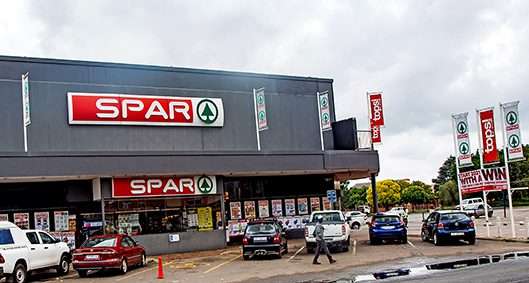
SPAR has warned that its financial performance for the year is expected to be under pressure as the Southern African business struggles with subdued consumer demand, weak wholesale volumes and rising credit losses among retailers.
The retailer said the pressure was concentrated in its Southern African groceries and liquor business, where operational improvements had not yet translated into sufficient earnings and cash benefits to offset the deterioration in trading conditions. As such, the 2026 financial year is expected to underperform the previous financial year.
“Management’s immediate priority is to improve profitability and cash generation in Southern Africa while maintaining appropriate levels of support for retailers,” the retailer said.
READ: Spar chairman Mike Bosman, deputy Shirley Zinn resign
Middle East conflict causes strain
This comes as consumers continue to face mounting pressure from higher living and borrowing costs, while the escalation of the Middle East conflict has added another layer of uncertainty to the economic environment through higher fuel and distribution costs.
South African Reserve Bank Governor Lesetja Kganyago said last week that the conflict has created a large persistent global supply shock. This as there is continued disruption to the oil flow through the Strait of Hormuz, adding inflationary pressures.
The central bank subsequently increased the inflation rate by 25 basis points to 7.25%. StatsSA also announced that inflation increased to 4.4%.
READ: Inflation rises to 4.4% as transport, housing costs keep consumers under pressure
The immediate concern for SPAR is the impact of a strained consumer on the retailers that form the backbone of its Southern African wholesale operation. The group said revenue growth remained modest for this region for the 48 weeks to August 28.
“Consumer sentiment and consequently wholesale revenue continued to be under pressure with higher fuel, utility costs and elevated interest rates,” the company said.
Measures to improve performance
The pressure comes despite a series of measures introduced by SPAR to improve its performance, including changes to pricing and merchandising, tighter promotional disciplines, improved distribution efficiency and efforts to improve the profitability of independent retailers.
The company said the earnings and cash benefits from these initiatives are expected to build progressively through FY2027. One of the clearest signs of pressure is the level of credit losses among SPAR’s retailers.
“Retailer expected credit losses (ECL), specific provisions and write-offs remained elevated in Southern Africa. At H1 FY2026, SPAR disclosed additional provisions in Southern Africa, mainly in the groceries and liquor business and this credit pressure continued after the interim period,” SPAR said.
The latest update also shows that SPAR is trying to reduce the cost of running its business while improving margins.
The group is tightening promotional spending, benchmarking distribution costs and fleet utilisation, and reviewing non-performing corporate stores, with a number expected to be closed or disposed of during 2026.
READ: Spar reports modest growth amid legal challenges
KZN remains a priority
In KwaZulu-Natal, where SPAR has faced operational and margin problems, the company said remediation work at its distribution centre had been completed and the temporary overflow facility had been exited, removing the additional lease cost.
SPAR is also attempting to strengthen its relationship with independent retailers, with executives and Guild representatives recently holding two days of discussions in
“Management has strengthened the operating plan and execution disciplines but expects the earnings and cash recovery to lag implementation,” SPAR said.
- SPAR expects its 2026 financial year to underperform due to subdued consumer demand, weak wholesale volumes, and rising credit losses in its Southern African business.
- Operational improvements in Southern Africa's groceries and liquor sector have not yet produced sufficient earnings or cash benefits to counteract deteriorating trading conditions.
- Increased living and borrowing costs, along with the Middle East conflict causing higher fuel and distribution costs, have strained consumer spending and wholesale revenue.
- SPAR has implemented measures including pricing changes, merchandising adjustments, tighter promotional disciplines, improved distribution efficiency, and efforts to boost retailer profitability, with benefits expected to build in FY2027.
- The company is reducing operational costs by tightening promotional spending, benchmarking distribution and fleet utilization, and reviewing non-performing corporate stores, with some stores planned for closure or disposal in 2026.
SPAR has warned that its financial performance for the year is expected to be under pressure as the Southern African business struggles with subdued consumer demand, weak wholesale volumes and rising credit losses among retailers.
The retailer said the pressure was concentrated in its Southern African groceries and liquor business, where operational improvements had not yet translated into sufficient earnings and cash benefits to offset the deterioration in trading conditions. As such, the 2026 financial year is expected to underperform the previous financial year.
“Management’s immediate priority is to improve profitability and cash generation in Southern Africa while maintaining appropriate levels of support for retailers,” the retailer said.
READ: Spar chairman Mike Bosman, deputy Shirley Zinn resign
This comes as consumers continue to face mounting pressure from higher living and borrowing costs, while the escalation of the Middle East conflict has added another layer of uncertainty to the economic environment through higher fuel and distribution costs.
South African Reserve Bank Governor Lesetja Kganyago said last week that the conflict has created a large persistent global supply shock. This as there is continued disruption to the oil flow through the Strait of Hormuz, adding inflationary pressures.
The central bank subsequently increased the inflation rate by 25 basis points to 7.25%. StatsSA also announced that inflation increased to 4.4%.
READ: Inflation rises to 4.4% as transport, housing costs keep consumers under pressure
The immediate concern for SPAR is the impact of a strained consumer on the retailers that form the backbone of its Southern African wholesale operation. The group said revenue growth remained modest for this region for the 48 weeks to August 28.
“Consumer sentiment and consequently wholesale revenue continued to be under pressure with higher fuel, utility costs and elevated interest rates,” the company said.
The pressure comes despite a series of measures introduced by SPAR to improve its performance, including changes to pricing and merchandising, tighter promotional disciplines, improved distribution efficiency and efforts to improve the profitability of independent retailers.
The company said the earnings and cash benefits from these initiatives are expected to build progressively through FY2027. One of the clearest signs of pressure is the level of credit losses among SPAR's retailers.
“Retailer expected credit losses (ECL), specific provisions and write-offs remained elevated in Southern Africa. At H1 FY2026, SPAR disclosed additional provisions in Southern Africa, mainly in the groceries and liquor business and this credit pressure continued after the interim period,” SPAR said.
The latest update also shows that SPAR is trying to reduce the cost of running its business while improving margins.
The group is tightening promotional spending, benchmarking distribution costs and fleet utilisation, and reviewing non-performing corporate stores, with a number expected to be closed or disposed of during 2026.
READ: Spar reports modest growth amid legal challenges
In KwaZulu-Natal, where SPAR has faced operational and margin problems, the company said remediation work at its distribution centre had been completed and the temporary overflow facility had been exited, removing the additional lease cost.
SPAR is also attempting to strengthen its relationship with independent retailers, with executives and Guild representatives recently holding two days of discussions in
“Management has strengthened the operating plan and execution disciplines but expects the earnings and cash recovery to lag implementation,” SPAR said.


