


The annual consumer inflation edged up to 4.4% in August from 4.3% in July, according to data released by Statistics SA on Wednesday.
The latest increase is due to persistent increases in transport, housing and financial services costs, even as overall prices remained unchanged from the previous month.
The latest Consumer Price Index (CPI) data point to an inflation environment that remains outside the South African Reserve Bank (SARB)’s target range but continues to squeeze households through elevated transport and administered costs. The Reserve Bank operates under a point inflation target of 3% with a tolerance band of one percentage point either side.
Transport remains key driver of inflation
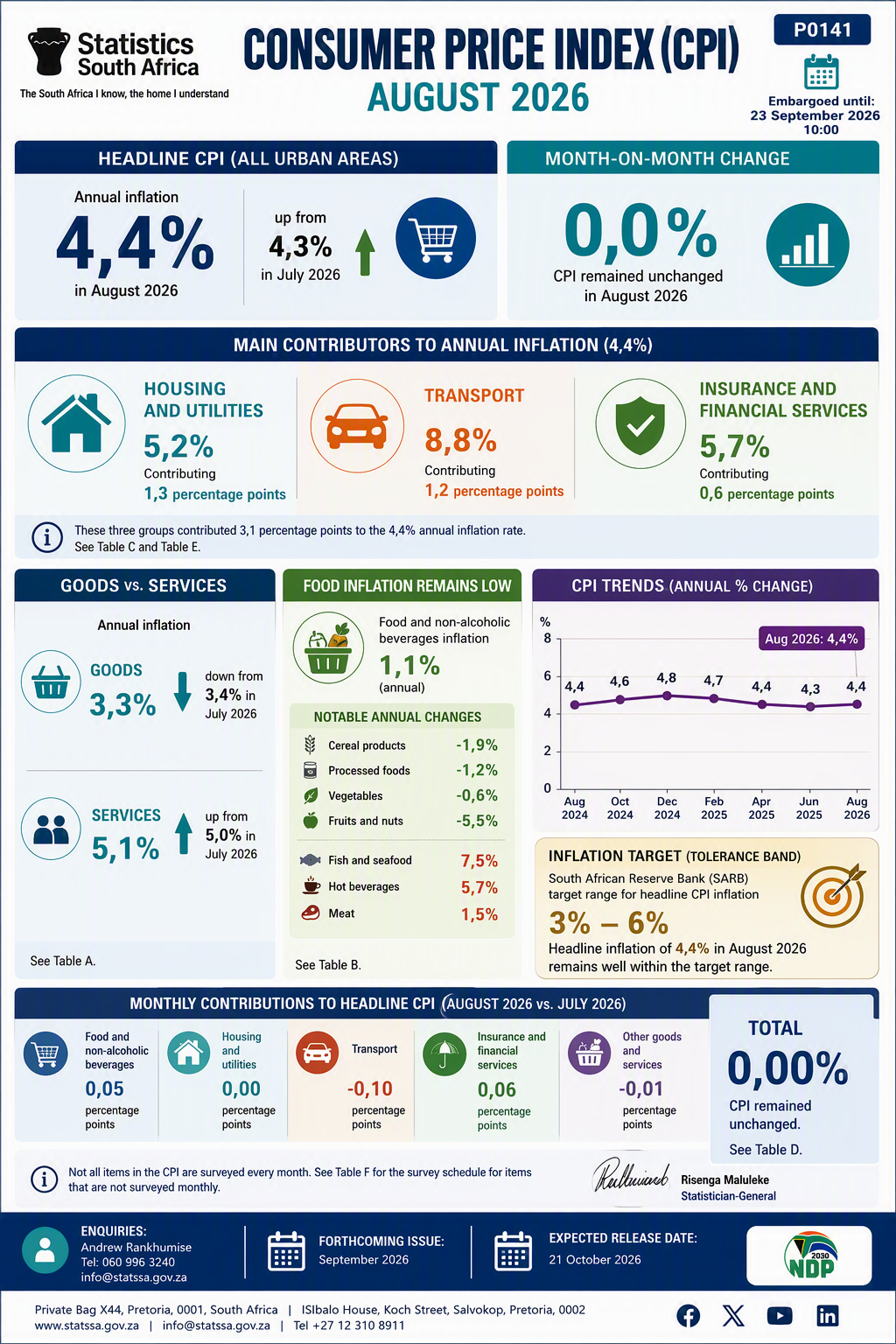
Transport was one of the largest contributors to headline inflation, adding 1.2 percentage points to the annual CPI rate, with the category recording inflation of 8.8%.
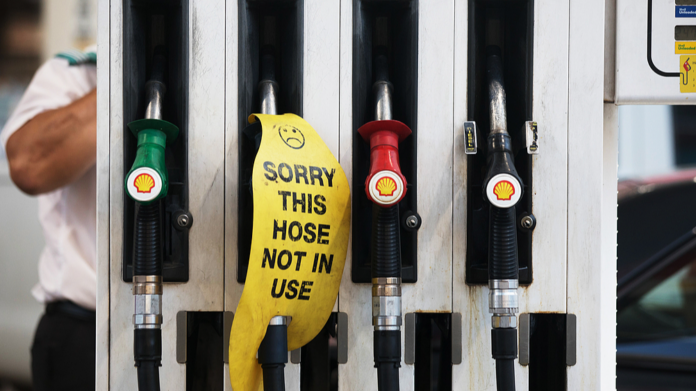
The sector’s influence came despite a 1.3% monthly decline in fuel prices during August. Fuel costs remained 20.0% higher than a year earlier, reflecting the lingering impact of previous price increases on annual inflation.
Costs associated with operating personal vehicles rose 15.7% year-on-year, while passenger transport services increased by 11.6%, reinforcing transport’s role as a major source of inflationary pressure.
Housing costs continue to support headline CPI
Housing and utilities remained the single largest contributor to annual inflation, accounting for 1.3 percentage points of the 4.4% headline rate.
READ: Household inflation expectations fall ahead of SARB rates announcement
Municipal tariffs and utility charges continued to underpin inflation in the category, with water supply and related services increasing by 7.2% over the year and electricity and other fuels rising by 7.4%.
Rental inflation remained more moderate, with actual rentals and owners’ equivalent rent increasing by around 4%, but the cumulative effect of utility and municipal price increases kept housing costs elevated.
Financial services add to consumer pressure
Insurance and financial services also made a meaningful contribution to headline inflation, adding 0.6 percentage points after recording annual inflation of 5.7%.
The persistent rise in service-related costs highlights a trend increasingly evident in recent inflation data: while goods inflation has eased, services inflation remains comparatively sticky.
Food prices continued to offer consumers a measure of relief.
Food and non-alcoholic beverage inflation remained subdued at 1.1%, while overall food inflation stood at just 0.7%.
Several categories recorded outright annual declines, including cereal products, processed foods, vegetables, and fruits and nuts. These declines helped offset increases in items such as fish and seafood, hot beverages and meat.
The weakness in food inflation was one of the main reasons headline CPI did not accelerate more sharply.
Read more: Stop fighting inflation, start fixing growth
Services outpace goods
A widening gap between goods and services inflation was evident in the August data.
Goods inflation slowed to 3.3%, while services inflation accelerated slightly to 5.1%.
The divergence suggests inflationary pressures are increasingly concentrated in services such as housing-related charges, insurance and various consumer services rather than in physical goods, where price growth has generally moderated.
Monthly inflation stalls
Although annual inflation rose, prices were flat on a month-to-month basis.
The decline in fuel prices largely offset increases elsewhere in the consumer basket, while housing costs, which saw significant tariff-related increases in July, contributed little additional momentum in August.
The result was a headline CPI reading that moved higher on an annual basis but showed no further price growth between July and August.
- The annual consumer inflation edged up to 4.4% in August from 4.3% in July, according to data released by Statistics SA on Wednesday.
- The latest increase is due to persistent increases in transport, housing and financial services costs, even as overall prices remained unchanged from the previous month.
- The latest Consumer Price Index (CPI) data point to an inflation environment that remains outside the South African Reserve Bank (SARB)’s target range but continues to squeeze households through elevated transport and administered costs.
- The Reserve Bank operates under a point inflation target of 3% with a tolerance band of one percentage point either side.
- Transport remains key driver of inflation Transport was one of the largest contributors to headline inflation, adding 1.2 percentage points to the annual CPI rate, with the category recording inflation of 8.8%.
The annual consumer inflation edged up to 4.4% in August from 4.3% in July, according to data released by Statistics SA on Wednesday.
The latest increase is due to persistent increases in transport, housing and financial services costs, even as overall prices remained unchanged from the previous month.
The latest Consumer Price Index (CPI) data point to an inflation environment that remains outside the South African Reserve Bank (SARB)'s target range but continues to squeeze households through elevated transport and administered costs. The Reserve Bank operates under a point inflation target of 3% with a tolerance band of one percentage point either side.
Transport was one of the largest contributors to headline inflation, adding 1.2 percentage points to the annual CPI rate, with the category recording inflation of 8.8%.
The sector's influence came despite a 1.3% monthly decline in fuel prices during August. Fuel costs remained 20.0% higher than a year earlier, reflecting the lingering impact of previous price increases on annual inflation.
Costs associated with operating personal vehicles rose 15.7% year-on-year, while passenger transport services increased by 11.6%, reinforcing transport's role as a major source of inflationary pressure.
Housing and utilities remained the single largest contributor to annual inflation, accounting for 1.3 percentage points of the 4.4% headline rate.
READ: Household inflation expectations fall ahead of SARB rates announcement
Municipal tariffs and utility charges continued to underpin inflation in the category, with water supply and related services increasing by 7.2% over the year and electricity and other fuels rising by 7.4%.
Rental inflation remained more moderate, with actual rentals and owners' equivalent rent increasing by around 4%, but the cumulative effect of utility and municipal price increases kept housing costs elevated.
Insurance and financial services also made a meaningful contribution to headline inflation, adding 0.6 percentage points after recording annual inflation of 5.7%.
The persistent rise in service-related costs highlights a trend increasingly evident in recent inflation data: while goods inflation has eased, services inflation remains comparatively sticky.
Food prices continued to offer consumers a measure of relief.
Food and non-alcoholic beverage inflation remained subdued at 1.1%, while overall food inflation stood at just 0.7%.
Several categories recorded outright annual declines, including cereal products, processed foods, vegetables, and fruits and nuts. These declines helped offset increases in items such as fish and seafood, hot beverages and meat.
The weakness in food inflation was one of the main reasons headline CPI did not accelerate more sharply.
Read more: Stop fighting inflation, start fixing growth
A widening gap between goods and services inflation was evident in the August data.
Goods inflation slowed to 3.3%, while services inflation accelerated slightly to 5.1%.
The divergence suggests inflationary pressures are increasingly concentrated in services such as housing-related charges, insurance and various consumer services rather than in physical goods, where price growth has generally moderated.
Although annual inflation rose, prices were flat on a month-to-month basis.
The decline in fuel prices largely offset increases elsewhere in the consumer basket, while housing costs, which saw significant tariff-related increases in July, contributed little additional momentum in August.
The result was a headline CPI reading that moved higher on an annual basis but showed no further price growth between July and August.


