


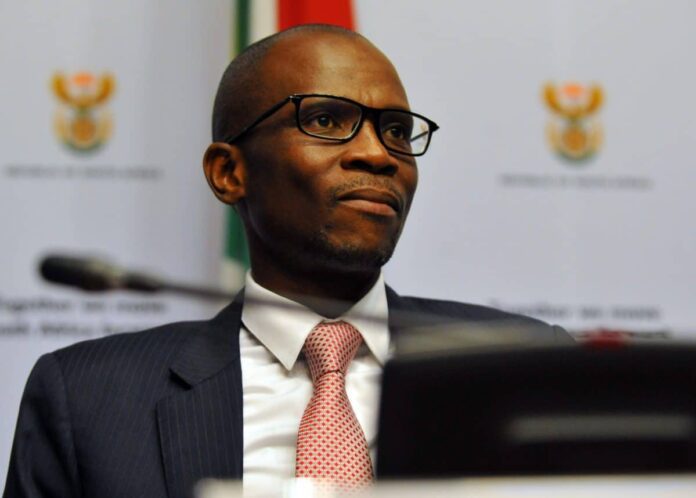
National Treasury and its partners have launched the third phase of the Southern African: Towards Inclusive Economic Development (SA-TIED) programme aimed at improving economic policymaking.
The initiative will run through to 2029 and is expected to deepen collaboration between National Treasury, the South African Revenue Service (SARS) and the United Nations University World Institute for Development Economic Research (UNU-WIDER). The European Union and the United Kingdom back the initiative.
Improving efficiency of public spending
The new phase will focus on improving the efficiency of public spending rather than simply expanding it.
David Masondo, Deputy Finance Minister, said the programme uses better data and research to strengthen the quality of policymaking.
“At its core, SA-TIED is anchored on a simple and yet powerful principle – good policy must be grounded in credible evidence. Better evidence leads to better policy, and better policy leads to better outcomes for our people,” Masondo said.
Expansion of the National Treasury Secure Data Facility
In phase 2, more than 130 research papers were produced, while over 200 officials and researchers have been trained in advanced analytical skills such as econometrics and data science.
Treasury said the main development has been the expansion of the National Treasury Secure Data Facility. This allows researchers to work with anonymised tax data to inform policy.
Importance of data in shaping economic decisions
SARS Deputy Commissioner Johnstone Makhubu highlighted the importance of data in shaping economic decisions.
“We see tax administration data as the lifeblood of research and economic policy design. We gather data with the end in mind, not only for tax administration purposes but also for research,” said Makhubu.
For business, a stronger focus on evidence-based policy could lead to more predictable regulation, better targeted incentives, and improved delivery in key areas such as infrastructure, energy and industrial development.
Helping SA navigate a volatile global environment
International partners also indicated that the programme could help South Africa navigate a volatile global environment, where poor policy choices can carry higher costs.
Incoming UNU-WIDER Director Patricia Justino warned against short-term decision-making in uncertain times.
“Research is not a luxury, if anything, it is needed more than ever. In times of uncertainty, bad decisions become very costly, short-term thinking becomes very tempting, and political pressure can crowd out careful thinking.
“What SA-TIED has built is something very rare: trust between research and policymaking. That trust is the foundation on which Phase III will be built,” Justino said.


