


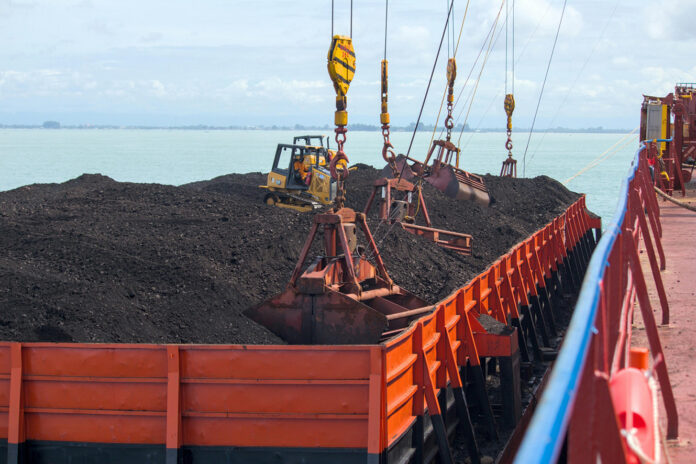
South Africa digs it out of the ground, ships it abroad, and then buys it back at a premium. That is the uncomfortable reality at the centre of our economy.
We export raw materials. Others process, manufacture and add value. And then we import the finished product, effectively funding growth, jobs and industrial expansion somewhere else, not here.
For an economy searching for growth, this is not just inefficient; it is unsustainable. And it is happening at a time when the global environment is becoming more volatile, more political and less forgiving.
A narrow stretch of water thousands of kilometres away – the Strait of Hormuz – has once again reminded the world how fragile global systems are.
When tensions rise there, oil prices respond instantly. And when oil prices rise, South Africa feels it immediately. Fuel costs rise; transport costs follow. Food prices increase, and inflation begins to build.
And just as the expectation was forming that interest rates would ease, that outlook is now under pressure. A sustained oil shock, combined with currency weakness, makes it increasingly difficult to anchor inflation around 3%. A move toward 4% or even 5% is becoming more likely. That means interest rates may remain higher for longer or even rise again.
So, while global instability feeds directly into domestic pressure, South Africa faces a deeper, structural problem: growth.
And here, the conversation needs to become far more honest. Yes, South Africa is part of Brics. Yes, it has strong relationships with China, Russia and India. But we need to ask a harder question: Where does real investment into South Africa actually come from? And who buys our value-added products? Because that is what drives growth.
China is a critical trade partner, but it is also one of the most competitive manufacturing economies in the world. It produces at scale, at cost, and exports globally, including into South Africa. It is not the natural destination for South African manufactured exports.
The United States, on the other hand, represents something fundamentally different. It is a high-value consumer market. It imports manufactured goods. It provides access to capital. It rewards value addition – the very thing South Africa needs more of.
That is not politics. It is economics.
Which brings us to a more immediate concern. In recent days, strong and unusually aligned criticism of the US has emerged across South Africa’s political spectrum – from both governing structures and newly established opposition leadership. That convergence should give us pause because this is not about personalities or politics. It is about positioning.
In a world that is becoming more strategic, more transactional, and less tolerant of ambiguity, relationships matter.
Trade access is not guaranteed. Investment is not unconditional, and perception plays a critical role in both.
If the government and the opposition begin to signal a more confrontational stance toward a key economic partner, the risk is not immediate collapse but gradual consequence. A shift in sentiment. A reassessment of risk. A tightening of access.
At the same time, South Africa is cushioning rising fuel costs through temporary relief measures that are fiscally unsustainable. Forgone revenue today will reappear elsewhere – through borrowing, reduced spending, or future taxes.
The cost has not disappeared; it has been delayed.
So the country finds itself under pressure from multiple angles.
Externally: rising oil prices and global instability.
Internally: weak growth and limited fiscal space.
Strategically: increasing sensitivity around key economic relationships.
This is not a comfortable position, but it is also not irreversible.
The path forward is clear – if we are willing to act on it. South Africa must shift from extraction to production. From exporting raw materials to exporting value-added goods. From being a price-taker in global markets to being a participant in higher-value supply chains.
That requires investment. It requires policy certainty. And critically, it requires stable, strategic relationships with markets that can absorb and reward what we produce. This is not about choosing sides. It is about choosing growth.
Because the reality is simple: South Africa will not achieve meaningful, sustained growth by exporting raw materials and importing finished goods. That model builds other economies. The question is whether we are prepared to build our own.
Van Doesburgh is an economist and head of economics and a regular commentator, focusing on financial markets, policy, and business strategy.
- South Africa's economy relies heavily on exporting raw materials and importing finished goods, which leads to lost opportunities for local value addition, jobs, and growth.
- Global volatility, such as tensions near the Strait of Hormuz, drives up oil prices and domestic inflation, putting pressure on interest rates and economic stability.
- Despite being part of BRICS, South Africa's key growth depends on access to high-value consumer markets like the US, which rewards value-added manufacturing, unlike China, a competitive manufacturing economy.
- Increasing political criticism of the US risks souring a crucial economic partnership, potentially leading to reduced trade access, investment, and economic consequences.
- To achieve sustainable growth, South Africa must transition from raw material extraction to producing and exporting value-added goods, requiring investment, policy stability, and strong strategic market relationships.


