


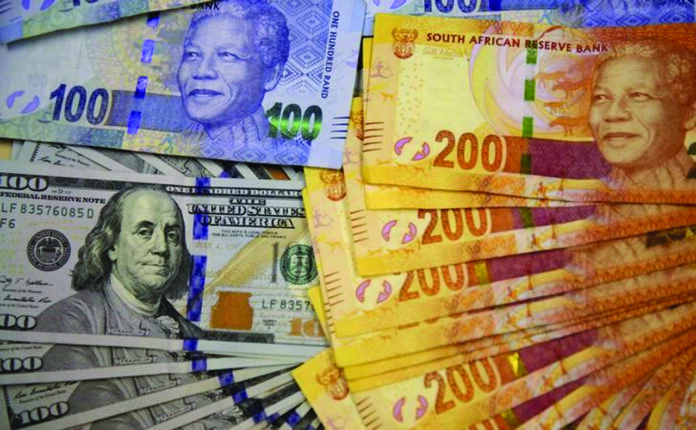
There was something almost encouraging about South Africa’s economic news this week.
The rand broke through R16 to the dollar.
Producer price inflation fell sharply from 7.5% to 5.7%. Oil prices eased after an early surge.
For an economy battling high input costs and weak growth, these are all welcome developments.
But then came the Industrial Development Corporation’s (IDC) results. And suddenly the picture looked rather different.
The IDC reported a staggering R4.65-billion loss for the year to March 2026, compared with a R329-million profit the previous year.
Its auditors also identified material misstatements of around R2-billion and weaknesses in financial reporting controls.
That should concern every South African.
Not simply because R4.65-billion is a lot of money but because of what the IDC is supposed to do.
The IDC’s mandate is to drive industrialisation, provide development finance and build productive capacity across sectors of the economy.
In other words, the IDC is supposed to be part of the engine that gets South Africa producing. That engine is clearly struggling.
As I have argued in previous columns, South Africa’s overriding economic challenge is getting the economy growing fast enough to create real jobs.
With official unemployment at 33.6%, we cannot reduce unemployment by simply moving money around the economy.
We need businesses producing more, factories operating, mines investing, entrepreneurs expanding and new industries being created. We need real economic growth.
The irony is that some of the conditions for growth are improving. PPI falling to 5.7% provides manufacturers with some relief.
A stronger rand reduces the cost of imported machinery, equipment, fuel, raw materials and other inputs. Lower oil prices can reduce transport and production costs.
The rand even managed to break through R16/$. It could have gone further.
But markets quickly found support for the dollar, reminding us that exchange rates are not controlled by South Africa alone.
US inflation remains above the Federal Reserve’s 2% target, and Fed chair Kevin Warsh has signalled that further rate increases could be necessary if inflation does not fall sufficiently. Markets subsequently increased the probability of a September hike and the dollar strengthened.
If US rates rise, the dollar should strengthen and emerging-market currencies such as the rand could weaken again.
We should enjoy the stronger rand – but we should not build an economic strategy around it. The bigger question is what we do with the breathing space it provides.
The IDC is considering bringing private investors into its ownership structure for the first time in its 86-year history, in an attempt to strengthen its capital base and expand its role in re-industrialising South Africa.
That could be a good thing.
South Africa needs more private capital, more expertise and more commercially disciplined investment, as we have reported in this column repeatedly.
But we must also ask why an institution at the centre of our industrial-development strategy has reached this point.
We cannot save every struggling company indefinitely. We cannot confuse preserving an existing business with creating a competitive economy.
The objective must ultimately be production, investment, competitiveness and jobs.
That is why I am less interested in whether the rand is briefly at R16 or R15.80 to the dollar than I am in whether South Africa is becoming a more productive economy.
A stronger rand is helpful.
Falling producer inflation is helpful.
Lower oil prices are helpful.
But these are opportunities, not solutions.
The solution is to get South Africa producing again.
Because when investment becomes factories, when factories become production and when production becomes jobs, we finally begin to tackle the problem that matters most.
South Africans becoming employed as investment translates into real economic growth.
That is the number we should really be watching.
• Van Doesburgh is an economist, head of economics at CPUT, CEO of Economics Investment Group and a regular commentator and business consultant on South Africa’s economic landscape, focusing on financial markets, policy, and business strategy. vandoesburghm@cput.ac.za
- The South African rand recently broke through R16 to the dollar, while producer price inflation fell from 7.5% to 5.7%, and oil prices eased after an early surge.
- The Industrial Development Corporation (IDC) reported a R4.65-billion loss for the year ending March 2026, compared to a R329-million profit the previous year, with auditors identifying R2-billion in material misstatements.
- The IDC's mandate is to drive industrialisation, provide development finance, and build productive capacity, but its financial troubles indicate struggles in fulfilling this role.
- The IDC is considering bringing private investors into its ownership structure for the first time in its 86-year history to strengthen its capital base and expand its role.
- South Africa's overriding economic challenge is achieving real economic growth to reduce the 33.6% unemployment rate by fostering production, investment, competitiveness, and job creation.


