


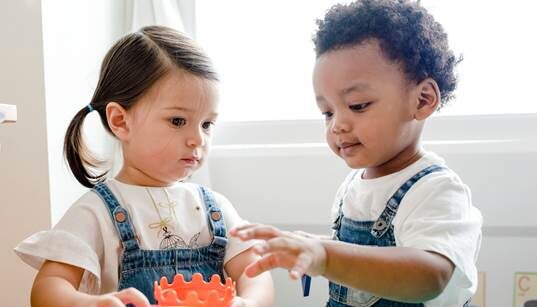
As pressure mounts on parents and schools to produce academically advanced children at younger ages, education experts are warning that pushing formal learning too early could do more harm than good.
According to education specialist Lynda Eagle, play is not simply a recreational activity for young children but a critical part of how they learn, develop relationships and make sense of the world around them.
“Play is not separate from learning; it is the medium through which learning becomes possible,” said Eagle, Early Years Phase specialist at AdvTech Schools.
She cautioned that when children are rushed into formal academic programmes before they are developmentally ready, the immediate results may appear positive, but the long-term consequences can be damaging.
“Early learning that prioritises performance over understanding risks weakening curiosity, motivation and wellbeing. Strong foundations are built through experiences that nurture thinking, communication, collaboration and joy,” she said.
Letting children learn at their own pace
Eagle explained that play allows children to learn at their own pace while exploring their interests and developing a sense of identity. Through play, children gain valuable social and emotional skills while building the foundations needed for future learning.
“It provides space for difference and diversity while creating opportunities for connection and shared experiences. Play also helps children regulate their emotions and prepares them for future learning by strengthening inquiry, reflection and participation in real-world situations,” she said.
While play and responsiveness are often viewed as abstract educational concepts, Eagle said they require deliberate support from both teachers and parents.
Guiding learning without taking control
She noted that adults play a crucial role by observing children, understanding their interests and knowing when to guide learning without taking control.
“When children play, they are constantly exploring ideas, testing theories, inventing solutions and discovering how the world works. They learn to solve problems, communicate effectively, collaborate with others and manage themselves,” Eagle explained.
She added that play also teaches children resilience by encouraging them to take manageable risks, overcome challenges and persevere when tasks become difficult.
Partnerships between educators and families are equally important in creating environments where children can thrive.
According to Eagle, children benefit most when parents and teachers work together to provide a balance between freedom and structure. This balance helps create emotional security while teaching respect for themselves, others and the environment.
“Such stability supports the development of empathy, resilience and perseverance,” she said.
Within supportive environments, children develop meaningful relationships, gain confidence as independent learners and begin to apply knowledge in different situations.
Eagle urged adults to reconsider any assumptions that academic acceleration automatically leads to long-term success.
“When adults understand why play matters and how responsiveness supports learning, they are better positioned to guide children with intention and trust,” she said.
“Ultimately, early learning is not only about what children know, but about how they think, how they relate to others and how they come to see themselves in a world full of possibility.”
- Education expert Lynda Eagle emphasizes that play is essential for young children's learning, development, and social-emotional skills, not just recreation.
- Rushing children into formal academic programs before they are developmentally ready may show short-term gains but can harm curiosity, motivation, and wellbeing in the long run.
- Play allows children to learn at their own pace, fostering thinking, communication, collaboration, emotional regulation, and resilience through manageable risks and challenges.
- Adults, including parents and teachers, should support play and learning by observing and guiding without taking over, promoting a balance between freedom and structure.
- Partnerships between educators and families create stable environments that nurture empathy, perseverance, independent learning, and the ability to apply knowledge broadly.


