


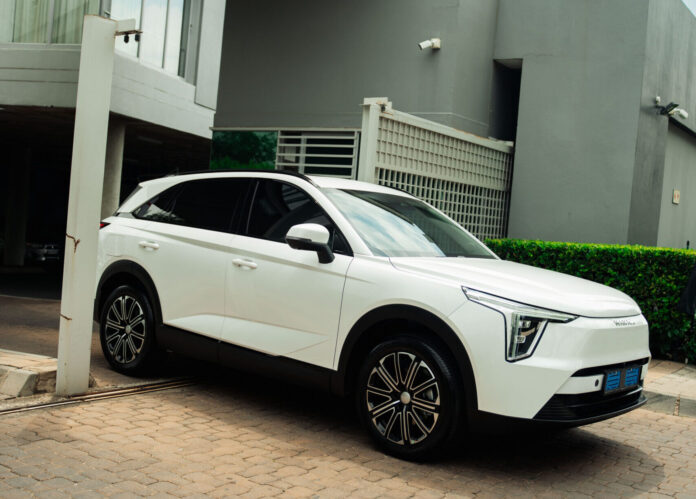
A drive from Johannesburg to Parys offered an opportunity to get acquainted with the all-new Haval Jolion Max, the latest addition to GWM’s SUV line-up that arrives with three powertrain options and an ambition to appeal to a range of motorists.
Available in petrol, hybrid electric vehicle (HEV) and plug-in hybrid electric vehicle (PHEV) configurations, the Jolion Max is positioned as a versatile offering for buyers looking for a combination of technology, space and everyday practicality.
But with more South Africans considering electrified vehicles, the question is whether the technology translates into a genuinely convenient ownership experience and whether the price makes sense.
READ: GWM expands Haval Jolion range with new Max SUV
I drove the Jolion Max PHEV during its South African launch, including time behind the wheel in fully electric mode. My first impression was how quiet and composed the vehicle felt on the road.
The acceleration was smooth, with power delivered without any dramatic interruption. The cabin was impressively quiet, while the vehicle felt stable and comfortable throughout the drive.
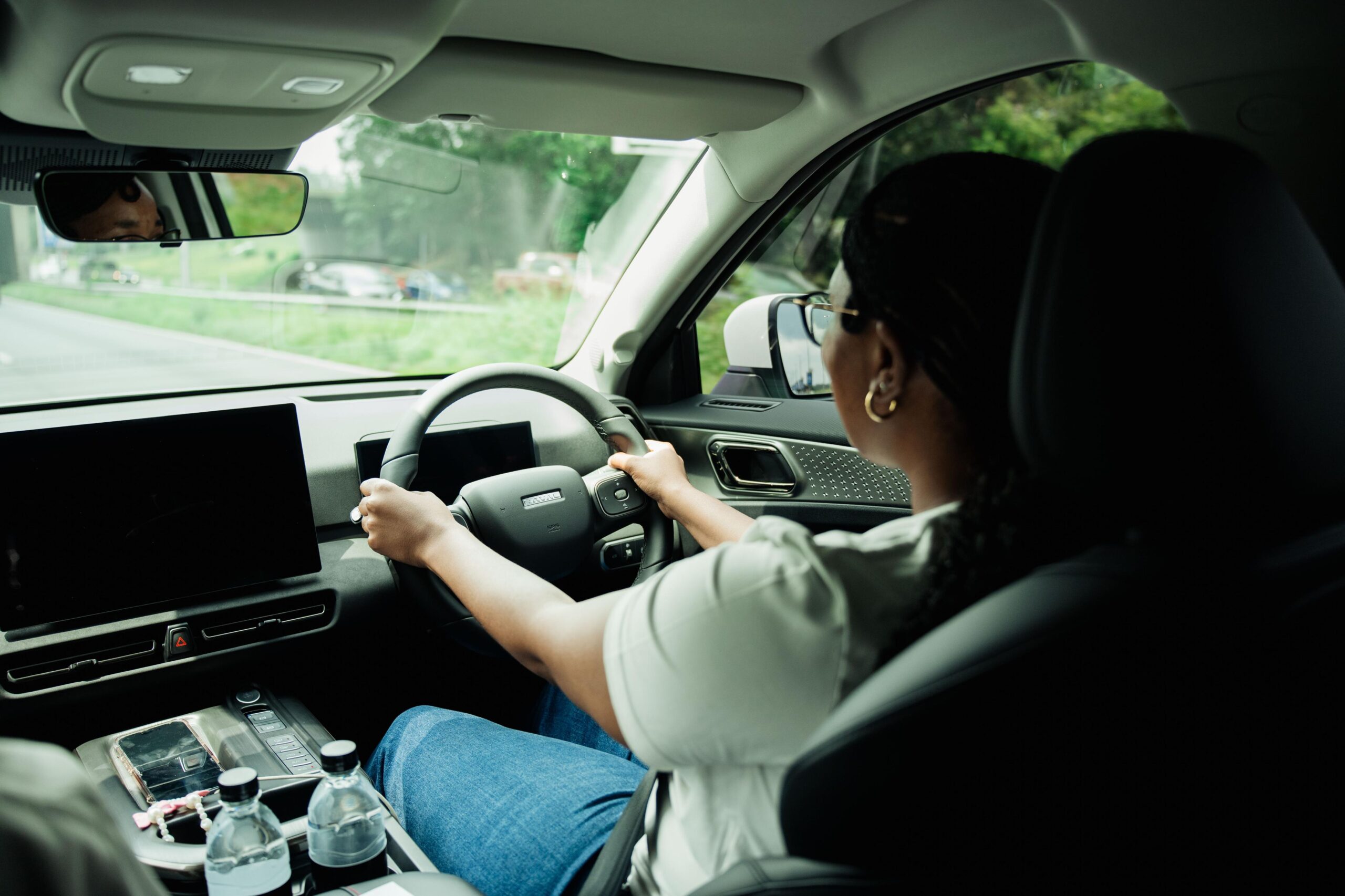
It is the kind of driving experience that makes longer journeys feel less demanding. However, the smoothness also means drivers need to keep an eye on their speed rather than rely on the feel of the vehicle to judge how fast they are travelling.
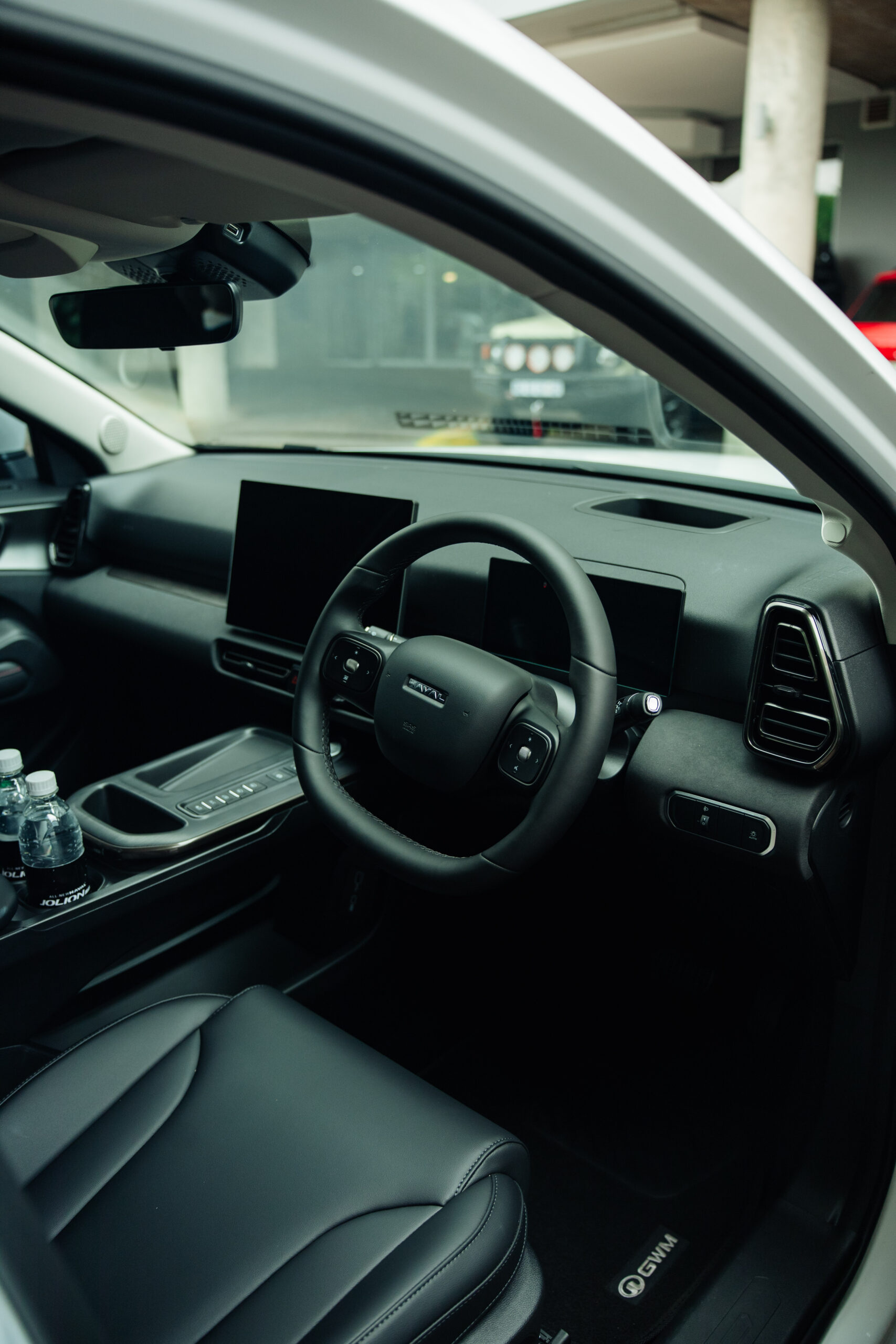
Inside, the Jolion Max makes a strong case for family buyers. The cabin is spacious, and the rear seating area comfortably accommodates two adults travelling with equipment. The boot also impressed, offering useful room for luggage and everyday family essentials.
The panoramic sunroof adds to the sense of space, while the 360-degree camera is a particularly useful feature when manoeuvring in tighter spaces.
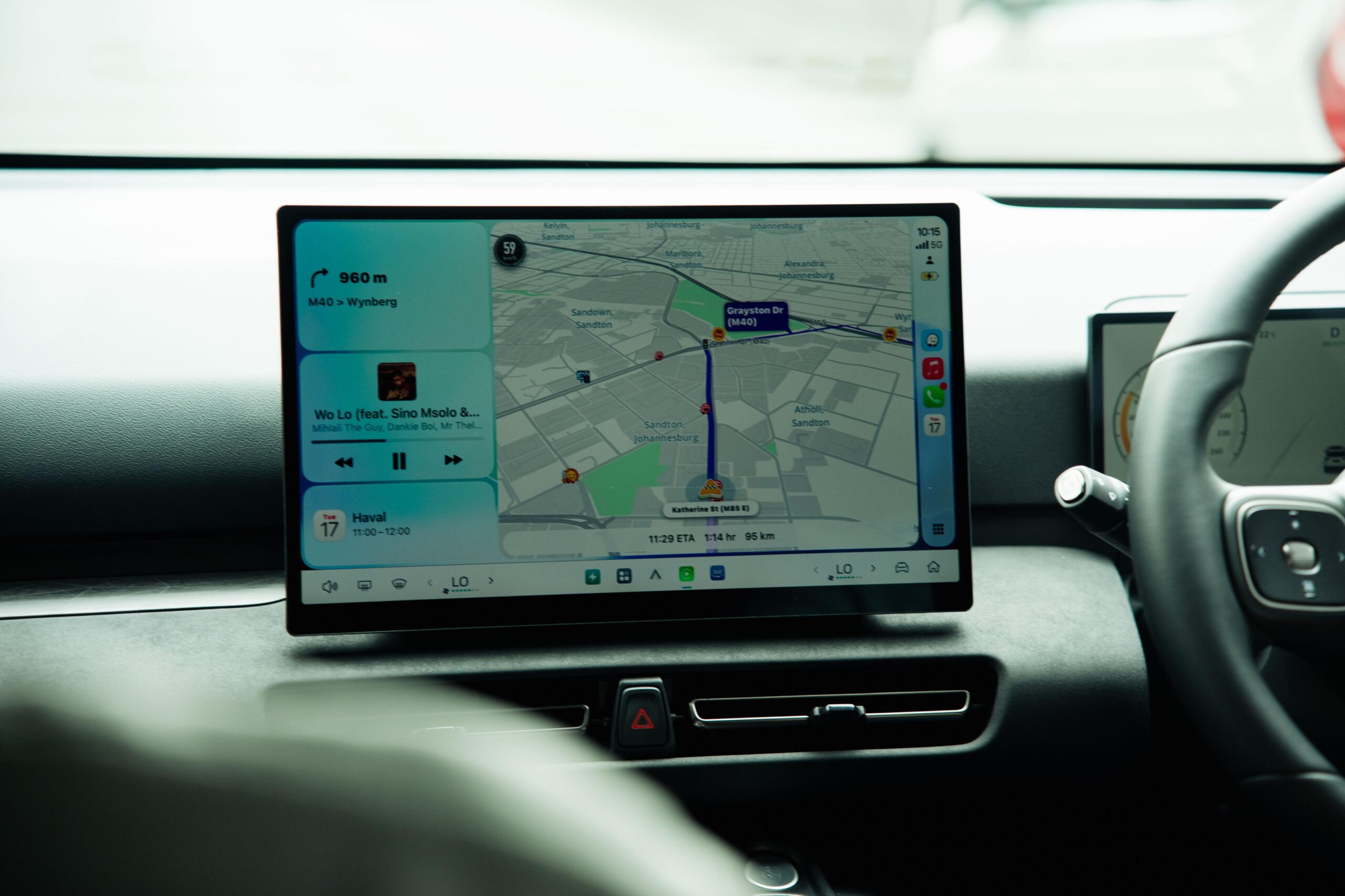
Technology is a major part of the vehicle’s proposition. The infotainment system offers plenty to explore, although the interface was not immediately intuitive. There is a learning curve, and drivers who prefer straightforward controls may need time to familiarise themselves with the system.
That is an important distinction: having plenty of technology is one thing, but making it easy to use is just as important.
GWM’s decision to offer three powertrains is intended to give buyers flexibility rather than push everyone towards one type of vehicle.
ALSO READ: GWM expands Haval Jolion range with new Max SUV
Floyd Ramabulana, Head of Marketing, Brand and Public Relations at GWM, said the right choice ultimately depends on individual driving habits and access to charging infrastructure.
“The petrol model suits buyers looking for a conventional drive that is primarily used for long distances in areas with limited charging infrastructure. The HEV is ideal for those who want improved fuel efficiency and additional power. The PHEV is suited to customers with access to charging facilities who want to maximise electric driving in the city,” he said.
“Our aim is to offer a powertrain for every lifestyle.”
For motorists who regularly travel long distances and do not have reliable access to charging facilities, the petrol model may be the more straightforward option. The HEV offers a middle ground for those seeking improved fuel efficiency without needing to plug in. The PHEV, meanwhile, is likely to make the most sense for drivers who can charge at home or work and want to complete more of their daily journeys using electric power.
The PHEV’s advertised electric-only range is up to 115km, although that figure needs context.
Ramabulana said the range is achieved under the New European Driving Cycle (NEDC) testing conditions. Actual performance will depend on factors such as driving style, speed, passenger load and air-conditioning use.
“As an indicative estimate, customers should plan around 85–95km in mixed driving conditions. The key benefit is that many daily commutes can potentially be completed using electric power alone,” he said.
That more conservative estimate is useful for prospective buyers. The advertised figure should not be treated as a guaranteed distance, particularly for motorists who regularly travel at highway speeds or carry heavier loads.
The Jolion Max range starts at R429,900 for the 1.5T Premium DCT petrol derivative and stretches to R599,900 for the 1.5T PHEV Super Luxury DHT.

The price difference is worth considering. The HEV costs R40,000 more than the entry-level petrol model, while the PHEV flagship carries a R170,000 premium over it.
For buyers, the decision will come down to whether the additional technology and electrified driving capability justify the higher purchase price, alongside their access to charging facilities and typical driving habits.
The PHEV’s price also raises an important consideration: potential fuel savings need to be weighed against the higher upfront cost. Buyers who can charge regularly and use electric mode for much of their daily driving may find greater value in the plug-in hybrid than those who predominantly travel long distances without charging.
Warranty and service package offer added reassurance
One of the standout aspects of GWM’s offering is its warranty and service package, particularly for buyers who may still have reservations about owning an electrified vehicle.
The Jolion Max comes with a seven-year or 200,000km vehicle warranty and a seven-year or 75,000km service plan. Service intervals are scheduled every 15,000km or 12 months.
The package also includes seven-year unlimited-kilometre roadside assistance. For the HEV and PHEV derivatives, the hybrid battery is covered by an eight-year or 150,000km warranty.
For many buyers, the decision to purchase a plug-in hybrid goes beyond its advertised range or potential fuel savings. Battery longevity, replacement costs, maintenance and access to charging facilities all form part of the calculation.
Ramabulana said charging costs would depend on electricity tariffs, adding that home charging could offer savings compared with petrol, particularly where solar power is available.
He also pointed out that the PHEV still requires regular servicing of its petrol engine, alongside inspections of its electrical systems. On the question of battery replacement costs after the warranty period, Ramabulana said GWM expected costs to decline as battery-powered vehicles became more widely adopted.
He did not provide a current replacement-cost estimate, however, meaning prospective owners should seek clarity on this before purchasing rather than rely solely on the expectation that battery prices will fall.
The brand is also aware that the growing presence of Chinese automotive manufacturers in South Africa comes with questions about resale value, parts availability and long-term reliability.
Ramabulana said GWM was investing in its local dealer network, genuine parts availability and aftersales support.
“We understand that ownership confidence extends well beyond the purchase price,” he said. “Ultimately, we want to build lasting confidence through product quality and a consistently positive ownership experience.”
Meaningful step up?
The Jolion Max builds on an established name in GWM’s local range, but the brand is positioning it as a more spacious, technologically advanced and versatile SUV proposition than the Jolion Pro.
Ramabulana said the Max brings enhanced interior comfort, additional technology, upgraded convenience features and the choice of three powertrains.
ALSO READ: Haval H6 PHEV Could this be SA’s ideal family plug-in hybrid?
For buyers considering an upgrade, those additions will need to justify the price difference between the models. The final decision will also depend on which derivative best suits their budget and daily requirements.
My first drive suggests the Jolion Max has some compelling strengths, particularly its spacious cabin, quiet ride and comfortable driving experience. The PHEV’s electric mode makes for a refined drive, while the family-friendly interior gives it practical appeal.
However, the infotainment system could be more intuitive, and the advertised electric range needs to be understood in the context of real-world driving conditions.
The Jolion Max has arrived with a broad proposition. Whether it becomes a compelling choice for South African families and commuters will depend not only on what it offers on paper but also on how it performs over time and what ownership looks like after the initial excitement of a new-car purchase.
- The Haval Jolion Max offers three powertrain options: petrol, hybrid electric vehicle (HEV), and plug-in hybrid electric vehicle (PHEV), targeting versatility for various driver lifestyles.
- The PHEV variant provides an electric-only range of up to 115km under NEDC conditions, with more realistic daily range estimates of 85–95km depending on driving factors.
- Prices for the Jolion Max range from R429,900 for the petrol 1.5T Premium DCT model to R599,900 for the 1.5T PHEV Super Luxury DHT, with the PHEV priced R170,000 higher than the entry-level petrol variant.
- The vehicle includes a seven-year or 200,000km warranty, a seven-year or 75,000km service plan, seven-year roadside assistance, and an eight-year or 150,000km hybrid battery warranty for the electrified models.
- GWM emphasizes local dealer support, genuine parts availability, and aftersales service to address concerns about resale value, parts, and reliability for the Jolion Max in South Africa.
A drive from Johannesburg to Parys offered an opportunity to get acquainted with the all-new Haval Jolion Max, the latest addition to GWM’s SUV line-up that arrives with three powertrain options and an ambition to appeal to a range of motorists.
Available in petrol, hybrid electric vehicle (HEV) and plug-in hybrid electric vehicle (PHEV) configurations, the Jolion Max is positioned as a versatile offering for buyers looking for a combination of technology, space and everyday practicality.
But with more South Africans considering electrified vehicles, the question is whether the technology translates into a genuinely convenient ownership experience and whether the price makes sense.
READ: GWM expands Haval Jolion range with new Max SUV
I drove the Jolion Max PHEV during its South African launch, including time behind the wheel in fully electric mode. My first impression was how quiet and composed the vehicle felt on the road.
The acceleration was smooth, with power delivered without any dramatic interruption. The cabin was impressively quiet, while the vehicle felt stable and comfortable throughout the drive.
It is the kind of driving experience that makes longer journeys feel less demanding. However, the smoothness also means drivers need to keep an eye on their speed rather than rely on the feel of the vehicle to judge how fast they are travelling.
Inside, the Jolion Max makes a strong case for family buyers. The cabin is spacious, and the rear seating area comfortably accommodates two adults travelling with equipment. The boot also impressed, offering useful room for luggage and everyday family essentials.
The panoramic sunroof adds to the sense of space, while the 360-degree camera is a particularly useful feature when manoeuvring in tighter spaces.
Technology is a major part of the vehicle’s proposition. The infotainment system offers plenty to explore, although the interface was not immediately intuitive. There is a learning curve, and drivers who prefer straightforward controls may need time to familiarise themselves with the system.
That is an important distinction: having plenty of technology is one thing, but making it easy to use is just as important.
GWM’s decision to offer three powertrains is intended to give buyers flexibility rather than push everyone towards one type of vehicle.
ALSO READ: GWM expands Haval Jolion range with new Max SUV
Floyd Ramabulana, Head of Marketing, Brand and Public Relations at GWM, said the right choice ultimately depends on individual driving habits and access to charging infrastructure.
“The petrol model suits buyers looking for a conventional drive that is primarily used for long distances in areas with limited charging infrastructure. The HEV is ideal for those who want improved fuel efficiency and additional power. The PHEV is suited to customers with access to charging facilities who want to maximise electric driving in the city,” he said.
“Our aim is to offer a powertrain for every lifestyle.”
For motorists who regularly travel long distances and do not have reliable access to charging facilities, the petrol model may be the more straightforward option. The HEV offers a middle ground for those seeking improved fuel efficiency without needing to plug in. The PHEV, meanwhile, is likely to make the most sense for drivers who can charge at home or work and want to complete more of their daily journeys using electric power.
The PHEV’s advertised electric-only range is up to 115km, although that figure needs context.
Ramabulana said the range is achieved under the New European Driving Cycle (NEDC) testing conditions. Actual performance will depend on factors such as driving style, speed, passenger load and air-conditioning use.
“As an indicative estimate, customers should plan around 85–95km in mixed driving conditions. The key benefit is that many daily commutes can potentially be completed using electric power alone,” he said.
That more conservative estimate is useful for prospective buyers. The advertised figure should not be treated as a guaranteed distance, particularly for motorists who regularly travel at highway speeds or carry heavier loads.
The Jolion Max range starts at R429,900 for the 1.5T Premium DCT petrol derivative and stretches to R599,900 for the 1.5T PHEV Super Luxury DHT.
The price difference is worth considering. The HEV costs R40,000 more than the entry-level petrol model, while the PHEV flagship carries a R170,000 premium over it.
For buyers, the decision will come down to whether the additional technology and electrified driving capability justify the higher purchase price, alongside their access to charging facilities and typical driving habits.
The PHEV’s price also raises an important consideration: potential fuel savings need to be weighed against the higher upfront cost. Buyers who can charge regularly and use electric mode for much of their daily driving may find greater value in the plug-in hybrid than those who predominantly travel long distances without charging.
One of the standout aspects of GWM’s offering is its warranty and service package, particularly for buyers who may still have reservations about owning an electrified vehicle.
The Jolion Max comes with a seven-year or 200,000km vehicle warranty and a seven-year or 75,000km service plan. Service intervals are scheduled every 15,000km or 12 months.
The package also includes seven-year unlimited-kilometre roadside assistance. For the HEV and PHEV derivatives, the hybrid battery is covered by an eight-year or 150,000km warranty.
For many buyers, the decision to purchase a plug-in hybrid goes beyond its advertised range or potential fuel savings. Battery longevity, replacement costs, maintenance and access to charging facilities all form part of the calculation.
Ramabulana said charging costs would depend on electricity tariffs, adding that home charging could offer savings compared with petrol, particularly where solar power is available.
He also pointed out that the PHEV still requires regular servicing of its petrol engine, alongside inspections of its electrical systems. On the question of battery replacement costs after the warranty period, Ramabulana said GWM expected costs to decline as battery-powered vehicles became more widely adopted.
He did not provide a current replacement-cost estimate, however, meaning prospective owners should seek clarity on this before purchasing rather than rely solely on the expectation that battery prices will fall.
The brand is also aware that the growing presence of Chinese automotive manufacturers in South Africa comes with questions about resale value, parts availability and long-term reliability.
Ramabulana said GWM was investing in its local dealer network, genuine parts availability and aftersales support.
“We understand that ownership confidence extends well beyond the purchase price,” he said. “Ultimately, we want to build lasting confidence through product quality and a consistently positive ownership experience.”
The Jolion Max builds on an established name in GWM’s local range, but the brand is positioning it as a more spacious, technologically advanced and versatile SUV proposition than the Jolion Pro.
Ramabulana said the Max brings enhanced interior comfort, additional technology, upgraded convenience features and the choice of three powertrains.
ALSO READ: Haval H6 PHEV Could this be SA’s ideal family plug-in hybrid?
For buyers considering an upgrade, those additions will need to justify the price difference between the models. The final decision will also depend on which derivative best suits their budget and daily requirements.
My first drive suggests the Jolion Max has some compelling strengths, particularly its spacious cabin, quiet ride and comfortable driving experience. The PHEV’s electric mode makes for a refined drive, while the family-friendly interior gives it practical appeal.
However, the infotainment system could be more intuitive, and the advertised electric range needs to be understood in the context of real-world driving conditions.
The Jolion Max has arrived with a broad proposition. Whether it becomes a compelling choice for South African families and commuters will depend not only on what it offers on paper but also on how it performs over time and what ownership looks like after the initial excitement of a new-car purchase.


