


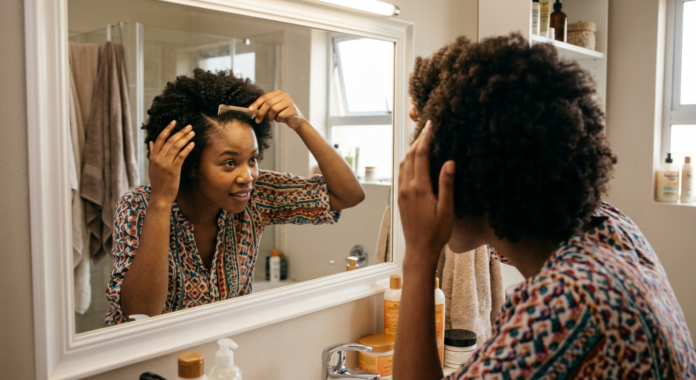
Chemical hair relaxing has long been part of the hair-care routine for many South African women. But while some breakage and thinning caused by years of chemical processing can improve with better hair care, experts warn that not every case is simply ‘damage’.
In some women, changes to the hair can be an early warning sign of permanent hair loss. Dr Kashmal Kalan, Medical Director at Alvi Armani South Africa, says one of the first things he considers when assessing a patient of African descent with hair breakage or thinning is whether the problem is affecting the hair itself or the follicle underneath it.
“Chemical processing is part of my initial analysis: the pattern of breakage, where it’s concentrated, and how the scalp responds,” says Kalan.
“Disclosing this information is not something a patient needs to feel awkward or ashamed about. It is simply another piece of useful information, amongst others, that informs treatment.”
Not all hair damage is the same
According to Kalan, the crucial distinction is between damage to the hair shaft and damage to the follicle. The hair shaft is the visible part of the hair, while the follicle is the structure in the scalp responsible for producing it. If the follicle remains healthy, hair that has become weak or brittle can potentially recover with appropriate care.
“A significant number of patients I consult with breakage or thinning still have healthy, viable follicles under the hair shaft whether they use relaxer or not. That kind of damage usually responds well to the right hair care and treatment.”
The situation becomes more concerning when the follicle itself has been damaged.
“Once a follicle is replaced by scar tissue, treating the hair shaft alone won’t reverse that damage,” he says.
ALSO READ: Don’t blame weight-loss jab just yet for thinning hair, expert warns
South African research also highlights just how common chemical relaxing is among women and girls with afro-textured hair. Research from the University of Cape Town’s Division of Dermatology found chemically relaxed hair in 78% of schoolgirls and 49.2% of adult women studied.
That prevalence makes it particularly important for women to understand the difference between routine breakage and signs that warrant medical attention.
When the crown starts changing
One of the areas Kalan pays particular attention to is the crown. If hair around the crown starts becoming noticeably shorter, thinner or behaves differently from the rest of the scalp, women should not automatically assume that it is simply the result of relaxing.
This can sometimes be associated with Central Centrifugal Cicatricial Alopecia (CCCA), a form of scarring hair loss that typically begins around the crown and can progressively spread.
Kalan recalls consulting a patient whose hair loss initially appeared relatively straightforward. There was no obvious inflammation and no visible scarring during the examination.
The patient subsequently underwent a hair transplant, but the results did not meet expectations once the transplanted hair had had sufficient time to grow. That prompted further investigation.
A scalp biopsy revealed an underlying scarring condition that had not been visible during the initial examination. The condition was limiting the ability of transplanted follicles to survive.
When the patient’s history was reviewed more closely, years of chemical relaxing stood out as a possible contributing factor in her case. Kalan stresses, however, that this does not mean relaxers can automatically be blamed for CCCA.
A 2019 study published in the South African Medical Journal tested 121 hair relaxers sold in South Africa, including products marketed for children. The products were found to be highly alkaline, with a median pH of 12.36. For Kalan, the finding demonstrates why relaxers should be handled carefully, but it does not prove that they cause CCCA.
“This study tells us that relaxers are strong products that should be treated with respect. However, it doesn’t outright indicate that relaxers cause conditions like Central Centrifugal Cicatricial Alopecia.”
ALSO READ: Gail Mabalane goes public about her battles with Alopecia
Repeated chemical exposure can damage the hair and, in some cases, irritate or damage the scalp. That damage may contribute to hair loss or worsen an existing condition.
Your hairline matters too
The crown is not the only area women should watch. Breakage and thinning around the hairline can have a different cause altogether.
Kalan says the pattern may point towards traction alopecia, a form of hair loss associated with repeated mechanical tension from hairstyles such as tightly braided or woven hair. This is particularly relevant when relaxed hair is also subjected to tight styling.
South African research found traction alopecia in 32.1% of girls who braided relaxed hair, compared with 22.9% of girls who braided natural hair. For women, the message is not necessarily to abandon relaxing or protective styling altogether.
Instead, it is to pay attention to what the hair and scalp are telling you. Persistent breakage, progressive thinning, changes around the crown, a receding hairline, scalp discomfort or other noticeable changes should not simply be dismissed as the price of maintaining a particular hairstyle.
“No hairstyle or product should cost you your hair, or cause permanent damage. Relaxer isn’t the enemy here. Ignoring what your scalp is telling you is.”
For women noticing unexplained or progressive hair loss, seeking an assessment from a dermatologist or qualified hair-loss specialist can help determine whether the problem is hair-shaft damage, traction or an underlying scalp condition.
- Chemical hair relaxing is prevalent among South African women, with 78% of schoolgirls and 49.2% of adult women studied having chemically relaxed hair.
- Dr. Kashmal Kalan emphasizes the importance of distinguishing between damage to the hair shaft and damage to the follicle when assessing hair breakage or thinning.
- Central Centrifugal Cicatricial Alopecia (CCCA) is a form of scarring hair loss that often starts at the crown and may be linked to chemical relaxing, though relaxers are not definitively proven to cause it.
- Traction alopecia, caused by mechanical tension from hairstyles like tight braids, is more common among girls who braid relaxed hair (32.1%) compared to those who braid natural hair (22.9%).
- Women experiencing persistent breakage, thinning, scalp discomfort, or changes in hair patterns are advised to seek assessment from dermatologists or hair-loss specialists to determine the cause and appropriate treatment.


