


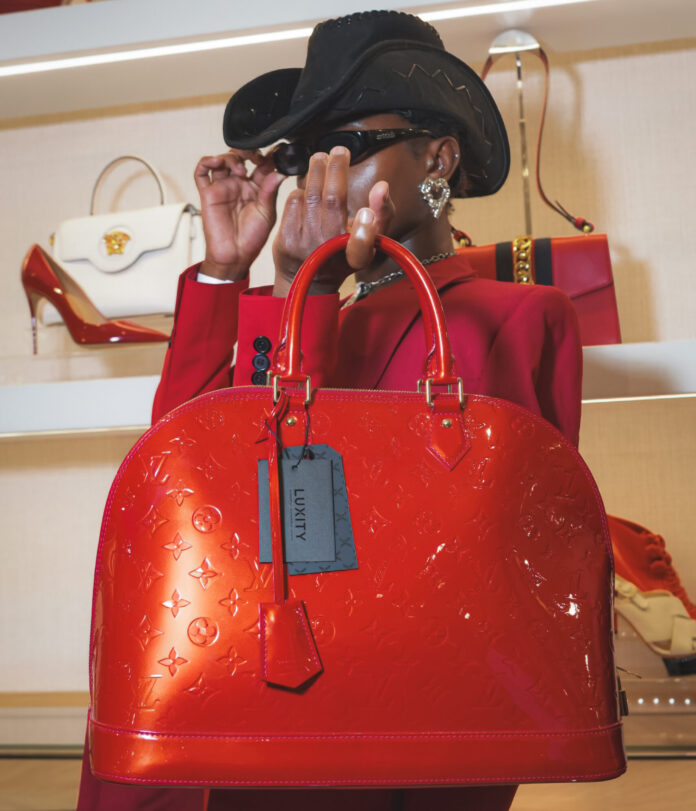
There was a time when buying pre-owned designer goods in South Africa involved a fair amount of detective work. Ten years ago, if you wanted a Louis Vuitton, Gucci or Chanel item, you might have found it on a site such as Gumtree and hoped the photographs told the whole story.
Was it authentic? Where had it come from? Why was it being sold? And, perhaps most importantly, could you trust the person behind the listing? Today, the questions are different.
Which one? Which colour? Which collection? Which year?
Few people have had a better view of that shift from second-hand to pre-owned than Michael Zahariev, co-founder of luxury resale platform Luxity, which is marking its tenth year in business.
A decade of sales data offers a revealing snapshot of how South Africans’ relationship with luxury has changed, from what they buy and how they shop to the brands they return to when yesterday’s trends become today’s collectibles.
A decade ago, handbags dominated the resale market. Two out of every three pieces changing hands were handbags, with most of the remainder being shoes. Today, handbags account for closer to one in five purchases. That does not mean the luxury handbag has lost its appeal. In fact, the opposite is true.
Also Read: Rolex leading resale surge, becoming a real timeless timepiece for SA consumers
According to Luxity’s figures, the average pre-owned handbag now sells for R28,238, compared with R12,599 previously. At the same time, the price of classic designer handbags has risen substantially since 2019, making the pre-owned market a more accessible entry point into luxury.
What has changed is the breadth of what customers are prepared to buy. Shoes have grown from about one in 10 purchases to nearly one in three. Watches, which Luxity did not offer in 2017, now sell for an average of R49,999.
Apparel was added in 2021, while homeware has also entered the mix.
“The resale customer has become much more fashion-literate,” Zahariev says. “They know the brands, the collections and, increasingly, what they’re hunting for.”
That shift matters because it suggests South African consumers are no longer simply looking for a cheaper way to own luxury. They are becoming more deliberate about what they buy.
2016 was ver Gucci
If you wanted a snapshot of fashion in the mid-2010s, Gucci would be difficult to leave out. Alessandro Michele took over as the house’s creative director in 2015 and ushered in an era of maximalism, clashing prints, logos and vintage references.
The Dionysus bag became one of the defining accessories of the period. Luxity’s resale data reflects that influence. In 2017, one in seven pieces sold by the company was Gucci. Today, the figure is closer to one in five.
Louis Vuitton has moved in the opposite direction, falling from more than four in every 10 pieces to just over two. The change illustrates something interesting about resale: a fashion house can lose momentum in the mainstream while particular pieces from its past become increasingly desirable.
Yesterday’s trend can become tomorrow’s archive. Gucci is not the only example. According to Luxity, Dolce & Gabbana’s share of items sold has grown from 0.9% to 5.2%, while Versace has risen from 0.4% to 2.8%. Montblanc, which did not feature in the early mix, now accounts for 2.9%. Chanel and Hermès have lost share by volume but still sell more individual pieces than they did in 2017.
The figures point to a resale customer who is becoming increasingly interested in the history and identity of a brand – not simply its logo.
Also Read: Gucci shoes branded most popular in Europe
The past decade has also been one of extraordinary change at the world’s major fashion houses. In 2018, Hedi Slimane took over at Celine from Phoebe Philo, Virgil Abloh joined Louis Vuitton menswear, Kim Jones moved to Dior and Riccardo Tisci took over at Burberry.
By 2025, the fashion industry’s musical chairs had accelerated further. Jonathan Anderson took on both menswear and womenswear at Dior, Matthieu Blazy moved to Chanel, Demna took over at Gucci and Donatella Versace stepped down after three decades at the Italian house.
For resale, these changes are more than industry headlines. Every creative-director change can alter what consumers perceive as desirable, collectible or outdated.
“The interesting thing about resale is that you get to watch the fashion cycle play out in real time,” Zahariev says.
“A brand can cool off, a particular style can suddenly become desirable again, and a piece that sat untouched for years can become the one everyone wants.”
What people watched, they wanted
Fashion has never happened exclusively on the runway. Increasingly, it happens on screens.
A television character wears something and viewers want to know where it came from. A film sends audiences back into a designer’s archive. A celebrity repeatedly wears a particular piece and it becomes part of a wider cultural conversation.
When Succession mocked a Burberry tote as “ludicrously capacious” in 2023, searches for the bag reportedly rose sharply in the weeks that followed.
House of Gucci sent viewers back to the Italian fashion house’s history, while Emily in Paris has helped keep French luxury and Parisian styling in the global conversation.
South Africa has developed its own fashion moments. Tyla’s red-carpet wardrobe has become a global fashion story, from her Met Gala debut in 2024 in a Balmain gown sculpted to resemble sand, to her subsequent appearances in custom Jacquemus and Valentino.
That last appearance carries an interesting full-circle detail: Valentino’s 2026 look was designed by Alessandro Michele, the same designer whose Gucci era helped shape one of the defining luxury aesthetics of the previous decade.
Closer to home, amapiano has developed a visual language of its own.
Born from Johannesburg and Pretoria’s townships and club culture, the genre has helped bring local labels such as Rich Mnisi and Galxboy into conversations alongside international names including Louis Vuitton, Gucci and Amiri.
Fashion is no longer being dictated solely by runways and glossy magazines. It is being shaped by musicians, actors, creators, television characters and social-media personalities, often in real time. That has helped normalise the idea that style can be discovered, discussed and purchased outside the traditional luxury system.
Suspicion took a decade to shake
Perhaps the biggest change, however, has been trust. For years, buying pre-owned luxury goods online required a leap of faith. Customers had to trust photographs, descriptions and authentication claims without necessarily seeing the product in person.
Physical stores changed that. By 2023, Luxity’s physical stores were doing nearly four times the business of its website, according to the company. Customers wanted to touch the leather, inspect the stitching and make their own judgement before spending thousands of rands.
Now, the pendulum appears to be moving again. Luxity says its online sales are up 75.3% compared with the same period last year. A customer who once wanted to inspect a luxury item in person may now be prepared to buy a R60,000 watch from a phone.
“You cannot argue somebody out of being suspicious,” Zahariev says. “You have to let them look. Once somebody has been in, examined everything and bought something, they’ll order a R60,000 watch online without asking to see it first.”
Trust, in other words, has become part of the luxury proposition. And once customers trust the market, they are also willing to wait for something specific. In 2025, a Hermès Birkin made for Jane Birkin herself sold at Sotheby’s in Paris for €8.6 million, setting an auction record for a handbag.
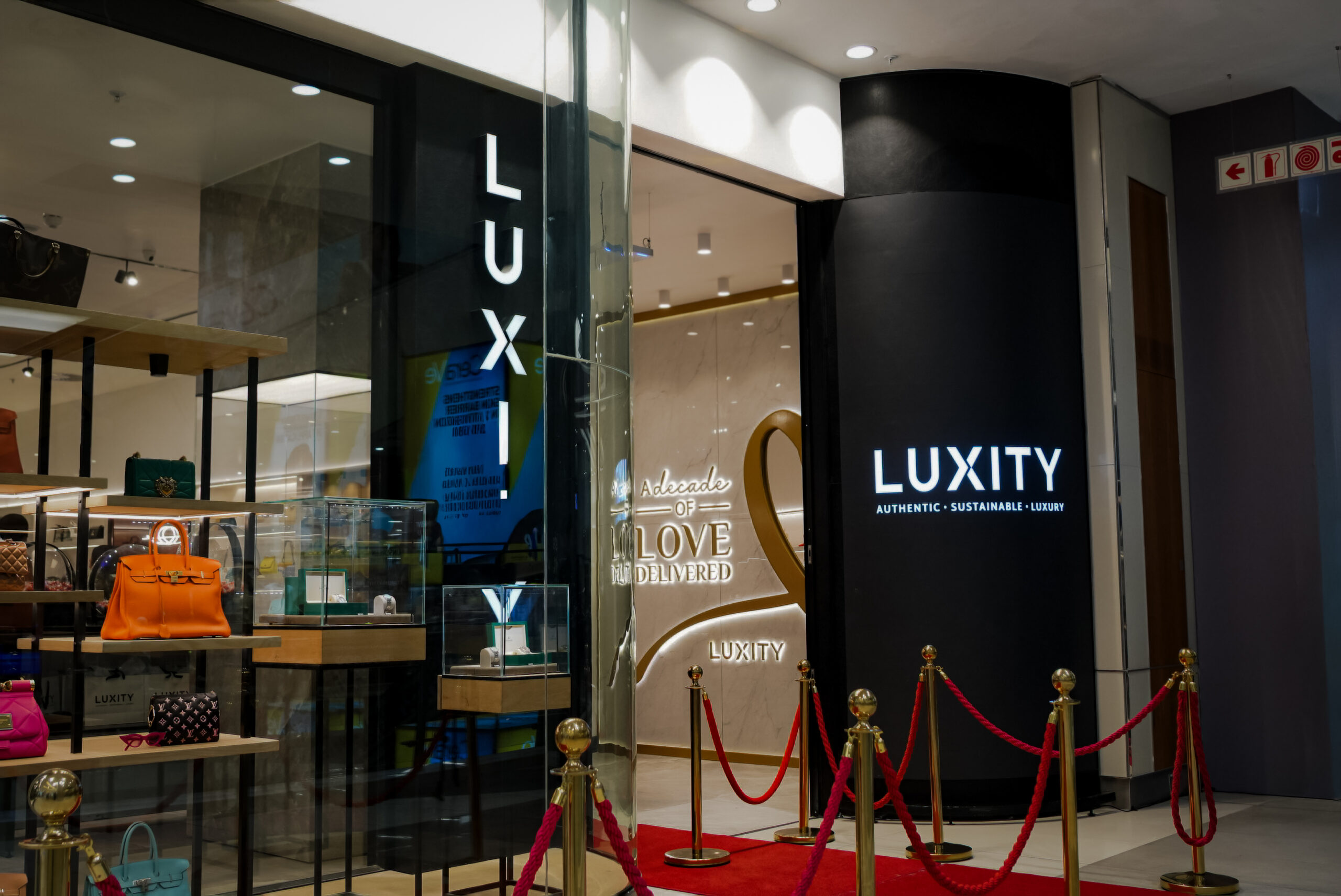
South Africa has seen its own examples of how quickly the right piece can move. Luxity sold a Hermès Togo Birkin for R220,000 within two minutes of listing it in 2021. The company now has multiple Birkins listed for more than R500,000.
“By the time a piece like that comes in, the customer has usually been looking for months. They know the bag, the size, the colour or the leather they want. So when the right one appears, there can be very little hesitation.”
If the first decade of luxury resale was about building trust, the next could be about building sophistication.
Zahariev expects at least one in 10 luxury items bought in Africa to be pre-owned by 2027.
“The customer knows what they want now,” he says. “They know the brand, the collection, the colour, the year. And if you know what you’re looking for, resale gives you a much bigger wardrobe to choose from.”
The broader luxury market is moving in the same direction. According to industry research cited by Luxity, half of luxury shoppers globally now check the pre-owned market before buying something new, while pre-owned luxury has continued to grow as new luxury sales have weakened.
- Luxity, a luxury resale platform in South Africa, has observed a shift over ten years from primarily handbag sales to a more diverse range including shoes, watches, apparel, and homeware.
- The average price of a pre-owned luxury handbag has increased from R12,599 to R28,238, with watches, introduced in 2017, averaging R49,999.
- Gucci's share of resale items sold by Luxity has grown from one in seven to nearly one in five, while Louis Vuitton's share decreased from over 40% to just over 20%.
- In 2023, Luxity's physical stores outperformed its website nearly fourfold, but online sales have since surged by 75.3% year-on-year, reflecting growing consumer trust in buying luxury goods online.
- By 2027, it is expected that at least one in 10 luxury items bought in Africa will be pre-owned, with customers becoming more knowledgeable about brands, collections, and specific items they seek.
There was a time when buying pre-owned designer goods in South Africa involved a fair amount of detective work. Ten years ago, if you wanted a Louis Vuitton, Gucci or Chanel item, you might have found it on a site such as Gumtree and hoped the photographs told the whole story.
Was it authentic? Where had it come from? Why was it being sold? And, perhaps most importantly, could you trust the person behind the listing? Today, the questions are different.
Which one? Which colour? Which collection? Which year?
Few people have had a better view of that shift from second-hand to pre-owned than Michael Zahariev, co-founder of luxury resale platform Luxity, which is marking its tenth year in business.
A decade of sales data offers a revealing snapshot of how South Africans’ relationship with luxury has changed, from what they buy and how they shop to the brands they return to when yesterday’s trends become today’s collectibles.
A decade ago, handbags dominated the resale market. Two out of every three pieces changing hands were handbags, with most of the remainder being shoes. Today, handbags account for closer to one in five purchases. That does not mean the luxury handbag has lost its appeal. In fact, the opposite is true.
Also Read: Rolex leading resale surge, becoming a real timeless timepiece for SA consumers
According to Luxity’s figures, the average pre-owned handbag now sells for R28,238, compared with R12,599 previously. At the same time, the price of classic designer handbags has risen substantially since 2019, making the pre-owned market a more accessible entry point into luxury.
What has changed is the breadth of what customers are prepared to buy. Shoes have grown from about one in 10 purchases to nearly one in three. Watches, which Luxity did not offer in 2017, now sell for an average of R49,999.
Apparel was added in 2021, while homeware has also entered the mix.
“The resale customer has become much more fashion-literate,” Zahariev says. “They know the brands, the collections and, increasingly, what they’re hunting for.”
That shift matters because it suggests South African consumers are no longer simply looking for a cheaper way to own luxury. They are becoming more deliberate about what they buy.
If you wanted a snapshot of fashion in the mid-2010s, Gucci would be difficult to leave out. Alessandro Michele took over as the house’s creative director in 2015 and ushered in an era of maximalism, clashing prints, logos and vintage references.
The Dionysus bag became one of the defining accessories of the period. Luxity’s resale data reflects that influence. In 2017, one in seven pieces sold by the company was Gucci. Today, the figure is closer to one in five.
Louis Vuitton has moved in the opposite direction, falling from more than four in every 10 pieces to just over two. The change illustrates something interesting about resale: a fashion house can lose momentum in the mainstream while particular pieces from its past become increasingly desirable.
Yesterday’s trend can become tomorrow’s archive. Gucci is not the only example. According to Luxity, Dolce & Gabbana’s share of items sold has grown from 0.9% to 5.2%, while Versace has risen from 0.4% to 2.8%. Montblanc, which did not feature in the early mix, now accounts for 2.9%. Chanel and Hermès have lost share by volume but still sell more individual pieces than they did in 2017.
The figures point to a resale customer who is becoming increasingly interested in the history and identity of a brand – not simply its logo.
The past decade has also been one of extraordinary change at the world’s major fashion houses. In 2018, Hedi Slimane took over at Celine from Phoebe Philo, Virgil Abloh joined Louis Vuitton menswear, Kim Jones moved to Dior and Riccardo Tisci took over at Burberry.
By 2025, the fashion industry’s musical chairs had accelerated further. Jonathan Anderson took on both menswear and womenswear at Dior, Matthieu Blazy moved to Chanel, Demna took over at Gucci and Donatella Versace stepped down after three decades at the Italian house.
For resale, these changes are more than industry headlines. Every creative-director change can alter what consumers perceive as desirable, collectible or outdated.
“The interesting thing about resale is that you get to watch the fashion cycle play out in real time,” Zahariev says.
“A brand can cool off, a particular style can suddenly become desirable again, and a piece that sat untouched for years can become the one everyone wants.”
Fashion has never happened exclusively on the runway. Increasingly, it happens on screens.
A television character wears something and viewers want to know where it came from. A film sends audiences back into a designer’s archive. A celebrity repeatedly wears a particular piece and it becomes part of a wider cultural conversation.
When Succession mocked a Burberry tote as “ludicrously capacious” in 2023, searches for the bag reportedly rose sharply in the weeks that followed.
House of Gucci sent viewers back to the Italian fashion house’s history, while Emily in Paris has helped keep French luxury and Parisian styling in the global conversation.
South Africa has developed its own fashion moments. Tyla’s red-carpet wardrobe has become a global fashion story, from her Met Gala debut in 2024 in a Balmain gown sculpted to resemble sand, to her subsequent appearances in custom Jacquemus and Valentino.
That last appearance carries an interesting full-circle detail: Valentino’s 2026 look was designed by Alessandro Michele, the same designer whose Gucci era helped shape one of the defining luxury aesthetics of the previous decade.
Closer to home, amapiano has developed a visual language of its own.
Born from Johannesburg and Pretoria’s townships and club culture, the genre has helped bring local labels such as Rich Mnisi and Galxboy into conversations alongside international names including Louis Vuitton, Gucci and Amiri.
Fashion is no longer being dictated solely by runways and glossy magazines. It is being shaped by musicians, actors, creators, television characters and social-media personalities, often in real time. That has helped normalise the idea that style can be discovered, discussed and purchased outside the traditional luxury system.
Perhaps the biggest change, however, has been trust. For years, buying pre-owned luxury goods online required a leap of faith. Customers had to trust photographs, descriptions and authentication claims without necessarily seeing the product in person.
Physical stores changed that. By 2023, Luxity’s physical stores were doing nearly four times the business of its website, according to the company. Customers wanted to touch the leather, inspect the stitching and make their own judgement before spending thousands of rands.
Now, the pendulum appears to be moving again. Luxity says its online sales are up 75.3% compared with the same period last year. A customer who once wanted to inspect a luxury item in person may now be prepared to buy a R60,000 watch from a phone.
“You cannot argue somebody out of being suspicious,” Zahariev says. “You have to let them look. Once somebody has been in, examined everything and bought something, they’ll order a R60,000 watch online without asking to see it first.”
Trust, in other words, has become part of the luxury proposition. And once customers trust the market, they are also willing to wait for something specific. In 2025, a Hermès Birkin made for Jane Birkin herself sold at Sotheby’s in Paris for €8.6 million, setting an auction record for a handbag.
South Africa has seen its own examples of how quickly the right piece can move. Luxity sold a Hermès Togo Birkin for R220,000 within two minutes of listing it in 2021. The company now has multiple Birkins listed for more than R500,000.
“By the time a piece like that comes in, the customer has usually been looking for months. They know the bag, the size, the colour or the leather they want. So when the right one appears, there can be very little hesitation.”
If the first decade of luxury resale was about building trust, the next could be about building sophistication.
Zahariev expects at least one in 10 luxury items bought in Africa to be pre-owned by 2027.
“The customer knows what they want now,” he says. “They know the brand, the collection, the colour, the year. And if you know what you’re looking for, resale gives you a much bigger wardrobe to choose from.”
The broader luxury market is moving in the same direction. According to industry research cited by Luxity, half of luxury shoppers globally now check the pre-owned market before buying something new, while pre-owned luxury has continued to grow as new luxury sales have weakened.


