


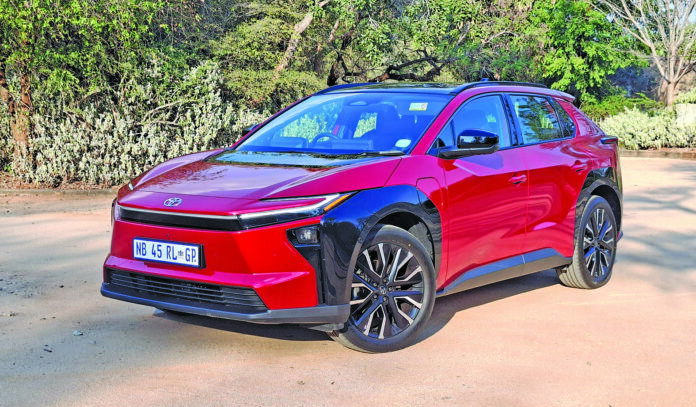
South Africa’s strongest monthly new vehicle sales performance in 12 years appears, at first glance, to contradict the country’s broader economic reality. With growth subdued, unemployment stubbornly high and many households still under financial pressure, the July new car sales figures raise an important question: what is driving consumers back into dealership showrooms?
Naamsa indicated that domestic new vehicle sales reached 57 708 units in July 2026, an increase of 11.9% compared with the same month last year. Passenger vehicles accounted for 40 912 units – the strongest monthly passenger car performance since September 2014 – while light commercial vehicles, including bakkies and minibuses, rose 10.6% to 13 710 units.
Toyota retained its position as South Africa’s best-selling brand with 14 142 units sold, followed by Suzuki Auto, Volkswagen Group South Africa, Hyundai Automotive South Africa, Ford Motor Company, Chery Auto South Africa, GWM South Africa, Isuzu Motors South Africa, Jetour South Africa and Kia South Africa. In the commercial vehicle market, FAW Trucks led the rankings ahead of Toyota, Isuzu, Scania and Daimler Truck Southern Africa.
While lower fuel prices during July and growing interest in new energy vehicles helped support consumer confidence, South Africa’s two largest vehicle financiers suggest the story extends beyond temporary economic relief.
Head of strategy and business analytics at Absa Vehicle Finance, Henry Botha, says consumers are increasingly choosing new vehicles over used ones because the value proposition has improved significantly. “The strong performance of the new vehicle market is largely being driven by a shift in consumer preference away from used vehicles and towards new vehicles,” he says.
According to Botha, increased competition from Chinese manufacturers and international brands producing vehicles in India has expanded the range of competitively priced models available to South African buyers.
Consumers are now finding new vehicles that offer higher specification levels, warranties and service plans at prices that compare favourably with used vehicles. Historically, around one-and-a-half used vehicles were financed for every new vehicle financed. Absa says that ratio is now approaching one-to-one, highlighting how new vehicles have become increasingly attractive.
First-time buyers are also increasingly opting for new cars instead of used ones, encouraged by improved affordability, greater model choice and a relatively stable exchange rate that has helped manufacturers maintain competitive pricing.
Wesbank identifies similar trends but places greater emphasis on affordability and financing structures.
Lebogang Gaoaketse, head of marketing and communication at Wesbank, says lower fuel prices and a more stable interest rate environment have supported consumer confidence, while flexible finance products have helped make monthly repayments more manageable.
“Greater reliance on flexible financing structures, including longer loan terms and balloon payment options, has been instrumental in keeping monthly instalments affordable.”
Vehicle preferences are also evolving. Both Absa and Wesbank say compact SUVs remain the strongest-performing segment as buyers seek a balance between practicality, fuel efficiency and affordability.
Absa further notes growing consumer interest in fuel-efficient vehicles and new energy vehicles.
Despite the encouraging sales figures, both financiers caution against assuming uninterrupted growth. Potential risks remain, including elevated household debt, inflationary pressures and broader economic uncertainty. However, both institutions believe stronger competition among manufacturers, stable interest rates and continued improvements in vehicle affordability should provide ongoing support for demand into 2027.
Greater competition, improved affordability, flexible finance structures and a broader range of well-equipped vehicles appear to be convincing more South Africans that, despite challenging economic conditions, purchasing a new vehicle now represents better long-term value than it did only a few years ago.
- South Africa's new vehicle sales reached 57,708 units in July 2026, an 11.9% increase from July 2025, with passenger vehicles at their strongest monthly performance since September 2014.
- Toyota was the best-selling brand with 14,142 units, followed by Suzuki Auto, Volkswagen Group, Hyundai, and Ford among others.
- Consumers are shifting from used to new vehicles due to improved value propositions, increased competition from Chinese and Indian-manufactured vehicles, and better vehicle specifications and warranties.
- Lower fuel prices, a stable exchange rate, and flexible financing options such as longer loan terms and balloon payments have supported consumer confidence and affordability.
- Despite positive sales trends, risks like high household debt, inflation, and economic uncertainty remain, though competition and affordability improvements are expected to sustain demand into 2027.


