


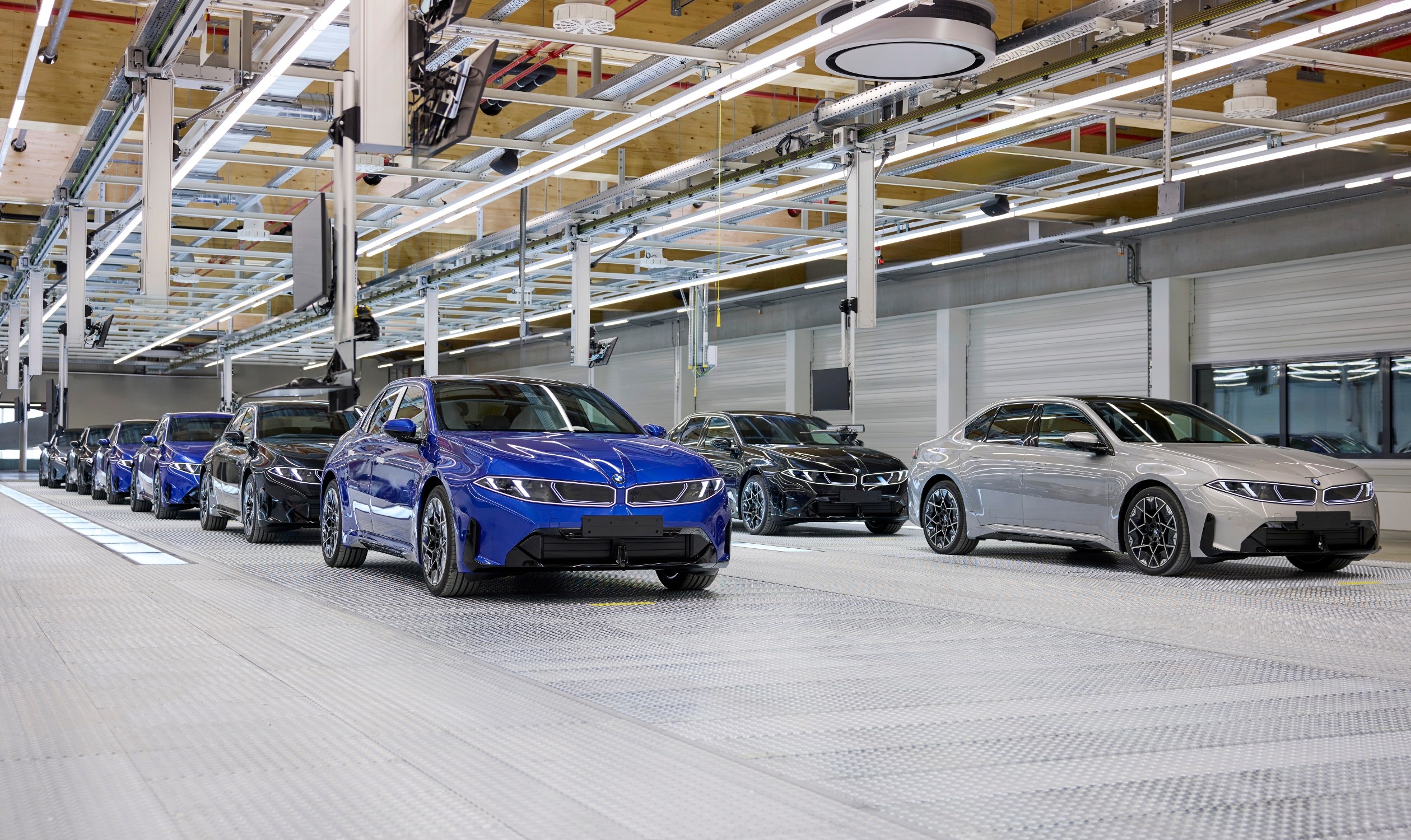

BMW Group plans to cut management roles, reduce the complexity of its vehicle range and expand the use of artificial intelligence as it seeks to improve profitability amid increasingly competitive global automotive markets.
The German manufacturer outlined the measures at its 2026 Capital Market Day, setting a long-term target of returning its automotive operating profit margin to between 8% and 10% by the beginning of the next decade. As an interim target, BMW expects its automotive EBIT margin to reach between 3% and 5% in 2028, while longer-term automotive free cash flow is targeted at at least €7-billion (R130-billion).
Streamlining the vehicle portfolio
Part of the strategy involves reducing the number of vehicle variants and concentrating on models delivering stronger returns in individual markets. BMW confirmed there will, for example, be no successor to the 2 Series Active Tourer.
At the upper end of its portfolio, the first model under the BMW ALPINA brand is due next year. Inspired by the 7 Series, it will be positioned between mainstream BMW models and Rolls-Royce.
China and Europe in focus
China will receive greater attention through increased local production and development. BMW wants at least 95% of locally manufactured vehicles in China to be tailored to Chinese customer preferences by 2030.
Europe, meanwhile, is scheduled to receive another compact fully electric Neue Klasse model in 2028, extending technology initially introduced on vehicles such as the iX3 into more affordable segments.
AI at the centre of efficiency drive
Artificial intelligence forms another major part of the efficiency programme. BMW plans to expand its use across vehicle development, manufacturing, purchasing, marketing, sales and aftersales. This includes AI-assisted engineering and simulations, automated production processes and the development of what BMW describes as an “AI-defined vehicle”.
Management cuts and organisational changes
The company is also reviewing its organisational structure. BMW said it intends to reduce the number of divisions and associated management positions by 20% by the middle of 2027, with similar reductions planned at organisational levels below management. Chairman Milan Nedeljković said BMW was improving its structures and cost base to respond to increasingly intense competition.
Facing growing industry pressure
The strategy comes as established premium manufacturers face pressure from the transition to electric vehicles, rising development costs and growing competition, particularly from Chinese manufacturers.
BMW said further measures remain under evaluation, with additional decisions expected by the northern hemisphere spring of 2027.
- BMW Group aims to return its automotive operating profit margin to between 8% and 10% by 2030, with an interim target of 3% to 5% EBIT margin in 2028.
- The company plans to reduce management roles by 20% by mid-2027 and cut vehicle variants, discontinuing models like the 2 Series Active Tourer.
- BMW will launch its first ALPINA model next year, positioned between mainstream BMW and Rolls-Royce, inspired by the 7 Series.
- Greater focus will be placed on China with 95% of locally manufactured vehicles tailored to Chinese preferences by 2030, and a new compact electric model will launch in Europe in 2028.
- Artificial intelligence will be expanded across all company areas, including vehicle development, manufacturing, and sales, to improve efficiency and create an “AI-defined vehicle.”


