


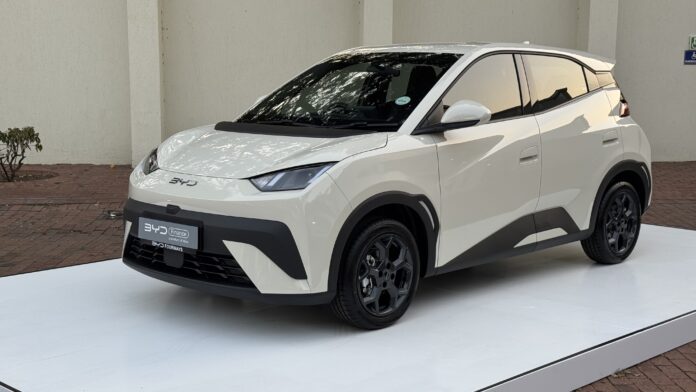
Chinese new energy vehicle giant BYD and Absa have deepened their strategic partnership in South Africa as competition intensifies in the country’s fast-growing electric and plug-in hybrid vehicle market.
The expanded collaboration, branded BYD Finance, builds on a relationship first established in 2025 and is aimed at making electric vehicle ownership more accessible through tailored finance, insurance and dealer support solutions.
The move also strengthens Absa’s position in the rapidly evolving vehicle finance landscape, equipping the bank to compete more aggressively with rival WesBank, which has secured finance partnerships with several Chinese automotive brands entering the South African market.
Under the agreement, Absa will continue providing retail vehicle finance, dealership wholesale funding, insurance products and other value-added banking services to support BYD’s growing footprint.
BYD Auto South Africa Managing Director Steve Chang said South Africa remains a strategic market for the world’s largest new energy vehicle manufacturer.
“For BYD, this is about more than bringing world-leading vehicles to market. It is about building the ecosystem that helps more South Africans access them,” said Chang.
Better support customers
He added that extending the partnership with Absa would enable the company to better support customers, dealers and businesses with the finance solutions required to accelerate the adoption of new energy vehicles.
The announcement comes as demand for electric mobility continues to surge locally.
According to Absa, sales of new energy vehicles increased by 78.8% between January and May this year compared with the same period in 2025. Battery electric vehicle (BEV) sales climbed by 193%, while plug-in hybrid electric vehicle (PHEV) volumes surged by an impressive 681%.
During the same period, BYD emerged as South Africa’s second best-selling new energy vehicle brand, recording 2 011 sales year-to-date.
Absa Vehicle and Asset Finance Managing Executive Charl Potgieter said the bank’s own finance portfolio indicates consumer confidence in electric mobility is steadily improving.
“While affordability and infrastructure remain important considerations, there is growing acceptance of electric mobility,” Potgieter said.
The strengthened partnership currently supports BYD’s network of 52 dealerships nationwide. The Chinese manufacturer plans to expand that footprint to 80 dealerships before the end of the year as it continues its aggressive local growth strategy.
The agreement also creates opportunities for Absa to support BYD’s expansion beyond South Africa through its Pan-African banking network, which spans 14 countries.
Founded as a battery technology company in 1995, BYD has grown into one of the world’s largest automotive manufacturers, selling more than 4.27 million new energy passenger vehicles globally in 2024. In South Africa, the brand continues expanding its electric and plug-in hybrid model range as competition among Chinese manufacturers intensifies.
- BYD and Absa have expanded their strategic partnership in South Africa to enhance electric and plug-in hybrid vehicle ownership through tailored finance, insurance, and dealer support solutions.
- The partnership strengthens Absa’s competitive position against rivals like WesBank in the growing vehicle finance market linked to Chinese automotive brands.
- New energy vehicle sales in South Africa surged by 78.8% year-on-year (Jan–May 2026), with BYD becoming the second best-selling brand, aided by Absa’s ongoing financing support.
- BYD plans to increase its dealership network in South Africa from 52 to 80 by year-end, supported by Absa’s finance services and Pan-African banking reach across 14 countries.
- Both companies aim to accelerate electric vehicle adoption by improving affordability, infrastructure, and consumer confidence amid rising demand for electric mobility.


