


Chinese automotive giant BYD has raised the stakes in the global race for autonomous driving technology by becoming the first carmaker to offer full damage coverage for accidents involving both intelligent parking and advanced urban driving-assistance systems.
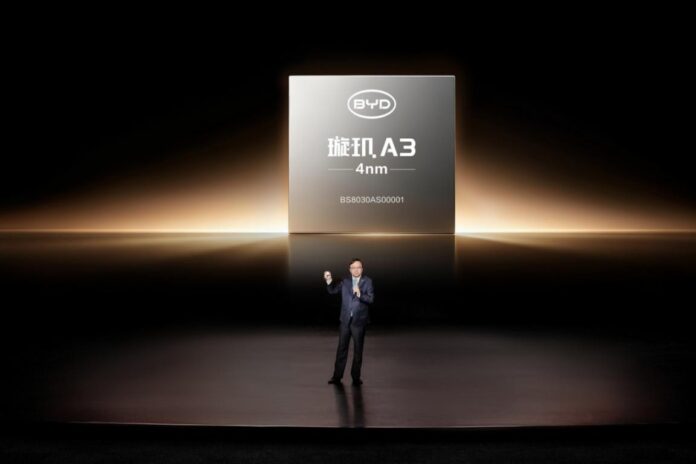
The announcement was made during the company’s latest Intelligence Strategy Launch Event in China, where BYD also unveiled its self-developed XUANJI A3 chip, said to be the country’s first 4-nanometre automotive-grade driving system-on-chip (SoC).
Under the new policy, BYD will cover all economic losses arising from accidents where its Urban Navigate on Autopilot (NOA) function is found legally liable, provided the system is being used in accordance with regulations. The one-year guarantee applies to new customers and existing owners who upgrade to the latest version of the company’s God’s Eye intelligent driving system in China.
Boosting consumer confidence in ADAS
The move is aimed at boosting consumer confidence in advanced driver-assistance systems (ADAS), which are becoming increasingly common in modern vehicles but continue to face public scrutiny over safety and accountability.
BYD says its confidence stems from the scale of its intelligent driving programme. More than 3.15-million BYD vehicles equipped with driving-assistance technology are already on the road, generating over 200-million kilometres of driving data every day. The company also boasts a research and development team of 5 000 engineers focused on intelligent mobility technologies.
God’s Eye intelligent driving platform upgraded
Alongside the coverage pledge, BYD announced significant upgrades to its God’s Eye intelligent driving platform, including enhanced artificial intelligence capabilities, a new satellite sensor architecture and improved data-learning systems.
The company also revealed its latest DiLink AI Intelligent Cockpit, featuring a digital assistant capable of proactive task execution and advanced reasoning functions.
Perhaps most significant was the unveiling of the XUANJI A3 chip, which supports future Level 3 and Level 4 autonomous driving applications. BYD claims the chip delivers lower power consumption and higher computing efficiency than rival systems.
The developments signal BYD’s growing ambition to become a global leader not only in electric vehicles, but also in intelligent and autonomous driving technologies.
Visit SW YouTube Channel for our video content
- Chinese automotive giant BYD has raised the stakes in the global race for autonomous driving technology by becoming the first carmaker to offer full damage coverage for accidents involving both intelligent parking and advanced urban driving-assistance systems.
- The announcement was made during the company’s latest Intelligence Strategy Launch Event in China, where BYD also unveiled its self-developed XUANJI A3 chip, said to be the country’s first 4-nanometre automotive-grade driving system-on-chip (SoC).
- Under the new policy, BYD will cover all economic losses arising from accidents where its Urban Navigate on Autopilot (NOA) function is found legally liable, provided the system is being used in accordance with regulations.
- The one-year guarantee applies to new customers and existing owners who upgrade to the latest version of the company’s God’s Eye intelligent driving system in China.
- Boosting consumer confidence in ADAS The move is aimed at boosting consumer confidence in advanced driver-assistance systems (ADAS), which are becoming increasingly common in modern vehicles but continue to face public scrutiny over safety and accountability.


