


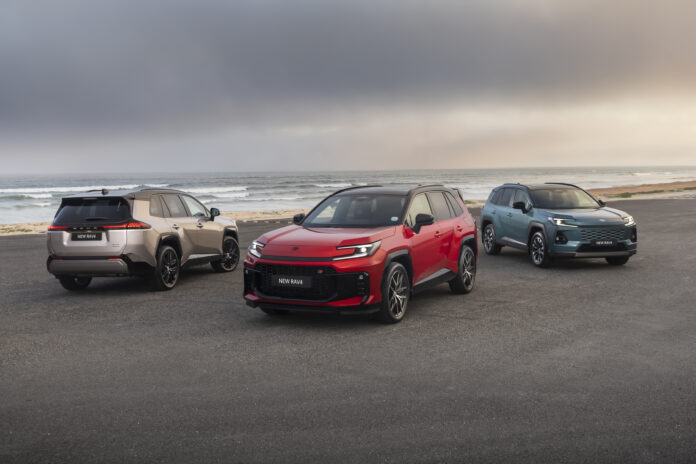
The RAV4 is one of those rare vehicles that changed the automotive landscape. When the first-generation model debuted in 1994, it effectively pioneered the mainstream compact SUV segment by combining the practicality of an SUV with the comfort and driving dynamics of a passenger car.
Since then, the model has evolved through six generations. The second generation arrived in 2001, followed by the third in 2006, the fourth in 2013 and the fifth in 2019. Now, in 2026, a sixth-generation RAV4 embraces greater connectivity, electrification and advanced safety technologies.
The numbers tell a compelling story. The RAV4 is sold in more than 180 countries and has accumulated more than 15 million sales globally in three decades.
Yet, the competitive landscape has changed. In 2019, the RAV4’s primary rivals came from established players such as Mazda and Volkswagen. Today, Toyota faces fierce competition from a new wave of challengers, including the Jetour T1 and T2, Haval H6, Jaecoo J7 and Ford Territory, all eager to chip away at its market share.
Toyota’s response is a more sophisticated, technologically advanced and rugged-looking SUV. Buyers can choose from petrol, hybrid, performance-inspired hybrids and plug-in
hybrid derivatives. The range includes a 2.0-litre naturally aspirated petrol engine producing 127kW and 203Nm in the VX model. Hybrid derivatives employ Toyota’s latest 2.5-litre hybrid electric vehicle technology, delivering 137kW and 221Nm, with a combined system output of 163kW.
Leading the line-up is the new 2.5-litre Plug-in Hybrid Electric Vehicle (PHEV), which combines Toyota’s sixth-generation plug-in hybrid technology with a larger 25.4kWh battery pack. The result is a substantial 225kW system output and significantly improved electric driving capability.
One of the most exciting additions is the introduction of the first-ever RAV4 GR-S. Drawing inspiration from Toyota Gazoo Racing, the GR-S adds a more dynamic and engaging personality without compromising the practicality and versatility that have made the RAV4 so popular.
The launch route covered some of the Western Cape’s most scenic roads. On the first day, we travelled about 350km from Cape Town through the picturesque mountain passes around Worcester and Ceres
before heading towards the coastal town of Paternoster. The RAV4’s handling was impressive on sharp bends.
I spent time behind the wheel of both the PHEV and hybrid derivatives. The standout was undoubtedly the plug-in hybrid.
In EV mode, it moved with near-silent refinement, while the instant torque delivery made progress effortless. Toyota claims an electric-only range of up to 142km, making it possible for many commuters to complete their daily journeys without using a drop of fuel.
Later in the day, I sampled the hybrid derivative, which proved impressively responsive on long stretches of road. The following day featured a 170km drive in the GR-S. Its sharper responses, firmer setup and sportier character added a welcome layer of driver engagement while retaining the comfort expected from a family SUV.
Inside, the transformation is even more dramatic. The redesigned cabin revolves around Toyota’s new “Digital Island” architecture, creating a clean and intuitive environment that feels significantly more premium than before. The standard 12.3-inch digital instrument cluster is available across the range, while either a 10.5-inch or 12.9-inch touchscreen, depending on specification, handles multimedia duties. Premium touches include JBL audio, wireless charging and a panoramic sunroof.
Higher-spec models introduce the Toyota Safety Sense 4.0, making its South African debut. The suite includes a driver monitoring system, adaptive high beam assist, road sign assist, emergency steering assistance, and intersection collision avoidance technology.
Additional features available across the range include Blind Spot Monitoring with Safety Exit Assist, Intelligent Park Assist, Head-Up Display, Parking Support Brake and a 3D Panoramic View Monitor.
Thirty years after redefining the compact SUV segment, the Toyota RAV4 is no longer simply defending its crown. It’s adapting to a rapidly changing market while embracing electrification, connectivity and advanced safety technologies.
Pricing starts at R770 500 for the RAV4 2.5 HEV GX, rising to R799 900 for the RAV4 2.0 VX, R927 800 for the RAV4 2.5 HEV VX, R941 800 for the RAV4 2.5 HEV GR-S and R1 043 900 for the flagship RAV4 2.5 PHEV.
The plug-in hybrid enters a growing premium electrified SUV segment where it will compete with the BYD Atto 8, BMW X1 xDrive30e and Volvo XC60 Recharge.
All models are sold with a six-services/90000km service plan, a three-year/100 000km warranty and an eight-year/160 000km battery warranty for electrified derivatives.
- The RAV4 launched its first generation in 1994.
- It pioneered the mainstream compact SUV segment.
- Combined SUV practicality with passenger car comfort and driving dynamics.
- Marked a significant change in the automotive landscape.
- Full story available in the Sunday World e-edition and on their YouTube channel.


