


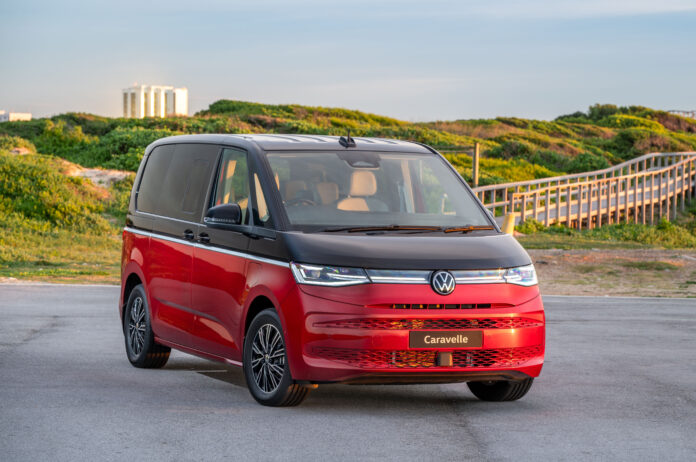
Volkswagen South Africa is turning up the heat in the multipurpose vehicle segment with the new T7 Caravelle eHybrid 4Motion, combining plug-in hybrid technology with seven-seat practicality and all-wheel drive.
I drove the new Caravelle for five days, putting it through school runs, meetings and a 420km return journey from Gauteng to Limpopo to transport a lobola delegation.
The Caravelle has heritage. From the Volkswagen Type 2 of 1950, the VW Bus evolved through generations of Kombi, Transporter and Caravelle models.
The T7 brings it into the electrified era. Its plug-in hybrid system combines a 1.5-litre turbocharged petrol engine producing 130kW and 250Nm with an electric motor incorporated into a six-speed DSG transmission. Combined output is 180kW and 350Nm, making this the most powerful production Caravelle offered locally.
A second electric motor drives the rear axle, providing the 4Motion all-wheel-drive capability without the conventional mechanical propshaft arrangement.
Around town, the Caravelle can pull away silently under electric power, with the petrol engine typically joining proceedings as speeds and power demands increase. Transitions between the two power sources were generally smooth. The sizeable Caravelle was surprisingly easy and pleasant to drive.
The Limpopo journey demonstrated its long-distance credentials well. My overall indicated petrol consumption settled at 6.7L/100km. I departed Johannesburg with about 520km of combined indicated range. After returning to Gauteng, about 200km remained. Recharging added more than 260km of indicated combined range. The 19.7kWh battery has a claimed electric range of up to 95km, although the most I observed was around 70km.
Volkswagen says the Caravelle can accept 11kW AC charging or up to 40kW DC fast charging, with a claimed 10% to 80% DC charging time of about 26 minutes under ideal conditions. My session took slightly more than 30 minutes. The experience also exposed one of the frustrations facing electrified-car users: the lack of interchangeable public charging networks.
I initially attempted to charge at a Rubicon station at Fourways Crossing using my GridCars card but it was declined, requiring a detour to Fourways Mall. There, the DC charger repeatedly ended the session as the battery approached 80%, despite the vehicle being configured for 100%. At 80%, the indicated electric range was about 63km.
That is not a criticism of the Caravelle but it illustrates how fragmented charging systems can complicate a straightforward ownership experience.
Volkswagen includes a 7.4kW AC wallbox, which it says can recharge the battery in about five-and-a-half hours at home.
In the cabin, standard equipment includes climate control, electrically operated sliding doors, a powered tailgate, ambient lighting and a 13-speaker, 840-watt sound system.
Adaptive cruise control, IQ.Light LED Matrix headlights, blind-spot monitoring, rear traffic alert and parking assistance are among the driver-assistance features.
At R1,794,000, the Caravelle eHybrid is not inexpensive. It comes with a three-year/ 120,000km warranty and five-year/100,000km maintenance plan. Volkswagen specifies an eight-year/160,000km warranty for the high-voltage battery.
- Volkswagen South Africa launched the T7 Caravelle eHybrid 4Motion, featuring plug-in hybrid technology, seven-seat capacity, and all-wheel drive.
- The vehicle combines a 1.5-litre turbocharged petrol engine (130kW, 250Nm) and an electric motor for a total output of 180kW and 350Nm.
- The 19.7kWh battery offers a claimed electric range of up to 95km, with practical observed ranges around 70km.
- Charging options include 11kW AC charging, 40kW DC fast charging with a 10%-80% charge time of about 26 minutes (real-world session took over 30 minutes), and a home wallbox recharge time of approximately five-and-a-half hours.
- Priced at R1,794,000, the Caravelle eHybrid comes with a three-year/120,000km warranty, five-year/100,000km maintenance, and an eight-year/160,000km battery warranty.


