


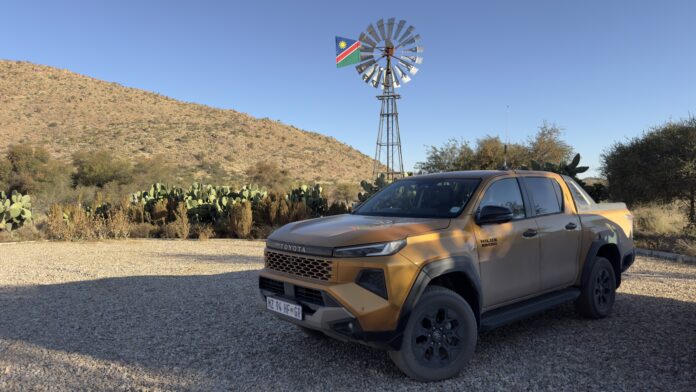
The Toyota Hilux is one of the most influential vehicles in shaping South Africa’s motoring landscape. Since its global debut in 1968, what began as a compact utility vehicle has evolved into one of the world’s most recognisable and trusted pickup nameplates, building an almost unrivalled reputation for durability, reliability and strong resale values.
This past week, I travelled to Namibia at the invitation of Toyota South Africa Motors to experience the all-new ninth-generation Hilux at its official media launch.
Over three days, the launch route covered more than 780km from Windhoek through the spectacular Namib Desert to Walvis Bay, incorporating long stretches of tar, loose gravel, blind rises and sweeping mountain roads that exposed every strength and weakness of Toyota’s latest contender.
The timing could hardly have been more significant.
Recently Volkswagen, Ford and Isuzu have all hosted media drives showcasing updates to the Amarok, Ranger and D-Max, respectively. South Africa’s fiercely contested bakkie segment is entering one of its most competitive periods in years.
Can the new Hilux regain lost ground?
The key question is whether the new Hilux can regain lost ground, especially in the double-cab market where the Ford Ranger has been increasingly successful.
Built in South Africa, the new Hilux launches with Toyota’s familiar 2.8-litre GD-6 turbo diesel engine, paired to a six-speed automatic transmission. Toyota says a 2.4-litre diesel derivative will follow during the first quarter of 2027, while market research confirmed diesel remains the preferred choice among local buyers.
The range comprises SRX, Raider, Raider X and the flagship Legend, with both rear-wheel-drive and four-wheel-drive derivatives available. Throughout the launch, we drove the Legend Mild Hybrid models.
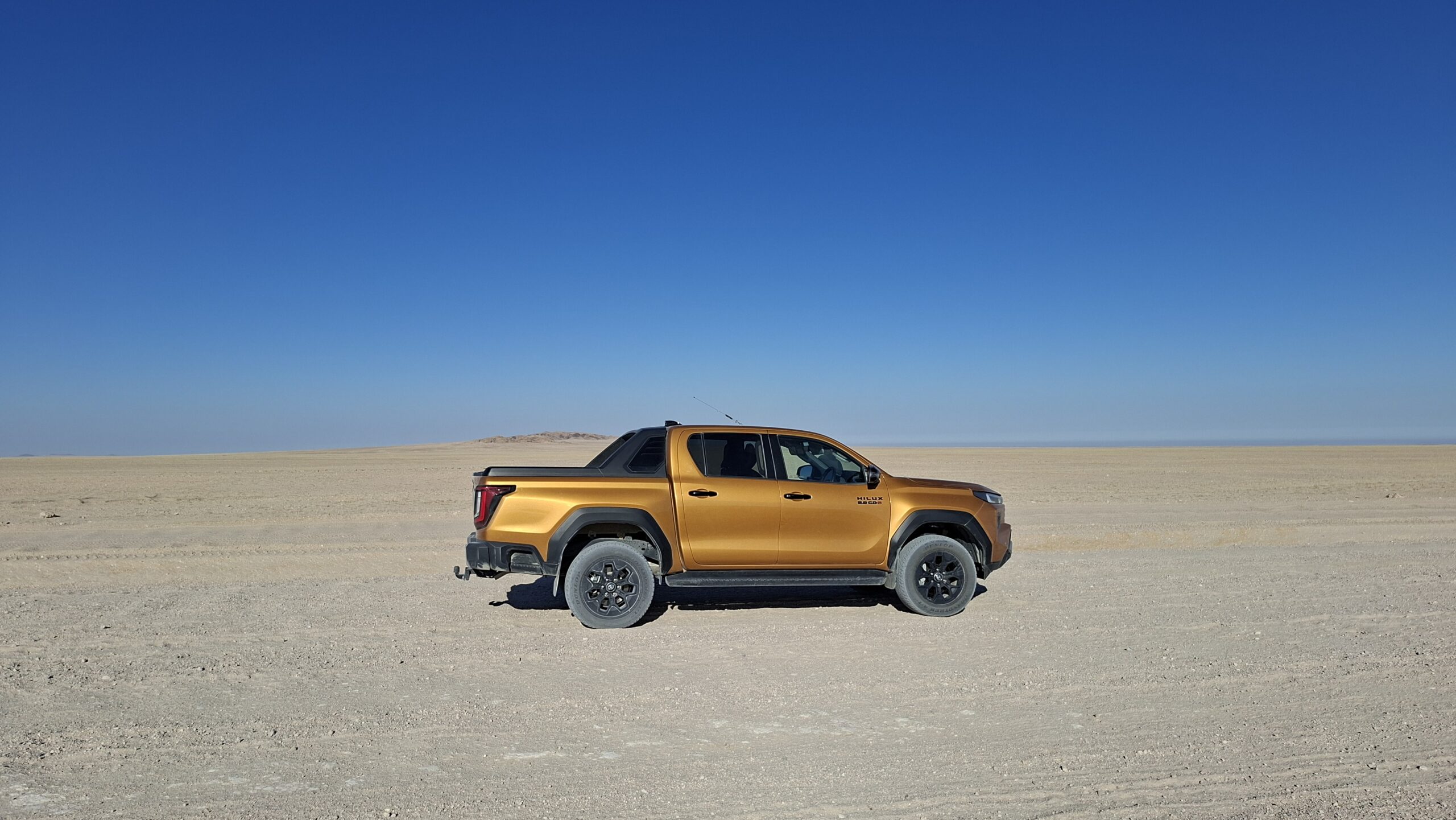
The visual changes are evolutionary rather than revolutionary. Slimmer LED headlamps, a wider grille, redesigned alloy wheels and updated badging give the Hilux a more modern, assertive appearance without abandoning the familiar identity buyers have come to know. Redesigned LED taillights and integrated rear access steps improve both aesthetics and everyday practicality.
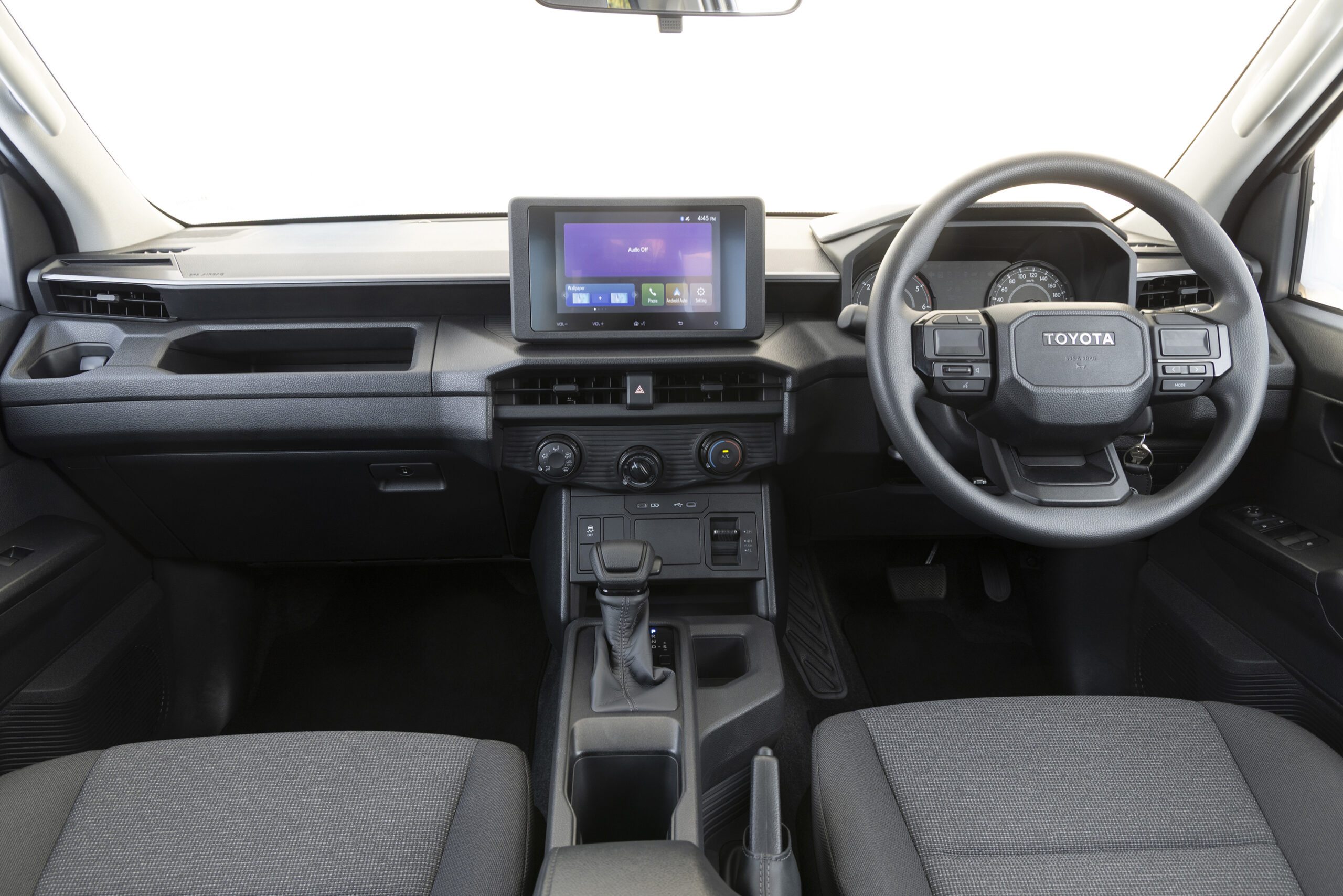
Inside, the cabin receives a welcome technological upgrade. Higher-specification models feature a 12.3-inch digital instrument cluster alongside a 12.3-inch infotainment touchscreen.
Wireless Apple CarPlay and Android Auto, wireless smartphone charging and improved multimedia functionality ensure the Hilux remains competitive in an increasingly connected market.
Addressing ride comfort
More importantly, Toyota has addressed one of the previous model’s biggest criticisms: ride comfort.
The redesigned front and rear suspension transforms the driving experience. Whether traversing corrugated gravel roads or absorbing unexpected bumps beyond blind crests, the new Hilux remained impressively composed. The introduction of electronic power steering also deserves praise, delivering lighter steering effort without sacrificing confidence or precision.
Fuel consumption during the launch averaged between 8.8 and 9.0 litres per 100 km – respectable figures considering the demanding terrain and sustained highway speeds.
Not everything was perfect. The test vehicle allocated to my driving partner and I repeatedly displayed a tyre-pressure warning for the right rear wheel despite the tyre being correctly inflated. The system eventually instructed us to visit the nearest Toyota dealer. While likely an isolated fault, it serves as a reminder that even launch vehicles are not immune to electronic glitches and will undoubtedly fall under warranty should customers encounter similar issues.
Preserving traditionally strong residual values
Toyota says preserving the Hilux’s traditionally strong residual values influenced its pricing strategy. Double-cab pricing starts at R658,500, rising to R999,900 for the flagship Legend 4×4 Mild Hybrid. Every model is sold with a three-year/100,000km warranty and a nine-service/90,000km service plan, while the mild-hybrid battery carries an eight-year/160,000km warranty.
After more than 780km behind the wheel, the verdict is clear. The ninth-generation Hilux is more refined, significantly more comfortable and better equipped than its predecessor without compromising the qualities that built its reputation.
Whether those improvements will be enough to wrestle double-cab market leadership back from the Ford Ranger remains to be seen, but Toyota has undoubtedly delivered a bakkie capable of mounting a serious challenge in what promises to be one of the most competitive chapters the segment has ever witnessed.
- The ninth-generation Toyota Hilux, launched in Namibia, features evolutionary design updates, enhanced technology (12.3-inch digital displays, wireless connectivity), and improved ride comfort through redesigned suspension and electronic power steering.
- The model range includes SRX, Raider, Raider X, and flagship Legend trims, powered initially by a 2.8-litre GD-6 turbo diesel engine with a 2.4-litre diesel variant expected in early 2027.
- Toyota aims to regain double-cab market share against rivals like the Ford Ranger in South Africa's highly competitive bakkie segment, leveraging the Hilux’s strong durability, reliability, and resale value reputation.
- Pricing starts at R658,500 for double-cab models, with the flagship Legend 4x4 Mild Hybrid priced at R999,900; all come with a 3-year/100,000km warranty and comprehensive service plans.
- Overall, the new Hilux offers a more refined, comfortable, and better-equipped driving experience without sacrificing its core strengths, though minor electronic issues were noted during the launch.



The Hi Lux looks too much ‘Chinese’ and not agressive or robust, so I don’t like it