


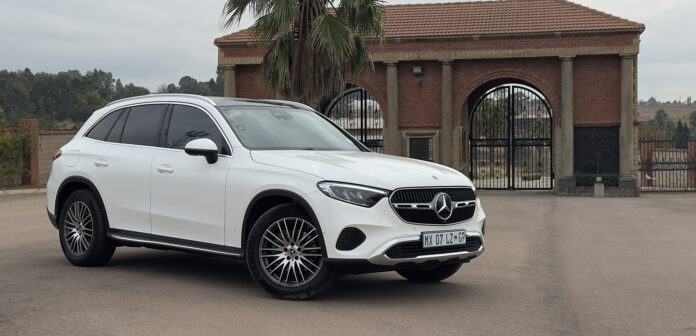
The automotive industry is changing rapidly. Diesel engines, once regarded as the obvious choice for long-distance motorists because of their fuel efficiency, are increasingly facing pressure from stricter emissions regulations and rising fuel costs. At the same time, Chinese manufacturers are flooding the market with plug-in hybrid electric vehicles (PHEVs) promising impressive driving ranges and lower running costs.
Against this backdrop, spending a week with the Mercedes-Benz GLC 200 raised an interesting question: does a conventional petrol-powered luxury SUV still make sense in 2026?
The GLC 200 is powered by a 2.0-litre four-cylinder turbocharged petrol engine producing 167kW and 320Nm. Power is sent to all four wheels through Mercedes-Benz’s 9G-Tronic automatic transmission and 4Matic all-wheel-drive system.
On paper, its power output exceeds that of the BMW X3 sDrive20i, while sitting below the more powerful Audi Q5 45 TFSI quattro. However, numbers alone do not provide a complete picture.
During my test period, the GLC 200 was used exactly as many owners would use it. It handled school runs, business meetings, shopping errands and daily commutes around Gauteng. It was comfortable, refined and effortlessly quiet, delivering the premium
driving experience expected from a Mercedes-Benz.
The real surprise came during a trip from Johannesburg to Mahikeng in North West. With a full 62-litre fuel tank, the indicated driving range was just under 600km. More impressive was the fuel consumption. On the open road, the GLC 200 returned a commendable 5.7 litres per 100km, while urban driving in Gauteng averaged 7.4 litres per 100km.
These figures demonstrate that modern petrol engines still have a role to play in a segment increasingly focused on hybrid technology, particularly for motorists who are not yet ready to make the transition to electrified mobility.
Mercedes-Benz has also equipped the GLC 200 generously. Standard features include Apple CarPlay and Android Auto, blind spot assist, active lane keeping assist, active brake assist, adaptive high-beam assist, heated front seats, wireless smartphone charging, ambient lighting, Thermatic climate control and the latest MBUX infotainment system.
One notable advantage is the inclusion of the 4Matic all-wheel-drive system, which provides additional traction and confidence in varying road conditions. This differentiates the GLC from some competitors that rely on rear-wheel-drive configurations in their entry-level derivatives.
Not everything was perfect. Around town, the GLC occasionally felt heavier than expected, particularly in stop-start traffic. On longer journeys, the SUV came into its own, delivering a composed ride, excellent refinement, and impressive cruising comfort.
At a starting price of R994 839, the GLC 200 competes in one of the most fiercely contested segments of the premium SUV market. Rivals include the BMW X3, Audi Q5, Volvo XC60 and Lexus NX, with some competitors already offering hybrid or plug-in hybrid alternatives.
The GLC 200 may not be the most technologically advanced powertrain in its class, but it makes a compelling case for the modern petrol engine.
It combines strong performance, respectable efficiency and premium comfort in a package that remains relevant, even as the industry accelerates towards electrification.
- The automotive industry is changing rapidly.
- Diesel engines, once regarded as the obvious choice for long-distance motorists because of their fuel efficiency, are increasingly facing pressure from stricter emissions regulations and rising fuel costs.
- At the same time, Chinese manufacturers are flooding the market with plug-in hybrid electric vehicles (PHEVs) promising impressive driving ranges and lower running costs.
- Against this backdrop, spending a week with the Mercedes-Benz GLC 200 raised an interesting question: does a conventional petrol-powered luxury SUV still make sense in 2026?
- The GLC 200 is powered by a 2.0-litre four-cylinder turbocharged petrol engine producing 167kW and 320Nm.


