


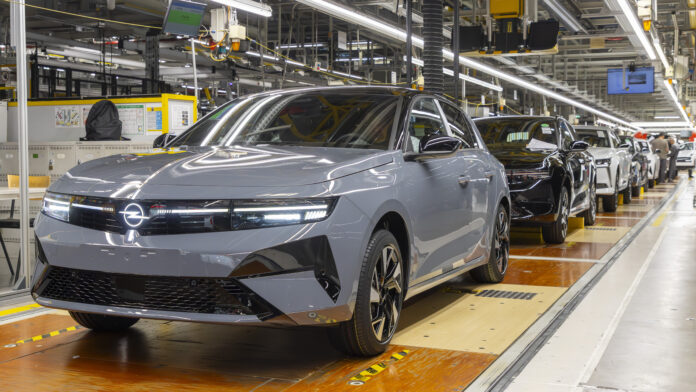

Global automotive giant Stellantis has unveiled an ambitious growth strategy for the Middle East and Africa (MEA), targeting a 40% increase in regional revenues by 2030 as it strengthens local manufacturing and expands its product portfolio.
Speaking at a regional media briefing, Stellantis Middle East and Africa chief operating officer Samir Cherfan said the company’s FaSTLAne 2030 strategy would accelerate execution through increased localisation, improved vehicle sourcing and a more focused model line-up.
The group aimed to maintain a double-digit operating margin while ensuring that 90% of its regional sales come from 22 strategically selected vehicle models. Around half of the vehicles would be manufactured in the region, while the remainder would be imported from Asia to improve competitiveness.
Cherfan described the Middle East and Africa as a key pillar of Stellantis’s global expansion plans.
“Middle East & Africa is a central pillar of Stellantis’s growth strategy. We are already operating at scale with strong profitability. With FaSTLAne 2030, we are accelerating execution by transforming our sourcing, maximising our industrial footprint and deploying a focused product strategy to capture the region’s full potential,” he said.
The strategy comes as competition intensifies across Africa’s automotive industry, with established manufacturers such as Toyota Motor Corporation, Volkswagen Group, Ford Motor Company and Hyundai Motor Company expanding their presence, while Chinese brands continue gaining market share with competitively priced vehicles.
According to Stellantis, the MEA region is among the fastest-growing automotive markets globally. It accounts for about 25% of the world’s population and is projected to reach 40% in the coming decades.
The company has ranked as the region’s second-largest automotive manufacturer for four-consecutive years, selling more than 500 000 vehicles annually while maintaining double-digit profitability.
As part of its industrial expansion, Stellantis will leverage its manufacturing facilities in Morocco and Turkey, which have a combined annual production capacity of 800 000 units. The group also plans to deepen localisation in Algeria.
In South Africa and the broader Middle East, Stellantis said it would improve its regional offering by introducing more competitively sourced vehicles while pursuing localisation opportunities.
The company expected approximately 75% of the FaSTLAne 2030 strategy to be implemented by 2028.
To support the plan, Stellantis would invest about €300 million (R6 billion) annually through partnerships and co-investments as it seeks to strengthen its long-term presence and contribution to local economies across the region.
- Stellantis aims to boost Middle East and Africa (MEA) revenues by 40% by 2030 through its FaSTLAne 2030 growth strategy, focusing on increased localisation and a streamlined model lineup.
- The company plans for 90% of sales to come from 22 selected vehicle models, with around half manufactured locally in the region and the rest imported from Asia.
- Stellantis maintains a double-digit operating margin and positions MEA as a key pillar in its global expansion, leveraging manufacturing hubs in Morocco, Turkey, and expanding localisation in Algeria and South Africa.
- The MEA automotive market is rapidly growing and highly competitive, with major global brands and Chinese manufacturers expanding their presence.
- Stellantis will invest approximately €300 million annually in partnerships and co-investments to deepen regional manufacturing, product sourcing, and economic contributions, aiming to complete 75% of the FaSTLAne 2030 rollout by 2028.


