


South Africa’s 2-1 quarterfinal defeat to hosts Morocco at the 2026 Women’s Africa Cup of Nations (Wafcon) was more than a disappointing result. It signalled what many supporters have quietly feared for some time: Banyana Banyana’s golden era may have reached its natural conclusion.
For a team that brought immense pride to the nation by winning the 2022 Wafcon title and reaching the knockout stages of the 2023 FIFA Women’s World Cup, the expectations were understandably high. Yet their early exit in Morocco has reignited questions about the team’s direction, leadership and ability to keep pace with a rapidly evolving African football landscape.
A legacy beyond question
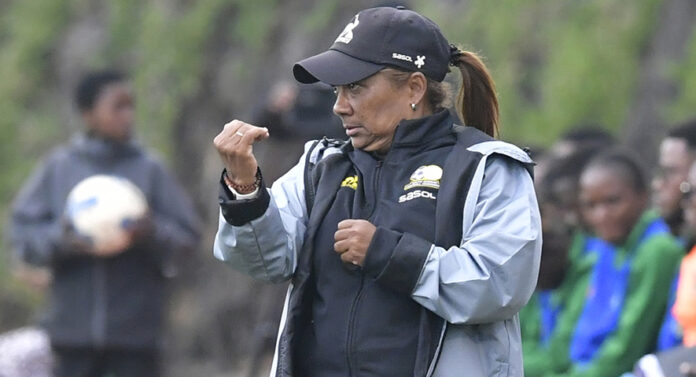
Desiree Ellis remains the most successful coach in South African women’s football history. Since taking charge in 2016, she has transformed Banyana Banyana into continental champions and elevated the profile of the women’s game to unprecedented levels.
Her achievements are secure in South African football history and cannot be diminished by one disappointing tournament. However, football is a results-driven business, and success often has an expiry date. The qualities that once made Ellis a tactical innovator now appear increasingly predictable against opponents who have adapted and evolved.
The question is no longer about what Ellis has achieved. It is whether she remains the right person to lead the next chapter.
The golden generation has aged
A critical challenge facing Banyana Banyana is the reliance on a core group of players who have carried the national team for more than a decade.
The foundation of this successful generation was laid long before Ellis assumed the reins. Former coach Vera Pauw helped establish the discipline, professional standards and scouting structures that shaped the team’s backbone. Players such as Janine van Wyk, Refiloe Jane and Thembi Kgatlana became the pillars of South African women’s football.
However, international football rarely allows teams to remain competitive while relying on the same nucleus for decade after decade. Across Africa, nations have introduced younger talent, modernised their systems and invested heavily in development structures. South Africa appears to have been slower to embrace generational change.
Predictability on the pitch
Throughout the tournament, Banyana Banyana often appeared short of creative solutions when confronted by organised opponents.
Defeat to Tanzania in the group stages and a draw against Côte d’Ivoire exposed some of the team’s limitations. When opposition teams neutralised South Africa’s attacking threats, there appeared to be few effective alternatives available from the technical bench.
Modern football demands flexibility, adaptability and quick decision-making. Teams that cannot alter their approach during matches often find themselves outmanoeuvred by more tactically dynamic opponents. Banyana’s campaign suggested a team struggling to evolve beyond familiar systems that once delivered success.
Safa must accept its share of responsibility
While criticism has largely focused on the coaching staff, the South African Football Association (SAFA) cannot escape scrutiny.
Preparation for a tournament as important as WAFCON should have included top-level international friendlies designed to test the squad against elite opposition before the competition began. Instead, questions remain about whether the team received the preparation necessary to compete against increasingly professional African rivals.
The stakes were significant. Beyond continental success, World Cup qualification remained a major objective. Such ambitions require planning, investment and consistent support from football administrators.
Fans must also play their part
Support for Banyana Banyana often reaches its peak during major tournaments, but domestic matches frequently attract modest crowds.
A sustainable football culture cannot be built solely on celebrating success after the fact. Consistent attendance, engagement and support are critical to the growth of women’s football. The passion displayed online must be matched by supporters in the stands if the game is to continue advancing.
A professional league is no longer optional
Perhaps the most pressing issue facing women’s football in South Africa is the need for a fully professional domestic league.
The Hollywoodbets Super League has played an important role in developing local talent, but many believe it has reached its developmental ceiling. To compete consistently against professional teams from North and West Africa, South African players need access to full-time training environments, sports science support and financial stability.
Without those structures, the gap between South Africa and its continental rivals is likely to continue widening.
Warnings from club football
Signs of South Africa’s declining dominance have already emerged at club level.
Mamelodi Sundowns Ladies, long regarded as one of Africa’s premier women’s teams, have faced increasingly stiff competition in CAF Women’s Champions League qualification campaigns. Their struggles reflect the broader reality that African women’s football is advancing rapidly.
If club football is becoming more competitive, the national team cannot expect to thrive without similar levels of investment and innovation.
The case for fresh leadership
South African women’s football now stands at a crossroads.
A renewed vision will require investment in the domestic game, stronger pathways for emerging players and a deliberate strategy to integrate overseas-based talent competing at higher levels every week.
Many observers believe that renewal should also extend to the coaching position. Among the names frequently mentioned is Simphiwe Dludlu, a coach widely respected for her progressive approach, tactical awareness and understanding of the modern women’s game.
Whether or not Dludlu becomes the next national team coach, the broader point remains the same: South Africa needs fresh ideas to remain competitive.
Respecting the past while embracing the future
Desiree Ellis’s contribution to South African football is beyond dispute. She helped transform Banyana Banyana into champions and inspired a generation of young female footballers.
But great leaders are often remembered not only for what they achieved, but for recognising when it is time to pass the baton.
The stage that once belonged to Banyana Banyana’s golden generation is changing. African women’s football is moving into a new era, and South Africa must decide whether it wants to lead that future or be left behind by it.
For many supporters, the answer begins with embracing change.
- Yolisa Njamela is an award winning international journalist and content strategist with over two decades of experience in media. Her 24-year career spans major local and global newsrooms. She’s also an avid football lover.
- South Africa's women's national football team, Banyana Banyana, was defeated 2-1 by Morocco in the 2026 Women's Africa Cup of Nations quarterfinals, marking an early exit for the defending champions.
- Coach Desiree Ellis, the most successful coach in South African women's football history since 2016, faces questions about her continued leadership after the team's decline.
- The team heavily relies on an aging core group of players, with insufficient integration of younger talent compared to other African nations investing in youth and modernization.
- The South African Football Association (SAFA) has been criticized for inadequate preparation, including the lack of elite international friendly matches ahead of the tournament.
- There is a growing consensus that South Africa needs a fully professional domestic league and fresh leadership to remain competitive in African women's football.



She should’ve retired after winning Afcon in 2022. Her selections in the World cup started banyana’s downward slide. She persisted with failing players.The way we crashed out of that tournament was embarrassing. Looking at the goals that were scored.
It time to pack her stuff and go… before she tarnishes her good name