


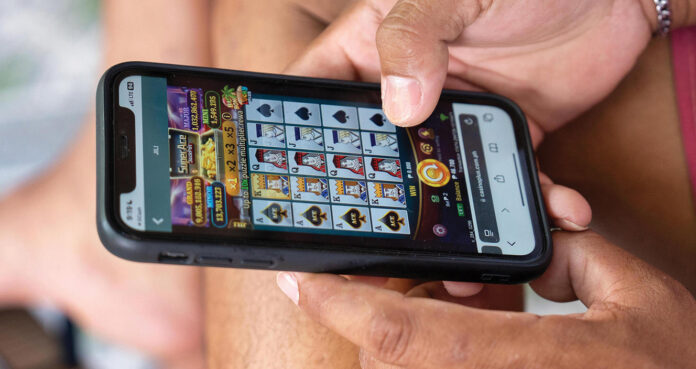
Young people in South Africa are increasingly turning to betting to make money amid the rising cost of living, scarce work opportunities and other financial pressures.
The South African Responsible Gambling Foundation (SARGF) says most people who contacted its helpline during the 2025/26 financial year were between the ages of 18 and 35.
Out of the 5 199 people who reached out for help, 2 670 were young people, with a further 198 identifying themselves as students in higher education and training.
Online betting and other gambling-related terms are among the most searched on Google in South Africa, highlighting the growing interest in the industry.
The growth of online gambling has also exposed gaps in regulation, monitoring and consumer protection.
Lebogang Seoheng, the SARGF advocacy and communications manager, makes a correlation between the Covid-era lockdown restrictions and the rise in online betting.
“Before the Covid-19 pandemic, we didn’t see quite a lot of youth prevalence in terms of gambling as well as gambling addiction. It was mostly middle-aged, 35 up to 70 years.
“But when we went into hard lockdown restrictions and restrictions of movement, a lot of people started moving on to online betting.”
Seoheng said the country’s socio-economic conditions, particularly high youth unemployment, were contributing to the way gambling was being used.
“Recently, Statistics SA released the unemployment statistics. If you look at that segment further, you see the youth unemployment statistics are even higher.”
He said gambling was increasingly viewed as a way of generating income rather than entertainment.
“The reason why those who are employed, part-time employed or self-employed are gambling is not about entertainment or taking a chance. They see it as a secondary income generator or an income multiplier, without understanding the financial risks associated with it. Every bet does not guarantee a win.”
The consequences can be severe when gamblers begin chasing losses with money meant for basic expenses.
“When they do not win, they start borrowing money and using money meant for normal day-to-day expenses, chasing losses. Then they go into their credit cards, they go into their savings and before they know it, they are in a huge hole of debt.”
Political organiser, activist and Rise Mzansi MP Makashule Gana has been raising the alarm on South Africa’s gambling regulations and whether the regulatory framework is equipped to keep up with the rapid evolution of online gambling.
Speaking to Sunday World, Gana said the problem was not only a lack of legislation. “It’s reinforcement of the regulations in some instances and also because we have a problem in terms of the ministry not fully focusing on the industry.
“We have a situation where the gambling industry has evolved greatly and the regulations can’t keep up.”
Gana also criticised the continued use of gambling advertising slogans that he believes fail to adequately warn consumers about the risks of addiction.
“We can’t be in 2026 with the problems that we are seeing in South Africa, still using the tagline, ‘winners know where to stop’. That’s an incorrect tagline. And we still don’t have the warnings around the dangers of gambling addiction in South Africa.”
He called for stronger warnings and greater public education.
Gana also raised concerns about minors accessing online gambling platforms by using their parents or elder siblings’ details.
He proposed an online gambling tax, saying it could help fund education and rehabilitation programmes.
Gana also noted poverty as another factor driving people towards gambling, with some hoping to win money to cover their basic needs.
“People want to escape poverty, hoping that they can get lucky and win some big prize so that they can at least provide for themselves.”
He said gambling operators were benefiting from the desperation.
In 2024, the World Health Organisation warned of the accessibility of online gambling platforms globally. It noted that the practice had been normalised through new commercial associations with sport and cultural activities.
Data from the National Gambling Board for the 2024-25 financial year shows that about R1.50-trillion was wagered in the gambling industry.
The higher turnover, sparked by increased participation in some form of gambling, prompted the Treasury to introduce the Remote Gambling Bill to the National Assembly in 2024. It proposed a 20% tax on gross gambling revenue from online gambling, including interactive gambling, which would be in addition to the provincial taxes being applied.
The aim of the new legislation is to protect minors and vulnerable people from the harmful effects of gambling while ensuring that operators follow financial regulations.
It’s not yet clear how far the process of the draft online gambling tax discussion paper is unfolding.
Earlier this year, Treasury invited the public to submit comments, amid backlash from some sectors of society.
- During the 2025/26 financial year, 2,670 of the 5,199 people who contacted the South African Responsible Gambling Foundation helpline were aged 18 to 35, with 198 identifying as students.
- Online betting has grown significantly since the Covid-19 pandemic lockdown, shifting gambling demographics from mostly middle-aged people to more young people and increasing youth gambling addiction.
- Many young South Africans view gambling as a way to generate income due to socio-economic pressures and high youth unemployment, often leading to severe financial consequences when losses are chased using money meant for basic expenses.
- Political activist Makashule Gana criticized South Africa’s inadequate gambling regulations, the lack of strong consumer warnings, and the ease of minors accessing online gambling platforms, and he proposed an online gambling tax to fund education and rehabilitation.
- The National Gambling Board reported about R1.50-trillion wagered in 2024-25, prompting the Treasury to introduce the Remote Gambling Bill in 2024, proposing a 20% tax on online gambling revenue to protect vulnerable people and regulate operators.


