


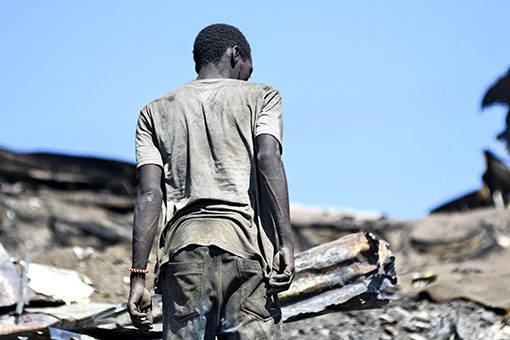
Homelessness remains one of the most pressing social challenges confronting Gauteng today. Every day, thousands of residents pass men, women, and young people living on the streets without knowing the circumstances that led them there. Too often, homelessness is viewed through stereotypes, with some assuming that those living on the streets are unwilling to work or have chosen such a lifestyle.
The reality, however, is far more complex.
Behind every person experiencing homelessness is a unique story shaped by a combination of factors such as poverty, unemployment, family breakdown, domestic violence, substance abuse, mental health challenges, or other life-altering events. Rarely is homelessness the result of a single poor decision. More often, it reflects the cumulative impact of social and economic hardships that leave individuals with limited options and nowhere to turn.
Urgent need for coordinated interventions
According to Census 2022, Gauteng is home to 25 384 people experiencing homelessness, representing almost half of South Africa’s homeless population. These figures highlight the scale of the challenge and underscore the urgent need for coordinated and sustained interventions.
Substance abuse is frequently associated with homelessness, but this relationship is often misunderstood. While addiction can contribute to unemployment and strained family relationships, life on the streets also exposes individuals to trauma, violence, hunger, and uncertainty. For many, alcohol and drugs become coping mechanisms for the harsh realities of homelessness rather than being the original cause of their predicament.
This reality demonstrates why efforts to address homelessness must extend beyond temporary relief. Sustainable solutions require integrated social development programmes that tackle the root causes of homelessness while helping individuals regain stability, independence, and hope.
The Gauteng Department of Social Development continues to implement programmes aimed at restoring dignity to people experiencing homelessness. Through outreach initiatives undertaken in partnership with municipalities, civil society organisations, and other government departments, homeless individuals are connected to shelters, social workers, healthcare services, psychosocial support, assistance with obtaining identity documents, substance abuse treatment programmes, and skills development opportunities.
These interventions recognise that homelessness is not merely a housing issue but a broader social development challenge requiring compassion, coordinated action, and long-term support.
Homelessness can affect anyone
The story of 26-year-old Lindokuhle Qokoman illustrates both the vulnerability and resilience of people experiencing homelessness. Driven by aspirations of a career in music, he travelled to Johannesburg believing he had secured an opportunity in the entertainment industry. Upon arriving at Park Station, he discovered he had been deceived. Without money, accommodation, or a support network, he found himself sleeping under bridges and relying on food queues before eventually being referred to the Wembley Shelter.
His experience is a powerful reminder that homelessness can affect anyone. A single act of fraud, unemployment, family conflict, or financial hardship can dramatically alter the course of a person’s life.
Equally important is the fact that homelessness has not diminished his ambitions. Through counselling, computer training, and other support services provided by the shelter, Lindokuhle continues to pursue his dream of studying sound engineering. His determination challenges the misconception that people experiencing homelessness have lost hope or lack aspirations for the future.
Challenge of undocumented migrants
Another vulnerable group facing significant challenges is undocumented migrants. Without the necessary documentation, many struggle to access formal accommodation, employment opportunities, and essential social services. This often leaves them vulnerable to exploitation, unsafe living conditions, and repeated displacement. While immigration matters must be addressed within South Africa’s legal framework, the principle of human dignity should continue to guide all interventions involving vulnerable individuals.
Addressing homelessness is not a responsibility that government can shoulder alone. Meaningful and lasting solutions require collaboration among businesses, faith-based organisations, non-profit organisations, communities, and individual citizens. Businesses can contribute through employment opportunities and skills development initiatives, while civil society organisations continue to provide critical services such as shelter, food assistance, counselling, and rehabilitation support.
All hands on deck
Communities also have a vital role to play. By looking beyond stereotypes and recognising the humanity of those living on the streets, residents can help foster a more compassionate and inclusive society. Every person experiencing homelessness has a name, a family, a history, and dreams for the future. Often, what they need most is an opportunity and the support necessary to rebuild their lives.
Ultimately, the way a society treats its most vulnerable members reflects its values. Responding to homelessness with empathy, dignity, and coordinated action is not only a moral and social responsibility but also an investment in building stronger, safer, and more inclusive communities.
As Gauteng continues to confront this growing challenge, our collective response must move beyond judgement and towards meaningful action. By working together, we can restore hope, rebuild lives, and ensure that every person has the opportunity to live with dignity.
- Madali Chibambu is a communicator at the Gauteng Department of Social Development.
- Gauteng faces a significant homelessness challenge, with over 25,000 people affected, nearly half of South Africa’s homeless population, driven by factors like poverty, unemployment, family breakdown, and mental health issues.
- Homelessness is complex and often misunderstood; substance abuse is more a coping mechanism than a cause, necessitating comprehensive social development programs beyond temporary relief.
- The Gauteng Department of Social Development collaborates with municipalities and organizations to provide shelters, healthcare, psychosocial support, substance abuse treatment, and skills development for homeless individuals.
- Stories like Lindokuhle Qokoman’s highlight that homelessness can affect anyone and that with proper support, individuals maintain hope and ambitions despite their circumstances.
- Effective solutions require collective efforts from government, businesses, civil society, and communities to address root causes, promote dignity, and foster an inclusive society supporting vulnerable populations including undocumented migrants.


