


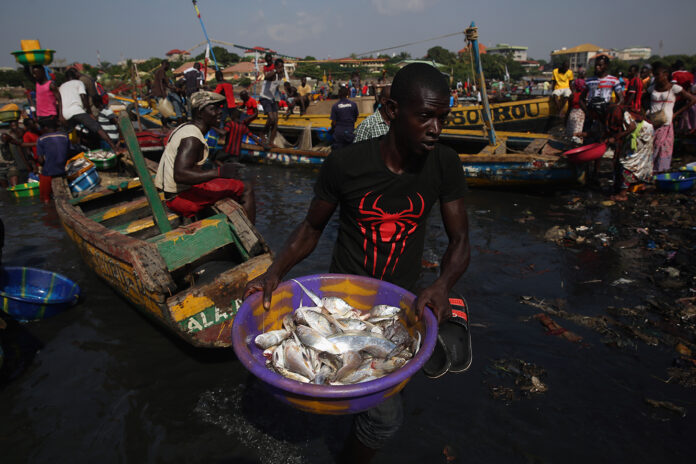
The 11th Our Ocean Conference, held in Mombasa, Kenya, concluded with a call for African countries to accelerate fisheries transparency reforms as part of efforts to strengthen ocean governance, combat illegal fishing and protect the livelihoods of coastal communities.
Held in Africa for the first time, the gathering provided a platform for governments, conservation groups and maritime stakeholders to highlight the growing role of transparency, technology and international cooperation in safeguarding marine resources.
Participants applauded countries such as Ghana and Cameroon for embedding transparency and accountability measures into national and regional fisheries policies.
The efforts are helping African governments translate commitments into concrete actions aimed at tackling illegal, unreported and unregulated fishing, while improving enforcement and promoting sustainable fisheries management.
“What we’ve seen in Mombasa is clear evidence that ocean transparency is becoming a global expectation,” said Tony Long, the CEO of Global Fishing Watch.
“From new government commitments and partnerships to advances in technology, momentum is building around a simple principle: we cannot sustainably manage what we cannot see.
“The challenge now is to turn that momentum into lasting action and make transparency the standard for every fishery, every vessel and every ocean around the world.”
A key focus of the conference was the growing use of technology to improve the visibility of fishing activities at sea.
Global Fishing Watch showcased new research using artificial intelligence and high-resolution satellite imagery to reveal small-scale fishing activities that have traditionally remained beyond the reach of conventional monitoring systems.
Presenting the findings, chief scientist David Kroodsma said the analysis identified more than 30 000 small-scale fishing vessels operating along Africa’s coastline and highlighted areas where industrial and artisanal fisheries compete for the same resources.
Stakeholders said the data provided governments with valuable insights to support fisheries management, strengthen ocean governance and safeguard the livelihoods of coastal communities.
“For the first time, satellite imagery and artificial intelligence are giving us an un-precedented view of small-scale fishing activity across African waters, revealing the people, places and pressures that have long remained hidden,” Kroodsma said.
“This is about more than technology. It is about empowering governments and communities with the information they need to make better decisions for the future of the ocean,” he added.
Beyond technological innovation, the conference underscored the growing importance of policy reforms, enforcement mechanisms and international partnerships in advancing fisheries transparency.
Participating governments endorsed the Mombasa Declaration, reaffirming their commitment to transparency, accountability and cooperation in protecting marine ecosystems and ensuring sustainable fisheries.
“The message coming out of Mombasa is clear,” Long said.
“The future of sustainable fisheries depends on making activities at sea visible and verifiable and on holding fishers fully accountable.”
A major outcome of the conference was the adoption of the Mombasa Declaration, an international call to action on fisheries transparency endorsed by 16 governments from Africa, Asia, Latin America and the Caribbean, Europe and the Pacific.
The declaration commits signatories to improving public access to information on vessel ownership, licensing and fishing activities. It also seeks to strengthen global efforts to combat illegal fishing and promote more equitable and sustainable management of marine resources.
“We’re seeing growing recognition that sustainable fisheries begin with knowing who is fishing, where they are operating and whether they are following the rules,” Long added.
Conference participants also unveiled a new collaboration aimed at creating the first global map of fishing activity that includes both industrial fleets and small-scale fishing vessels.
The initiative will combine vessel-tracking data with advanced satellite imagery and analytics to map millions of artisanal fishing boats.
Scheduled for launch on July 1, the project is expected to provide governments and fisheries managers with a more complete understanding of human activity at sea. – CGTN
- The 11th Our Ocean Conference, held in Mombasa, Kenya, concluded with a call for African countries to accelerate fisheries transparency reforms as part of efforts to strengthen ocean governance, combat illegal fishing and protect the livelihoods of coastal communities.
- Held in Africa for the first time, the gathering provided a platform for governments, conservation groups and maritime stakeholders to highlight the growing role of transparency, technology and international cooperation in safeguarding marine resources.
- Participants applauded countries such as Ghana and Cameroon for embedding transparency and accountability measures into national and regional fisheries policies.
- The efforts are helping African governments translate commitments into concrete actions aimed at tackling illegal, unreported and unregulated fishing, while improving enforcement and promoting sustainable fisheries management.


