


The ambitious R30-billion smart city that billionaire businessman Robert Gumede envisions for state-owned land south of Mbombela has encountered an early obstacle: contractual obligations, current residents, and the future of lucrative citrus land all still up for negotiation.
The enormous development could eventually spawn at least 8 000 homes and apartments, creating an estimated 30 000 construction jobs and 4 000 permanent jobs, with the Mpumalanga Economic Growth Agency (Mega) projecting a R45-billion impact on GDP.
Gumede’s Guma appears to have been quietly working on its proposal, with its plans only surfacing through a brief entry in Mega’s First Quarter Report for 2026/27, which revealed that the group had approached the agency to jointly develop a smart city on the Tekwane farmland.
The report also hinted at potential hurdles to the project.
“Issues requiring resolution before a formal agreement (that) can be finalised with Guma include dealing with existing contractual commitments and land encumbrances,” it stated.
In an exclusive interview with Sunday World, Mega CEO Isaac Mahlangu confirmed that the agency had agreed in principle to pursue the project after Guma approached them earlier this year. According to Mahlangu, about 378.64 hectares of the 845-hectare Tekwane property are being considered for the mega project.
“As proposed, the Smart City will include residential, industrial, retail, and social facilities, as well as government and corporate offices,” Mahlangu said.
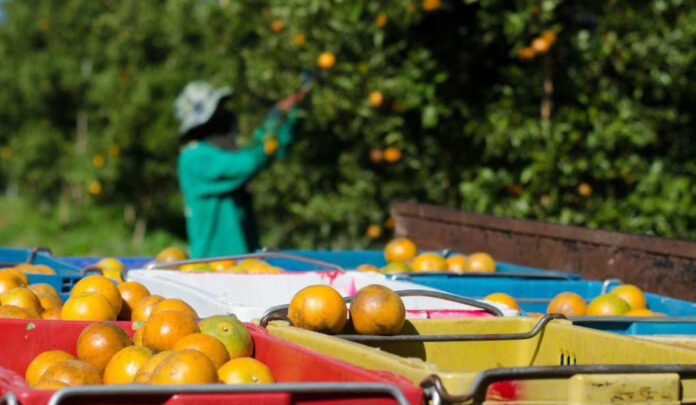
So far, no feasibility study has begun, nor has any formal agreement been signed. Among the issues that need to be urgently resolved is the future of the 118 hectares of citrus farms on Tekwane. More than 40 000 trees provide dozens of permanent jobs and hundreds of seasonal employment opportunities.
Asked whether any of that cultivated land would be swallowed by the proposed city, Mahlangu said: “This forms part of the ongoing negotiations. Mega does not alienate the land. There will be no retrenchment.”
Another complication involves properties already belonging to individuals within the proposed development footprint. Mahlangu revealed that houses and residential stands currently occupy roughly 16 hectares. “The 16-hectare residential area may or may not want to be part of the proposed development, depending on the outcome of the negotiations amongst the parties involved,” he said.
There is another consideration that would have to be factored into the equation. Mega had previously appointed a strategic development partner for a proposed shopping centre in Tekwane. That project predates Guma’s approach and would have to be integrated into the wider smart city if the plan proceeds.
That shopping centre is one of 10 projects in the pipeline which the Public Investment Corporation (PIC) has expressed interest in. Mahlangu, however, clarified the PIC has not expressed interest in Gumede’s wider R30-billion smart city.
How Guma ultimately acquires development rights over valuable state-owned land is also likely to attract scrutiny.
The DA has expressed concerns that the project has already suffered from insufficient transparency. The party’s finance, economic development and tourism spokesperson in Mpumalanga, Trudie Grovè-Morgan, demanded public consultation and disclosure around the proposed development.
“The DA is not opposed to investment and economic development. However, development involving state-owned land must be transparent, lawful, and in the public interest.”
Mahlangu told Sunday World that public participation would occur during the feasibility phase. He added that negotiations could result in a long-term lease and maintained this would not conflict with the Mega Act or PIC Act.
“Guma has persistently insisted that the transaction be conducted in strict adherence to all applicable legislation.”
Asked whether Guma had been formally selected or whether a competitive procurement process would still be required, Mahlangu described the discussions as “investment attraction negotiations as part of Mega’s pursuit of bigger socio-economic impact”.
Authoritative sources
- Robert Gumede's R30-billion smart city proposal on state-owned land south of Mbombela aims to create 8,000 homes, 30,000 construction jobs, and 4,000 permanent jobs, with an estimated R45-billion GDP impact.
- Mekumalanga Economic Growth Agency (Mega) has agreed in principle to pursue the project, covering about 378.64 hectares of the 845-hectare Tekwane farmland.
- Key issues delaying formal agreements include existing contractual commitments, land encumbrances, the future of 118 hectares of citrus farms, and 16 hectares of residential properties within the development area.
- A previously planned shopping centre project on the same land, predating Gumede’s proposal, must be integrated into the smart city plans, but the Public Investment Corporation has not expressed interest in Gumede’s wider development.
- The DA has called for transparency, public consultation, and lawful conduct concerning the development, with Mega CEO Isaac Mahlangu confirming public participation will occur during the feasibility phase.


