


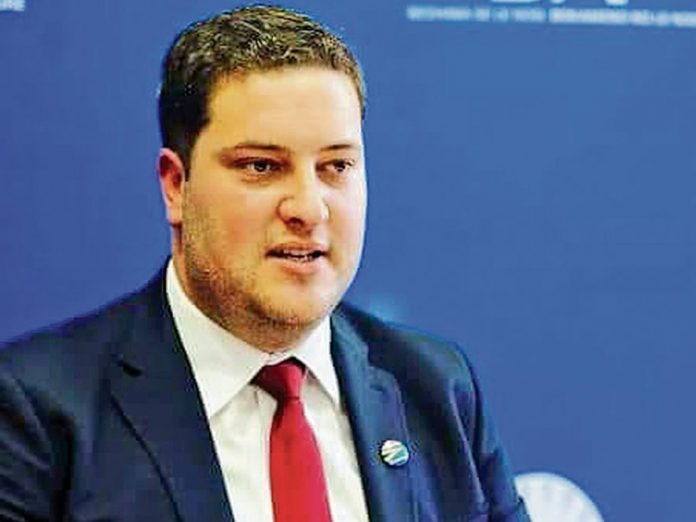
Cape Town has once again been recognised as South Africa’s only “highly financially sustainable” metropolitan municipality, according to the latest Municipal Financial Sustainability Index (MFSI), with Mayor Geordin Hill-Lewis saying the accolade reflects the city’s commitment to good governance and infrastructure investment.
The Municipal Financial Sustainability Index report, released by Ratings Afrika on July 9, awarded Cape Town an overall score of 71, significantly ahead of the average score of 36 recorded by the country’s other metropolitan municipalities.
According to the report, Cape Town remains the only metro classified as “highly financially sustainable”, citing the city’s strong financial position and its ability to continue investing in critical infrastructure while other municipalities struggle with financial pressures.
Ratings Afrika warned that many municipalities remain caught in a cycle of operating losses, worsening liquidity shortages and declining service delivery if urgent interventions are not implemented.
Hill-Lewis welcomed the findings, saying the report validates the city’s efforts to maintain service delivery and infrastructure investment.
“This report affirms the progress made in our vow that Cape Town will be South Africa’s beacon of hope, avoiding the tragic collapse of infrastructure and services we sadly see in other cities,” he said.
The mayor added that sound financial management has enabled the city to commit a record R40-billion to infrastructure upgrades over the next three years, while maintaining the lowest property rates among South Africa’s metros.
“Around 130,000 construction-related jobs will flow from infrastructure investment in the current term of office alone, with 75% of infrastructure spending directly benefitting lower-income households,” Hill-Lewis said.
The report also highlighted Cape Town’s revenue collection rate of 98%, compared with the average metro collection rate of 85.3%.
Major infrastructure investments
Under the city’s three-year budget framework, more than R16.7-billion has been allocated to water and sanitation projects, including wastewater treatment upgrades, expanded water supply sources and a major programme to replace ageing pipes.
A further R6-billion will be spent on electricity grid upgrades and maintenance to support a more decentralised energy future and reduce reliance on Eskom.
Road infrastructure will receive R3.7-billion for maintenance, pothole repairs and upgrades, while R653-million has been earmarked for congestion relief projects.
The city is also investing R3.2-billion in the expansion of the MyCiTi bus service into the Cape Flats, R3.3-billion for informal settlement upgrades and subsidised housing, R203-million for sports facilities and R300-million for the redevelopment of the Strandfontein Pavilion.
In addition, Cape Town’s 2026/2027 budget includes a record R6.8-billion allocation for safety and security.
Relief measures for residents
The city said its budget continues to provide extensive support to vulnerable households through a range of rebates and free basic services.
These include a 100% rates rebate for qualifying indigent households, free basic water and sanitation services, and rates-free benefits on the first R620 000 of a property’s value for homes worth up to R8-million.
Pensioners earning up to R27 000 a month also qualify for rates rebates and lifeline electricity benefits, regardless of the value of their property.
Lowest metro property rates
Cape Town also maintained that it offers the lowest property rates among South Africa’s metros, with a proposed rate-in-rand of 0.007010 for the 2026/2027 financial year.
By comparison, Johannesburg’s rate in rand stands at 0.009889, Ekurhuleni at 0.01169, Tshwane at 0.01231 and eThekwini at 0.01470.
The city said the lower rate means many residents pay less in property rates despite Cape Town’s generally higher property values.
Hill-Lewis said the city’s financial position demonstrates the benefits of stable governance and long-term planning, allowing it to invest heavily in infrastructure while continuing to provide relief to residents.
- Cape Town is recognized as South Africa’s only “highly financially sustainable” metro, scoring 71 on the Municipal Financial Sustainability Index, far above the average score of 36 for other metros.
- The city plans to invest a record R40 billion in infrastructure over the next three years, including major allocations for water, sanitation, electricity, roads, public transport, housing, and safety.
- Cape Town maintains the lowest property rates among major South African metros, with extensive rebates and free services for vulnerable households and pensioners.
- The city has a high revenue collection rate of 98%, supporting its stable financial position amid widespread financial challenges faced by other municipalities.
- Mayor Geordin Hill-Lewis attributes Cape Town’s success to sound financial management, good governance, and long-term planning, enabling sustained service delivery and job creation.


