


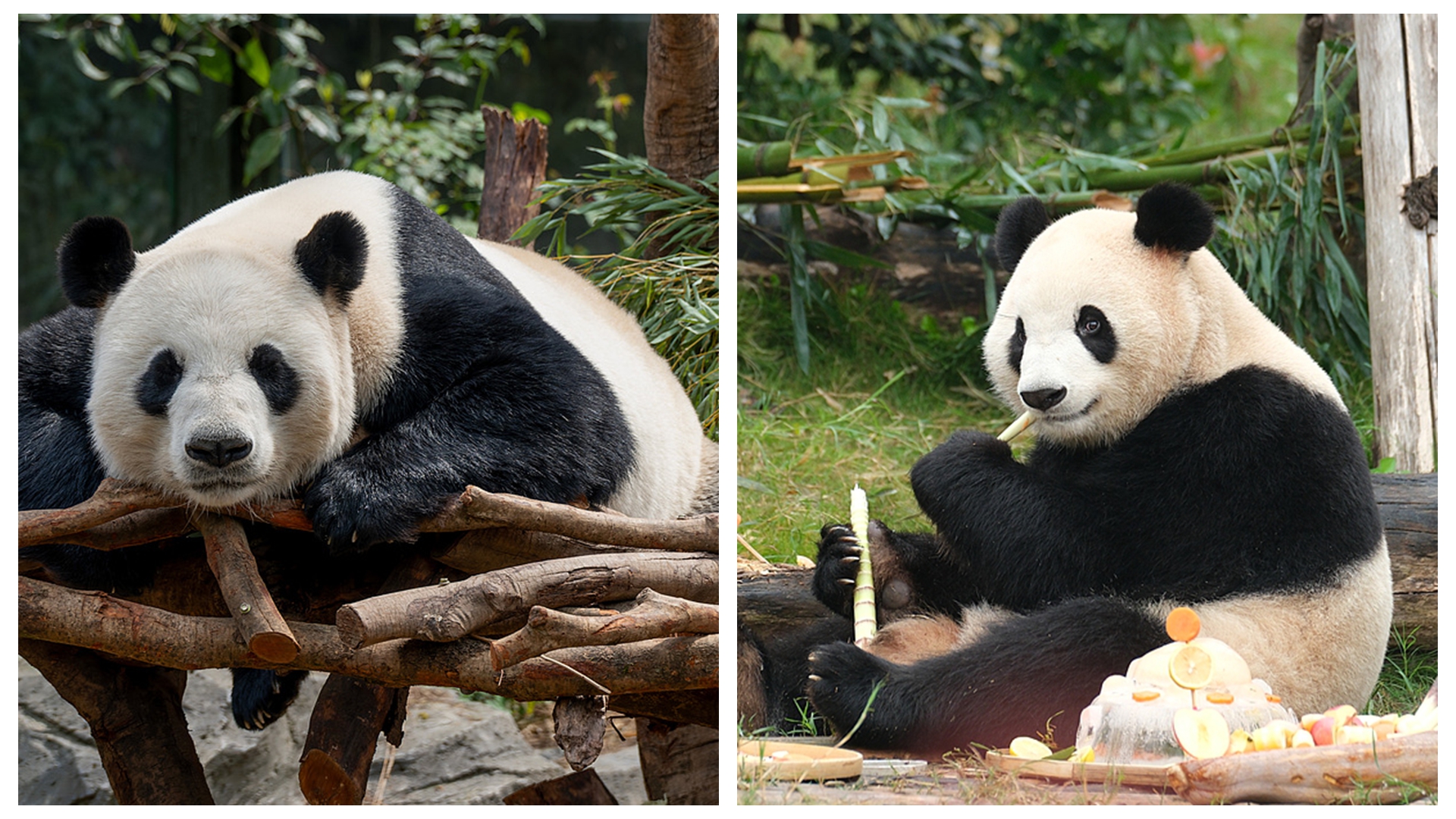
Giant pandas Ping Ping and Fu Shuang left Chengdu in south-west China’s Sichuan Province today for the United States, marking the start of a 10-year conservation partnership between the two countries.
Ping Ping, born on March 17, 2020, is easily recognisable due to its large, dark eye rims. It has a stocky build, moves nimbly and has demonstrated proficiency in climbing trees, often resting among the branches.
Fu Shuang, born on October 18, 2020, is characterised by a small tuft of fluffy fur on its head and a full, protruding forehead. With a round appearance, it is quick to react and capable of foraging for food.
The two giant pandas originate from the Chengdu Research Base of Giant Panda Breeding in Sichuan. They will embark on a 10-year protection cooperation programme at Zoo Atlanta.
Zoo Atlanta has a 25-year history of giant panda conservation cooperation with China. The previous partnership began in 1999 with the arrival of pandas Lun Lun and Yang Yang, which ended in 2024.
During the collaboration, they successfully bred five litters, resulting in seven cubs, marking the most successful international giant panda breeding programme with Europe and the Americas. All nine pandas have returned to the Chengdu Research Base of Giant Panda Breeding.
To ensure a safe and comfortable journey across the Pacific, the Chinese team has developed a detailed transport plan and prepared fresh bamboo shoots, bamboo, apples and emergency medications. The two giant pandas also underwent transport adaptation training in advance to help ease stress and anxiety.
During the journey to the US, cabin temperature and humidity are being maintained within a comfortable range for the pandas. Experienced veterinarians and keepers from the US are accompanying the pandas on the flight, monitoring their health in real time and meeting their health and dietary needs.
The Chinese side has also arranged for two teams of veterinarians and keepers to travel to the zoo in advance to make preparations. When they arrive in Atlanta, the giant pandas will undergo quarantine and health checks. Chinese staff will stay at the zoo to care for them throughout the quarantine period, while helping them adjust to the new environment through stress adaptation and behavioral training.
To create a healthy and comfortable living environment for Ping Ping and Fu Shuang, Chinese experts and Zoo Atlanta have held multiple online and in-person meetings since December 2025 to discuss plans for upgrading the pandas’ facilities.
Chinese experts provided technical guidance and set standards for facilities and equipment, husbandry, food supplies and health care. Zoo Atlanta actively adopted the recommendations and proceeded with the upgrades in an orderly manner.
In the middle of this month, Chinese experts conducted an on-site inspection of the renovated facilities. The upgraded indoor exhibit area now offers more space, with new enrichment features including climbing structures, stone platforms and a pool, giving the pandas more options for exploration and rest. The monitoring system has also been upgraded to provide more comprehensive, real-time information on conditions inside and outside the panda facilities.
In terms of food supplies, thanks to Atlanta’s climate, which is similar to that of Chengdu, the zoo can source a variety of edible bamboo locally. Fresh bamboo can be harvested year-round, ensuring an adequate supply for the two pandas.
- Giant pandas Ping Ping and Fu Shuang left Chengdu, Sichuan Province, China for the United States to start a 10-year conservation partnership at Zoo Atlanta.
- Ping Ping was born on March 17, 2020, and is known for its large dark eye rims and climbing agility, while Fu Shuang was born on October 18, 2020, with a tuft of fluffy fur on its head and sharp foraging skills.
- Zoo Atlanta has a 25-year history of giant panda conservation cooperation with China, previously hosting pandas Lun Lun and Yang Yang from 1999 to 2024, which resulted in seven cubs from five litters.
- The pandas' transport involved detailed planning, including fresh food preparation, transport adaptation training, and real-time health monitoring by veterinarians and keepers during the flight.
- Chinese experts and Zoo Atlanta have upgraded the pandas' indoor exhibit with more space, enrichment features, a modern monitoring system, and ensured a year-round bamboo supply due to Atlanta’s climate similarity to Chengdu.
Giant pandas Ping Ping and Fu Shuang left Chengdu in south-west China's Sichuan Province today for the United States, marking the start of a 10-year conservation partnership between the two countries.
Ping Ping, born on March 17, 2020, is easily recognisable due to its large, dark eye rims. It has a stocky build, moves nimbly and has demonstrated proficiency in climbing trees, often resting among the branches.
Fu Shuang, born on October 18, 2020, is characterised by a small tuft of fluffy fur on its head and a full, protruding forehead. With a round appearance, it is quick to react and capable of foraging for food.
The two giant pandas originate from the Chengdu Research Base of Giant Panda Breeding in Sichuan. They will embark on a 10-year protection cooperation programme at Zoo Atlanta.
Zoo Atlanta has a 25-year history of giant panda conservation cooperation with China. The previous partnership began in 1999 with the arrival of pandas Lun Lun and Yang Yang, which ended in 2024.
During the collaboration, they successfully bred five litters, resulting in seven cubs, marking the most successful international giant panda breeding programme with Europe and the Americas. All nine pandas have returned to the Chengdu Research Base of Giant Panda Breeding.
To ensure a safe and comfortable journey across the Pacific, the Chinese team has developed a detailed transport plan and prepared fresh bamboo shoots, bamboo, apples and emergency medications. The two giant pandas also underwent transport adaptation training in advance to help ease stress and anxiety.
During the journey to the US, cabin temperature and humidity are being maintained within a comfortable range for the pandas. Experienced veterinarians and keepers from the US are accompanying the pandas on the flight, monitoring their health in real time and meeting their health and dietary needs.
The Chinese side has also arranged for two teams of veterinarians and keepers to travel to the zoo in advance to make preparations. When they arrive in Atlanta, the giant pandas will undergo quarantine and health checks. Chinese staff will stay at the zoo to care for them throughout the quarantine period, while helping them adjust to the new environment through stress adaptation and behavioral training.
To create a healthy and comfortable living environment for Ping Ping and Fu Shuang, Chinese experts and Zoo Atlanta have held multiple online and in-person meetings since December 2025 to discuss plans for upgrading the pandas' facilities.
Chinese experts provided technical guidance and set standards for facilities and equipment, husbandry, food supplies and health care. Zoo Atlanta actively adopted the recommendations and proceeded with the upgrades in an orderly manner.
In the middle of this month, Chinese experts conducted an on-site inspection of the renovated facilities. The upgraded indoor exhibit area now offers more space, with new enrichment features including climbing structures, stone platforms and a pool, giving the pandas more options for exploration and rest. The monitoring system has also been upgraded to provide more comprehensive, real-time information on conditions inside and outside the panda facilities.
In terms of food supplies, thanks to Atlanta's climate, which is similar to that of Chengdu, the zoo can source a variety of edible bamboo locally. Fresh bamboo can be harvested year-round, ensuring an adequate supply for the two pandas.


