


The Constitutional Court has ruled that failed asylum seekers whose applications have been finally rejected do not have an automatic right to submit fresh claims while remaining in the country.
In the ruling handed down on Tuesday, the court upheld an appeal by the Department of Home Affairs and overturned an earlier Supreme Court of Appeal judgment that had allowed two Burundian women to lodge new asylum applications years after their original claims were dismissed.
The case centred on Amina Irankunda and Arava Niyonkuru, whose initial asylum applications were rejected in 2014 as manifestly unfounded.
Following an escalation of political violence in Burundi after 2015, the pair sought to reapply for asylum as sur place refugees, which refers to individuals who become refugees due to events that occur after they have left their home country.
Home Affairs refused to accept the new applications, treating the women as illegal foreigners under immigration law.
Writing for the majority, Justice Steven Kollapen, with six judges concurring, held that the Refugees Act does not create a legal mechanism for repeat asylum applications once a first claim has been conclusively rejected.
“There is no clear right under the Refugees Act to submit a subsequent asylum application following the refusal of a first application,” the majority judgment stated.
The court warned that recognising such a right without a clear legislative framework could undermine the finality of the asylum system and lead to a never-ending cycle of applications for asylum.
Act designed for first-time applications
Justice Kollapen highlighted that while some countries permit renewed asylum claims based on changed circumstances, those systems typically include specialised procedures and stricter thresholds for reconsideration.
South Africa’s Refugees Act, he said, was designed only for first-time applications and contains no equivalent framework.
The majority stressed that the court was interpreting the law as it currently stands, rather than expressing a view on what refugee policy ought to be.
“This conclusion simply says that such a right that the respondents say exists in the Act does not find expression in the Act,” Kollapen wrote.
However, Justices Nonkosi Mhlantla Nicholls and Dhaya Pillay Rogers strongly disagreed, saying that the Refugees Act can be understood to allow new applications if there has been a big change in circumstances.
The dissent pointed to the act’s definition of an abusive application for asylum, which refers to repeat applications submitted after refusing one or more prior applications without any substantial change having occurred.
According to the dissenting judges, that wording implicitly recognises that repeat applications may be legitimate if conditions have materially changed.
They said that the majority’s interpretation could lead to unfair and unreasonable results.
In one example, the judges described how a person who never previously sought asylum could receive protection, while another individual facing the same danger could be deported simply because they had earlier filed and lost a claim.
Rebuilding department’s systems
The judges argued that such a result would undermine constitutional guarantees of equality and South Africa’s obligations under the principle of non-refoulement, which prohibits returning individuals to countries where they may face persecution or harm.
For now, individuals whose asylum applications have been finally refused and who remain in South Africa will fall under the Immigration Act rather than the refugee protection system.
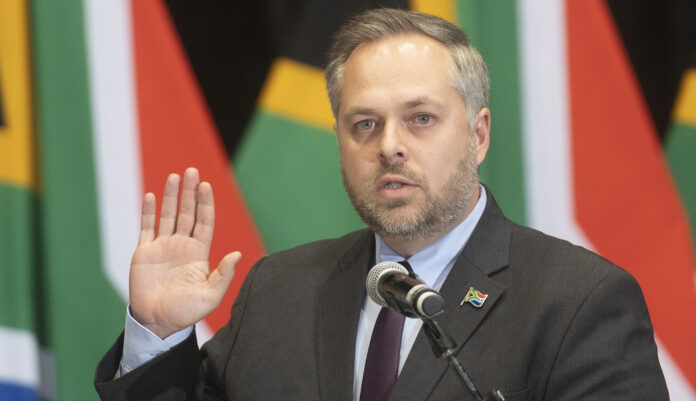
The Minister of Home Affairs, Dr Leon Schreiber, said these recent breakthroughs demonstrate that the department is making rapid progress in rebuilding these systems from the ground up to better serve South Africa’s interests.
“This judgment from the highest court in the land is an affirmation of the unprecedented progress we are making in restoring the rule of law and clamping down on abuse in the migration and asylum systems.
“It further demonstrates that our commitment to systemic reform not in opposition to, but anchored in our Constitution is rapidly resolving problems that once seemed insurmountable,” said Schreiber.
- The Constitutional Court ruled that failed asylum seekers with finally rejected applications do not have an automatic right to submit new claims while staying in South Africa.
- The court overturned a prior ruling that allowed two Burundian women to reapply for asylum years after their initial claims were dismissed as unfounded.
- The judgment emphasized that South Africa’s Refugees Act is designed for first-time applications and contains no legal mechanism for repeat claims without a clear legislative framework.
- Two dissenting judges argued that new applications should be allowed if substantial changes in circumstances occur, citing constitutional equality and non-refoulement obligations.
- The Home Affairs Minister stated the ruling affirms progress in reforming the asylum and migration systems to uphold the rule of law and prevent abuse.


