


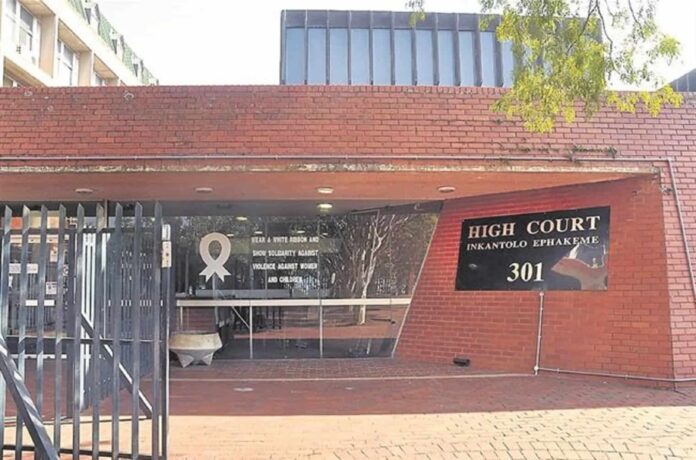
A man sentenced to 15 years in prison for fraud involving more than R709,000 has been acquitted after the KwaZulu-Natal High Court found that the state failed to prove that he participated in an elaborate email-interception scam targeting a farmer.
The High Court in Pietermaritzburg overturned both Bongani Archibold Jele’s conviction and sentence, ruling that merely establishing that the proceeds of the fraud were deposited into a bank account registered in his name was insufficient to prove his guilt.
Jele had already spent nearly four years in prison by the time his conviction was overturned.
In a judgment handed down this week, judges Poyo Dlwati JP and Mossop J found that Jele’s explanation about how strangers had obtained control of his bank account raised a reasonable alternative explanation that the prosecution had failed to disprove.
Jele was convicted of fraud by the Ixopo Regional Court on November 22, 2022 after a farmer, David Stone, lost more than R709,000 in a transaction involving the purchase of timber poles. He was subsequently sentenced to 15 years’ imprisonment in terms of the minimum sentencing provisions of the Criminal Law Amendment Act.
The fraud began when Stone, who farms in the Donnybrook district between Ixopo and Bulwer, sought to purchase timber poles from Treated Timber Products (TTP) for a shade-net structure on his farm, where he intended to cultivate kiwi fruit.
After receiving and accepting a quotation, Stone received an invoice for R709,333.41 on April 22, 2021. He made payment the following day and emailed proof of payment to the supplier.
However, while travelling on business in Mpumalanga, Stone received a call from TTP on May 6, informing him that the money had not reflected in its bank account. Upon checking his proof of payment, he discovered that the account number into which he had transferred the money differed from the supplier’s banking details.
The fraud involved the interception of email communications between Stone and TTP. According to the evidence presented at trial, the fraudster allegedly altered the invoice by replacing the supplier’s banking details with those of a different account.
The fraudster also allegedly intercepted Stone’s proof-of-payment email and changed the banking reference back to TTP’s legitimate account details, making it appear as though the payment had gone through correctly.
The account that received the money
An FNB quality assurance manager, Ashley Wilson, testified that the account belonged to Jele, who had opened it on March 23, 2021. The bank confirmed that his identity had been verified through a fingerprint authentication process linked to the Department of Home Affairs.
The account received a deposit of R709,327.32 on April 24, 2021, recorded as a Magtape Credit from Treated Timber Products. But Jele disputed being involved in the fraud, telling the court that he had been persuaded by two individuals, known to him as Ma-Africa and Sheppard, to sell control of his bank account for R500.
He claimed Sheppard was a foreign national who allegedly could not legally open a bank account in South Africa. Jele also explained that he had changed the cellphone number linked to the account because Sheppard was using it and needed to receive banking notifications.
He further testified that he initially became uncomfortable with the arrangement after his girlfriend warned him that he could get into trouble for allowing a stranger to operate an account registered in his name.
He subsequently cancelled the original bank card and obtained a replacement, briefly regaining control of the account before handing the new card to Sheppard. The High Court found that these explanations deserved proper consideration, particularly because aspects of Jele’s version were corroborated by the bank official’s evidence.
ALSO READ: Employer loses Labour Court battle after firing worker over poor performance
Mossop said the regional court had failed to adequately assess the defence’s version before dismissing it. The appeal court also questioned why investigators had not established who owned the replacement cellphone number linked to the account, despite having access to that information.
It found that determining who received the banking notifications could have helped establish whether Jele or someone else was controlling the account.
Discrepancies in state’s evidence
Stone testified that he had transferred R709,333.41, while the amount deposited into Jele’s account was R709,327.32, leaving a difference of R6.09.
The court also questioned why the bank statement described the payment as originating from TTP rather than Stone. These discrepancies were never satisfactorily explained during the trial.
Mossop said there was no evidence establishing that Jele had intercepted the emails, made the fraudulent representations or had the knowledge, ability or opportunity to participate in the scheme.
The court also found that the State had failed to establish the requirements for common purpose, including proof that Jele had intended the unlawful outcome or had foreseen the possibility of it occurring and nevertheless associated himself with the conduct.
The judgment noted that the investigating officer, Sergeant Nhlanhla Phetha, had confirmed that Jele provided the names of the two individuals he claimed had taken control of his account. This contradicted the regional court’s finding that Jele had failed to provide information about the alleged individuals.
During the appeal proceedings, the State conceded that the fraud conviction could not stand. Prosecutor Khathi had considered asking the High Court to substitute the conviction with one of theft but ultimately conceded that the evidence was insufficient to justify such a conviction.
The appeal was upheld, with the High Court setting aside Jele’s conviction and 15-year prison sentence and replacing them with a verdict of not guilty.
ALSO READ: ANC mayoral hopeful Thanduxolo Khalipha cleared as court sets aside convictions
- A man sentenced to 15 years in prison for fraud involving more than R709,000 has been acquitted after the KwaZulu-Natal High Court found that the state failed to prove that he participated in an elaborate email-interception scam targeting a farmer.
- The High Court in Pietermaritzburg overturned both Bongani Archibold Jele’s conviction and sentence, ruling that merely establishing that the proceeds of the fraud were deposited into a bank account registered in his name was insufficient to prove his guilt.
- Jele had already spent nearly four years in prison by the time his conviction was overturned.
- In a judgment handed down this week, judges Poyo Dlwati JP and Mossop J found that Jele’s explanation about how strangers had obtained control of his bank account raised a reasonable alternative explanation that the prosecution had failed to disprove.
- Jele was convicted of fraud by the Ixopo Regional Court on November 22, 2022 after a farmer, David Stone, lost more than R709,000 in a transaction involving the purchase of timber poles.


