


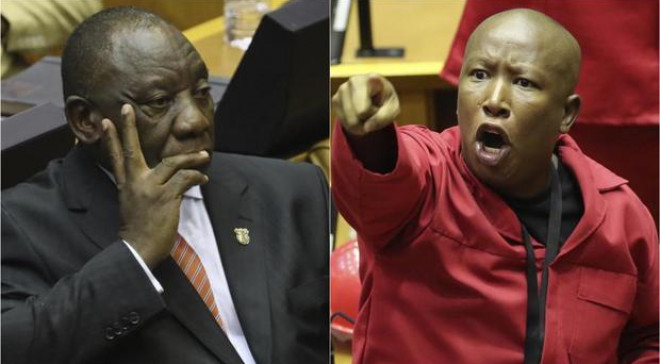
President Cyril Ramaphosa brushed off opposition criticism in Parliament on Wednesday, insisting that government would remain focused on growing the economy and creating jobs rather than being drawn into political battles.
Replying to the Presidency Budget Vote debate in the National Assembly, Ramaphosa used his address to defend his administration’s record and reject what he characterised as attempts by some opposition parties to distract government from its priorities.
“We are not distracted by the clamour of some political parties for attention. We are not distracted by political theatre or electoral posturing,” Ramaphosa told MPs.
‘Narrow agendas won’t sidetrack us’
His response came as the Economic Freedom Fighters (EFF) boycotted his reply and the uMkhonto weSizwe (MK) Party was absent from the chamber, with both parties having been among the most vocal critics of the president over the Phala Phala scandal and Parliament’s revived Section 89 impeachment process.
Without naming any party directly, Ramaphosa suggested that some opposition parties were more interested in political point-scoring than addressing the country’s challenges.
“We will not be sidetracked by narrow agendas that have nothing to do with the needs, interests and concerns of the people of South Africa.”
EFF, MKP want president held accountable
Ahead of Ramaphosa’s reply, the EFF announced that it would not participate in the proceedings, arguing that the president should not be afforded a platform in Parliament while legal disputes linked to the Phala Phala matter remain unresolved.
In a statement, the party accused Ramaphosa of attempting to avoid accountability through the courts and said it would not lend legitimacy to his Presidency while impeachment proceedings remained outstanding.
The MK Party’s benches were also empty during the president’s reply. The party has consistently argued that Ramaphosa should face accountability over the foreign currency theft at his Phala Phala game farm and has been among the strongest advocates for impeachment proceedings.
Ramaphosa ‘committed to rule of law’
However, the president briefly addressed the revived Section 89 process stemming from a Constitutional Court ruling that overturned Parliament’s earlier decision to reject the independent panel report into the Phala Phala matter.
Without commenting on the merits of the case, Ramaphosa said he remained committed to constitutional processes and the rule of law.
“The institutions of our democracy must be allowed to perform their work without interference and without intimidation,” he said.
Although Ramaphosa avoided direct engagement with the criticism levelled against him, he repeatedly returned to what he described as government’s responsibility to focus on economic recovery and service delivery.
He said South Africans expected leaders to provide solutions rather than simply highlight problems.
“South Africans expect of all of us not simply to diagnose the country’s problems, but to work together to solve them. They expect leadership, accountability and results,” he said.
Progress made under Ramaphosa
Much of the president’s address was devoted to defending the role of the Presidency as the centre of government coordination and outlining what he described as progress made under his administration.
Ramaphosa argued that economic growth remained government’s foremost priority, saying the focus was on creating an economy capable of generating jobs, attracting investment and expanding opportunities.
“Economic growth is not an abstract concept. It is about whether a young person can find work. It is about whether a small business can expand. It is about whether investors have confidence to build factories, establish enterprises and create opportunities,” he said.
The president used the opportunity to highlight a number of achievements he said were evidence that reforms were beginning to yield results. These included the end of load shedding, improvements in rail and port operations at Transnet, and the implementation of structural reforms through Operation Vulindlela.
Push to rebuild investor confidence
He also defended government’s investment drive, saying investment conferences and special envoys had helped rebuild investor confidence after years of economic stagnation.
According to Ramaphosa, R634-billion of the R1.5-trillion pledged through the investment initiative over the past eight years has already been invested in projects including factories, mines, renewable energy facilities and data centres.
The president further pointed to employment interventions coordinated through the Presidency, including the Presidential Employment Stimulus, which he said had created work and livelihood opportunities for more than 2.5-million unemployed South Africans.
Legacy of state capture
Ramaphosa also reflected on the legacy of state capture, arguing that a key responsibility of the Presidency since he took office had been rebuilding institutions weakened by corruption and political interference.
He said government was continuing to recover funds lost through corruption and strengthen accountability mechanisms across the state. Recoveries linked to the implementation of recommendations from the State Capture Commission now exceed R17 billion, according to the president.
Despite acknowledging persistent challenges such as unemployment, crime and failing municipalities, Ramaphosa maintained that South Africa was making progress and warned against pessimism.
He argued that reforms undertaken over recent years were beginning to stabilise key institutions and create conditions for future growth.
Visit SW YouTube Channel for our video content
- President Ramaphosa dismissed opposition criticism in Parliament, emphasizing government focus on economic growth and job creation rather than political distractions.
- The Economic Freedom Fighters (EFF) boycotted the Presidential Budget Vote reply, citing unresolved legal matters linked to the Phala Phala scandal, with the MK Party also absent without engaging.
- Ramaphosa reaffirmed his commitment to constitutional processes and the rule of law amid ongoing impeachment proceedings but avoided direct responses to allegations.
- The president highlighted achievements including the end of load shedding, improvements in Transnet operations, investment of R634 billion in various projects, and employment interventions benefiting over 2.5 million people.
- He addressed the legacy of state capture, noting significant progress in recovering R17 billion lost to corruption, while acknowledging ongoing challenges but stressing signs of institutional stability and potential growth.


