


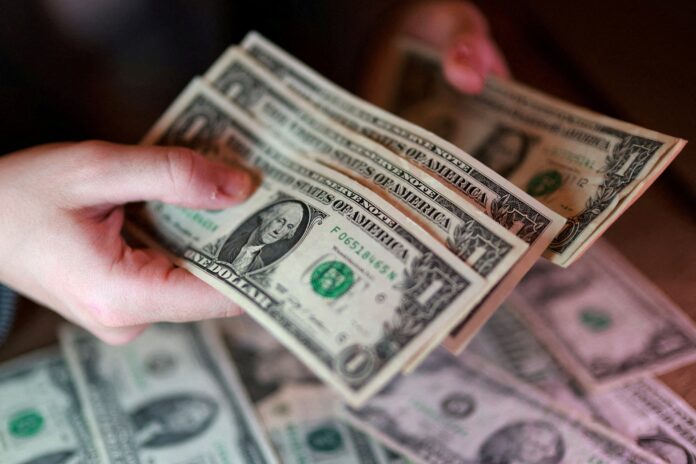
The dollar held steady on Wednesday as markets remained on edge over the latest clash between the US and Iran, while awaiting closely watched US inflation data that could provide clues on the Federal Reserve’s interest rate path.
US President Donald Trump said on Wednesday Iran had taken too long to negotiate a deal and would now “have to pay the price”, while Tehran said it would reassess diplomatic engagement with Washington after tit-for-tat strikes overnight.
Missile and drone attacks
Iran launched missile and drone attacks on US bases in Jordan, Kuwait and Bahrain in retaliation for American strikes on Iranian targets around the Strait of Hormuz.
The dollar index, which measures the greenback against a basket of currencies including the yen and euro, was last steady at 99.97.
The euro was flat at $1.1541, while sterling was little changed at $1.3384.
“Even with the kind of re-upping of some of the tensions in the short term, actually the overall sentiment that we see more broadly is that we’re still closer to some kind of deal or agreement than further away,” said Dominic Bunning, head of G10 FX strategy at Nomura.
He said investors are also focused on US economic data and the outlook for Fed rates, especially with Chairman Kevin Warsh taking the helm.
“At some point there’s certainly a sense that we’ll need to see a bit of a breakout from this kind of holding pattern,” Bunning said.
“I think most people probably lean towards the side that the dollar will probably strengthen a bit more for now because of that strong US data pulse.”
Later on Wednesday, the US was expected to release consumer price index data for May, which is seen as crucial in gauging whether the Fed might hike rates later this year following last week’s stronger-than-expected jobs report.
“If inflation accelerates this time, expectations for further rate hikes are likely to strengthen, pushing the dollar higher,” said Sho Suzuki, a market analyst at Matsui Securities.
Yen remains in focus
Meanwhile a Bank of Japan rate hike at the June 16 policy meeting is now almost fully priced in, meaning it is unlikely on its own to trigger a significant reversal in yen weakness if delivered.
“It’s going to take some hawkish commentary from Governor (Kazuo) Ueda that signals the BOJ could bring forward its next hike from December to September – with the possibility of a third hike before year-end,” said Tony Sycamore, market analyst at IG, in a note.
“Without that or something similar, the Ministry of Finance will likely need to pull out its cheque book again to defend the currency.”
The Japanese yen was steady against the greenback at 160.47 per dollar, continuing to hover around the 160 level that is widely viewed as a line in the sand for official intervention.
A Reuters poll of economists indicated the BOJ will raise its key interest rate this month and again in the fourth quarter, taking borrowing costs to 1.25% by the end of the year, as it grows more wary of inflation risks than downside hazards to the economy.
Data on Wednesday showed Japan’s wholesale inflation accelerated to a three-year high of 6.3% in May from a year earlier, as price pressures from the Middle East war broadened.
Read more:
- The US dollar remained steady amid rising US-Iran tensions and anticipation of key US inflation data influencing Federal Reserve interest rate decisions.
- Iran launched missile and drone attacks on US bases in retaliation for US strikes near the Strait of Hormuz, heightening geopolitical risks.
- Market sentiment suggests investors still expect progress toward a US-Iran deal despite recent escalations, with focus on upcoming US inflation and employment data driving expectations for further Fed rate hikes.
- The Japanese yen held steady near a critical intervention level (160 per dollar), with markets pricing in a likely Bank of Japan rate hike in June and possible further hikes later in the year.
- Japan's wholesale inflation reached a three-year high at 6.3% in May, increasing concerns about inflation risks and supporting expectations of tighter monetary policy by the BOJ.


