


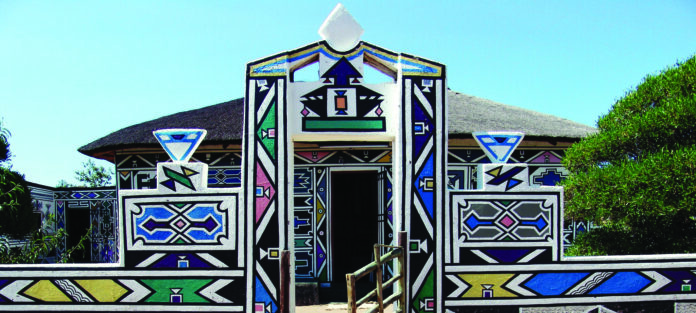
The demise of a historic Mpumalanga cultural village associated with world-renowned Ndebele artist Esther Mahlangu is a case study of some of the challenges associated with land restitution.
In the past, government pumped more than R10m into attempts to save it. While a municipal plan estimates that R50m would be needed for its rehabilitation.
In its heyday, the Botshabelo Mission Station and Ndebele Cultural Village outside Middelburg attracted about 5,000 tourists annually and generated about R300,000 a year for the municipality, says DA MPL Trudie Grovè-Morgan, who recently raised alarm over its deterioration.
For third-generation beneficiary Mmatebogo Sihlabela, the scarred crumbling buildings, overgrown grounds and abandoned facilities tell the story of a land claim that restored ownership but failed to restore the economic life that families believed would come with it.
“I did not grow up in Botshabelo but I grew up hearing about it as our home. That is why this place is personal to me,” Sihlabela told Sunday World.
Her grandparents lived in Botshabelo before the family were forcibly removed in 1971.
When Botshabelo was handed back to its rightful owners, it became a symbol of pride, justice and hope for the families. Sihlabela said they pictured the land bringing prosperity while preserving their cultural inheritance for future generations.
“There was no clear funded business plan handed over with the property for how to run a tourism facility of that size,” Sihlabela said.
The Mpumalanga Department of Culture, Sport and Recreation rejected the suggestion that government handed over Botshabelo and walked away.
Department spokesperson Sibongile Nkosi said more than R10m was made available for interventions at the site.
“A portion of the funding was utilised but further implementation was affected when the Community Trust’s bank account was frozen amid disputes among the beneficiaries.”
Nkosi said the government had to remain neutral and could also not, in good faith, continue to spend public funds when the trust’s governance and banking problems remained unresolved.
She said the Botshabelo Community Trust carried the primary responsibility for its governance, management, security and routine maintenance.
Sihlabela said there were internal differences over private investment and the property management.
As the dispute raged on, the deterioration accelerated, prompting officials to remove threatened movable heritage objects.
Steve Tshwete local municipality’s 2020 tourism strategy contemplated rehabilitation of the historic attraction. It would require more than R50m.
But six years later, Nkosi said the provincial culture department had no knowledge of a funded rescue programme.
Grovè-Morgan likened abandoning the cultural village to “disgracing the status of the legendary Esther Mahlangu”.
Sihlabela said a restored cultural village could support Ndebele artists, host school tours, revive the museum and create employment for beneficiaries and surrounding communities.
Nkosi said the Botshabelo case exposed shortcomings extending beyond the legal return of land. “The deterioration … demonstrates that successful land restitution must be accompanied by sustainable governance, post-settlement support, conservation expertise and a viable operating model,” she said.
The department has committed to reopening discussions with legal representatives of the trust and other authorities to determine a way forward.
For Sihlabela, however, the ultimate measure of restitution cannot merely be whose name appears on the title deed.
“Restitution is supposed to restore dignity and economic life. Until Botshabelo can sustain families and preserve heritage, the job is unfinished.”
- The demise of a historic Mpumalanga cultural village associated with world-renowned Ndebele artist Esther Mahlangu is a case study of some of the challenges associated with land restitution.
- In the past, government pumped more than R10m into attempts to save it.
- While a municipal plan estimates that R50m would be needed for its rehabilitation.
- In its heyday, the Botshabelo Mission Station and Ndebele Cultural Village outside Middelburg attracted about 5,000 tourists annually and generated about R300,000 a year for the municipality, says DA MPL Trudie Grovè-Morgan, who recently raised alarm over its deterioration.
- For third-generation beneficiary Mmatebogo Sihlabela, the scarred crumbling buildings, overgrown grounds and abandoned facilities tell the story of a land claim that restored ownership but failed to restore the economic life that families believed would come with it.


