


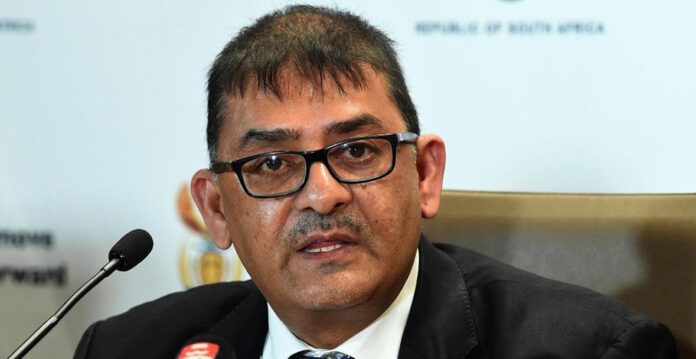
Leaks and security breaches to journalists alleged
The suspension of South Africa’s intelligence watchdog was set in motion by allegations of leaks and security breaches, but documents reveal that a missing piece in the chain of events is the identity of the person or institution that first raised concerns about Imtiaz Fazel.
Before Fazel knew he was being investigated, the Joint Standing Committee on Intelligence (JSCI) had already become involved in a process concerning his conduct.
He only learnt of the investigation after the State Security Agency (SSA) acting director-general Ambassador Tony Msimanga informed him that there was an “ongoing investigation” into him.
But the SSA did not tell him who initiated the process, who lodged the complaint, when it was opened or what specific allegations had been placed before the committee.
The missing complainant sits at the beginning of the chain that ended with President Cyril Ramaphosa suspending Fazel.
The first known communication came from Msimanga on September 22, 2025. The letter was titled, “Investigation of the leak of the Inspector-General of Intelligence’s report to the media.”
Msimanga told Fazel the SSA was investigating the leak of a report of the Inspector-General (IG) dated September 18, 2025.
The SSA said media enquiries showed journalists were allegedly in possession of classified information.
“The agency notes that the enquiries from the media indicate that they are in unlawful possession of classified information that relates to the South African Police Service and/or its activities, which were presented to the IG,” Msimanga wrote.
The letter warned that the disclosure of classified information handled by the IG was unlawful.
“The unlawful disclosure of classified information leaves the agency with no option but to institute the appropriate steps against any person(s) found to have contravened the law,” Msimanga wrote.
The letter was copied to Minister in the Presidency Khumbudzo Ntshavheni and JSCI chairperson Sylvia Izaks.
The following day, the matter escalated.
Msimanga withdrew Fazel’s top-secret security clearance and referred to an investigation that had already begun.
“The agency has subsequently become aware of an ongoing investigation into the IG’s conduct concerning the access to and unauthorised disclosure of classified information in terms of sections 7(4) and (5) of the Oversight Act,” he wrote.
The word “subsequently” suggests the SSA became aware of an investigation that was already underway.
The reference to sections 7(4) and (5) of the Intelligence Services Oversight Act points to the process where the Inspector-General may be investigated by JSCI and suspended by the president pending that investigation.
Fazel later challenged the secrecy surrounding the allegations.
In his response, he said he had not been informed by JSCI of findings against him and demanded details.
He asked for:
“The scope of the investigation, the specific allegations against me, if any, and the JSCI’s findings in this regard.”
He also questioned the SSA’s reference to “alleged political interference” involving his office.
Fazel demanded to know:
“Who exercised it and over what.”The SSA later justified the withdrawal of his clearance by citing reported leaks, alleged political interference and possible weaknesses in security protocols.
It said:
“Given the nature of the disclosures, there is a credible basis to consider that a breach of security protocols may have occurred.”
The agency said the withdrawal was a precautionary measure to protect classified information.
Fazel’s suspension followed after the matter moved through the JSCI process and reached the president.
But the first link remains missing. The documents show the investigation. They show the security decision. They show the suspension. They do not show who made the complaint that started it all.
- Imtiaz Fazel, South Africa’s intelligence watchdog, was investigated and suspended over alleged leaks and security breaches involving classified information.
- The State Security Agency (SSA) and the Joint Standing Committee on Intelligence (JSCI) were involved before Fazel was officially informed of the investigation.
- The SSA withdrew Fazel’s top-secret clearance and cited possible political interference, leaked classified information, and security protocol weaknesses as reasons.
- Fazel challenged the secrecy, demanding details of the allegations, investigation scope, and any findings by JSCI.
- Key documents reveal the investigation and suspension process but do not identify who initially lodged the complaint against Fazel.


