


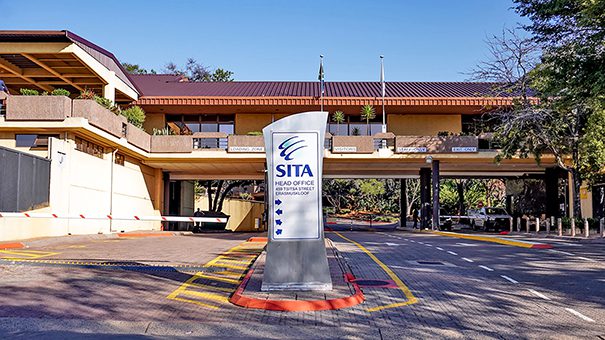
A Public Service Commission (PSC) investigation into governance, procurement, consequence management, and organisational weaknesses at the State Information Technology Agency (SITA) has painted a picture of an organisation gripped by fear, collapsing trust and declining professional standards.
The probe looking into affairs at the institution between 2020 and 2025 reveals that SITA employees have almost no confidence they will be protected if they expose corruption or misconduct.
Erosion of trust
According to the report, “employee survey results reflect a significant erosion of trust, with widespread scepticism regarding fairness, accountability, and the effectiveness of reporting mechanisms, as well as concerns about retaliation and procedural integrity.”
The findings are backed by an employee survey conducted during the investigation.
Only 0.12% of employees who participated said they trusted SITA’s protection against retaliation after reporting wrongdoing, while just 16.26% believed staff could speak up without fear.
Confidence in the fair and consistent handling of grievances, disciplinary matters and complaints was even lower, averaging 6.37%. Meanwhile, 80% of respondents expressed scepticism about how unethical conduct is handled.
Investigators warned that the lack of trust has become one of the biggest threats to the agency’s ability to detect corruption and misconduct.
‘Perceived lack of responsiveness by leadership’
The report states that the “perceived lack of responsiveness by leadership further contributes to declining employee confidence in reporting mechanisms.
“Employees may become reluctant to report concerns if they believe that matters are not properly addressed, that feedback is inadequate, or that no meaningful action follows from reported issues. This may also heighten perceptions of retaliation risk, particularly where employees do not see visible accountability or protective measures being applied.”
The PSC found that although SITA have whistleblowing mechanisms, including an external Ethics Line and internal grievance channels, they operate independently of one another. This makes it difficult for management to identify patterns of misconduct across the organisation.
“Whistleblowing and grievance reports are not consistently cross-referenced against internal grievance registers. As a result, governance functions may only have partial visibility of workplace concerns, which limits the organisation’s ability to identify patterns of misconduct or emerging cultural risks.“
Fragmented reporting system
The report concludes that the fragmented reporting system has weakened oversight and reduced confidence in internal processes.
It found that “the siloed handling of whistleblowing and grievance matters weakens the organisation’s ethical culture by reducing trust in internal reporting processes, limiting organisational learning, and impairing management’s ability to respond proactively to workplace concerns and misconduct risks.”
Beyond whistleblower concerns, the commission found that professional standards across the agency have steadily deteriorated despite SITA having policies promoting integrity, accountability and ethical conduct.
‘Governance systems largely exist on paper’
The report says governance systems largely exist on paper but are not consistently implemented.
“The evidence does not indicate an absence of governance instruments. Rather, it points to a systemic governance implementation failure, where established frameworks for ethics, discipline, risk management, and oversight were not consistently or effectively operationalised.”
Instead of being applied consistently across the organisation, disciplinary processes and ethical standards vary between business units. This has in turn created what investigators describe as perceptions of unfairness and weakening confidence in management.
“Policies governing professionalism, ethics, discipline, and human resources were applied unevenly across business units, resulting in inconsistent disciplinary outcomes, perceived unfairness, weak consequence management, and reduced confidence in organisational processes.”
Failures to enforce consequence management
Investigators found that repeated failures to enforce consequence management have further undermined professionalism.
The commission said this has fuelled a culture where employees believe organisational rules are optional rather than enforceable.
“Over time, these weaknesses contribute to a culture of reduced accountability, where employees perceive that non-compliance does not result in meaningful consequences.
“It further increases the risk of misconduct, fraud, and ethical breaches, while eroding trust in leadership and governance structures,” it warns.
The investigation also found that the gap between SITA’s stated values and employees’ day-to-day experiences has widened because of years of leadership instability and weak accountability.
The commission believes rebuilding trust will require more than policy changes. The commission recommends an integrated system to monitor whistleblowing.
- A PSC investigation into SITA (2020-2025) reveals a culture of fear, lack of trust, and declining professional standards among employees regarding governance and misconduct reporting.
- Only 0.12% of employees trusted protection against retaliation, with low confidence (6.37%) in handling grievances and 80% skeptical about treatment of unethical conduct.
- Leadership is perceived as unresponsive, reducing employee willingness to report concerns, with fragmented whistleblowing and grievance systems hindering misconduct oversight.
- Governance frameworks exist but are inconsistently applied, leading to uneven disciplinary measures, perceived unfairness, weak consequence management, and reduced organizational trust.
- Persistent failure to enforce accountability has fostered a culture where rules are seen as optional, increasing risks of misconduct and eroding confidence in leadership and governance.


