


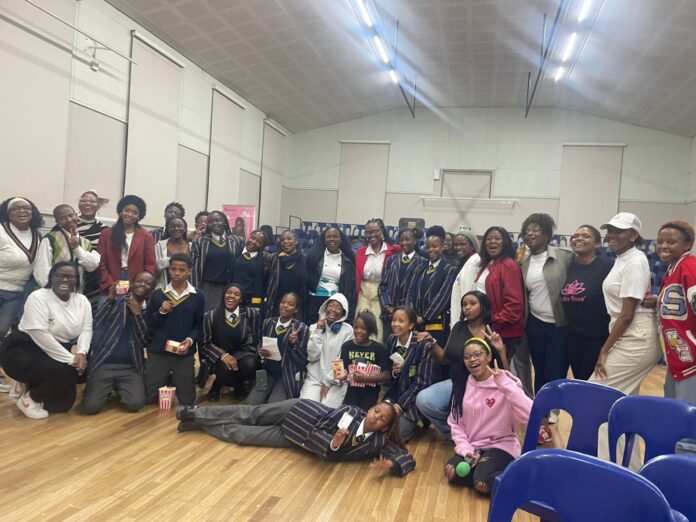
As the world observed International Menstrual Hygiene Day, Sacred Heart College in Johannesburg became a hub of advocacy and education, hosting the Flow Forward 2026 Annual Lecture, an event that turned global awareness into urgent local action against both menstrual stigma and growing concerns over unsafe sanitary products.
The gathering, held on the evening of May 28 at the college’s hall, brought together individuals, healthcare professionals, educators, and activists under the theme, “Flowing in Action”. In a powerful convergence, attendees marked International Menstrual Hygiene Day by demanding a shift from silence to transparency in menstrual health.
A watch party with purpose
In a unique collaboration with That’s On Period, the event featured an interactive exhibition of menstrual health organisations followed by a watch party. Organisers described the evening as “an enlightening and empowering space”, where panel discussions and keynote speeches deepened understanding of menstrual health challenges, while showcasing innovative solutions.
“Sacred Heart College has long been a space for courageous conversations,” said one speaker. “Tonight, we’re proving that menstrual health is not a niche issue, it is a justice issue, a safety issue, and a dignity issue.”
The shadow of unsafe products
The celebration of menstrual hygiene carried an urgent undercurrent of alarm. Earlier this year, concerns emerged that some sanitary pads on the market may be unhealthy and unsafe.
Following a study from the University of the Free State’s microbiology department, South African authorities launched a formal investigation into multiple sanitary pad suppliers. The peer-reviewed research, published in Science of the Total Environment detected endocrine-disrupting chemicals (EDCs) including phthalates and bisphenols – in 16 brands of sanitary pads and eight types of pantyliners. These chemicals, often used in plastics and adhesives, were found even in products labeled “free from harmful substances”.
According to the World Health Organization, EDCs can interfere with the human hormonal system, potentially leading to metabolic disorders, fertility issues, and increased cancer risks. While no immediate harm has been proven, scientists warn that lifelong cumulative exposure during menstruation demands urgent scrutiny.
The South African National Consumer Commission has demanded that suppliers submit their most recent safety tests, a probe expected to take six months.
From taboo to policy
The safety scare added fuel to calls already echoing across South Africa and beyond. Activists recently presented a Menstrual Health Equity Bill to Parliament, arguing that safe, dignified menstrual care is a constitutional right.
“Today is International Menstrual Hygiene Day,” an event organizer reminded the crowd at Sacred Heart College. “But hygiene is not just about cleanliness anymore. It’s about chemical safety. It’s about transparency. It’s about demanding that the products we trust aren’t silently harming our bodies.”
Flowing forward from Sacred Heart
Despite the sobering news, the mood at Flow Forward remained hopeful. Attendees browsed an exhibition of safer, innovative menstrual products, participated in interactive workshops, and networked with advocates determined to build a stigma-free, health-first future.
The lecture was also aimed as educating the boy child on periods and how to protect females and do away with the period stigma.
- Sacred Heart College in Johannesburg hosted the Flow Forward 2026 Annual Lecture on International Menstrual Hygiene Day to promote menstrual health awareness and combat stigma.
- The event featured panel discussions, an exhibition of menstrual health organizations, and a watch party in collaboration with That's On Period, emphasizing menstrual health as a justice, safety, and dignity issue.
- A recent study revealed harmful endocrine-disrupting chemicals (EDCs) in multiple South African sanitary pad brands, prompting a government investigation demanding safety tests from suppliers.
- Activists are pushing for a Menstrual Health Equity Bill, framing safe menstrual care as a constitutional right amid concerns about chemical safety and product transparency.
- Despite safety scares, the event fostered hope through education, showcasing safer menstrual products, workshops, and efforts to educate boys to end period stigma.


