


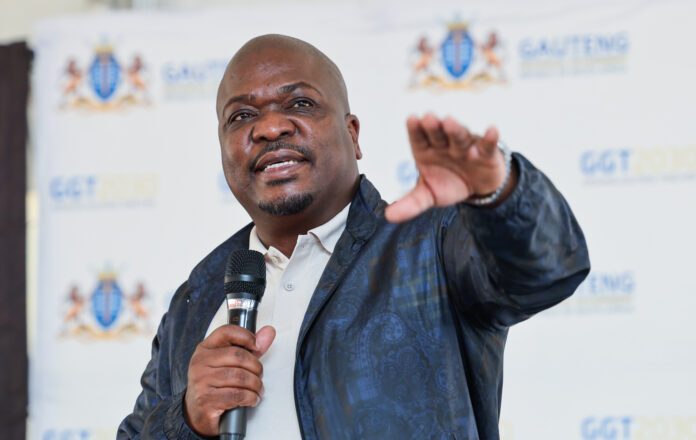
The Ekurhuleni Metro has finally adopted its R71bn budget after a dramatic fourth attempt in council on Tuesday, bringing weeks of political uncertainty to an end and easing fears that the metro could be placed under administration.
The breakthrough followed a late agreement between the ANC and the DA, whose combined support helped secure approval of a revised financial plan aimed at stabilising governance and preventing further paralysis in council operations.
ANC yields to DA demands
In a statement, the DA said the ANC had formally agreed to “major DA demands that place residents ahead of politicians and infrastructure ahead of vanity projects”.
These include reducing property rates to just 1.5%, ring-fencing infrastructure spending so money cannot simply be diverted away from roads, electricity, water and sanitation, establishing an Electricity Protection Unit to combat illegal connections and electricity theft.
Other demands which the ANC have agreed to incorporating into the budget include the publishing monthly service delivery dashboards so residents can measure performance, freezing luxury spending and focusing expenditure on essential services and strengthening consequence management and improving oversight of finances and governance.
EFF rejects fiscal framework
In the final vote, 171 councillors supported the budget, while 31 voted against it. The only opposition came from the Economic Freedom Fighters (EFF), which remained the sole party to reject the fiscal framework.
EFF councillor Thembi Mswana said the party rejected the budget in principle, arguing that political actors were prioritising expediency over the real needs of residents.
“Speaker, this minority government speaks about rebuilding a strong financial base, the strengthening of infrastructure, improving service delivery, and creating jobs. The EFF cannot support this budget that asks residents to continue to pay in more while receiving less. We cannot support a budget that claims to be developmental while unemployment continues to rise in our townships and economies remain marginalised,” according to the red berets councillor.
She also cast aspersions on Ekurhuleni Mayor Doctor Xhakaza’s ability to implement the budget.
“Speaker, the increase on compensation of employees is not for insourcing. This money is going to be used for salary increases, overtime, and for fulfilling positions that are already vacant as we sit here. Speaker, we need structural change and adoption to give into effect insourcing as directed by the EFF motion in this council. We remain clear and convinced, Speaker, that we have no belief that Xhakaza can lead a collective and effective and deal with the implementation of this budget,” she said.
Earlier budget failures had sparked growing concern that continued deadlock could trigger section 139 intervention, which would place the municipality under provincial administration and significantly reshape its governance structure.
Approved budget totals R3.3bn
Council ultimately approved a R3.3-billion capital budget for the 2026/27 financial year, together with R800-million allocated for the repair and maintenance of existing infrastructure.
Following the approval of the budget, Finance MMC Jongizizwe Dlabathi told said that the city had taken a deliberate decision to prioritise finishing ongoing projects rather than expanding into new capital programmes that could overstretch resources.
Dlabathi said the combined allocation for capital investment and maintenance would improve the durability of the city’s infrastructure network, particularly in essential services such as water supply, sanitation systems, electricity provision, waste management and road maintenance.
He added that the approach was intended to strengthen long-term service delivery capacity by preventing further deterioration of already strained infrastructure.
He also highlighted ongoing revenue-generation efforts, including the Equitable Development Agency and newly introduced precinct development projects, which are expected to increase future income and support higher infrastructure spending in the outer years.
Budget adoption ‘a critical moment for stability’
Xhakaza welcomed the adoption of the budget, describing it as a critical moment for stability in the metro and continuity of service delivery ahead of the new financial year.
“The support we received from council today has enabled us, for the first time after several attempts, to approve the budget for the people of Ekurhuleni for the 2026/2027 financial year, which begins on 1 July,” Xhakaza said during a press briefing following the vote.
He said the approved budget would ensure continuity in service delivery and reflect a stronger focus on addressing community needs rather than political contestation.
“This is about ensuring service delivery for our people. It is not only about politics but about real issues that affect communities on the ground,” he said.
He added that attention now shifts to implementation, with the municipality expected to focus on turning the approved budget into tangible service delivery outcomes across the metro.
- Ekurhuleni Metro approved its R71 billion budget after four attempts, ending political deadlock and averting potential provincial administration intervention.
- The ANC and DA reached a late agreement, incorporating DA demands such as reducing property rates to 1.5%, ring-fencing infrastructure budgets, and establishing an Electricity Protection Unit.
- The budget passed with 171 votes in favor; the Economic Freedom Fighters (EFF) opposed it, criticizing the budget for neglecting residents' needs and doubting Mayor Doctor Xhakaza’s leadership.
- The approved budget includes R3.3 billion for capital projects and R800 million for infrastructure maintenance, prioritizing existing project completion over new expansions.
- Mayor Xhakaza emphasized the budget's focus on service delivery and community needs, marking a critical moment for stability and promising implementation of tangible outcomes.


